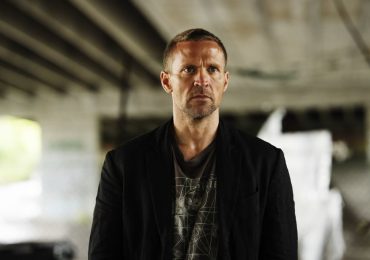

Country singer Zach Bryan is making headlines after a snippet of his new song “Bad News,” posted on the singer’s Instagram, revealed what some observers have called “anti-ICE” lyrics and unpatriotic sentiments. Many on the right have criticized Bryan. Homeland Security Secretary Kristi Noem found the song “completely disrespectful,” while country star John Rich took to X to express his doubt that country fans would keep supporting Bryan: “Who knows, maybe there’s a large ‘anti law enforcement’ wing of the country music fanbase. We’ll soon find out.”
[time-brightcove not-tgx=”true”]
Permeating the debate around Bryan’s song is the belief that country music, and its audience, are inherently conservative. But they aren’t. Indeed, for much of the 20th century, country music furthered liberal politicians and progressive causes. The seeming symbiosis between country music and Republican politics is a fairly recent phenomenon—a product of Richard Nixon’s electoral strategy and the broader cultural and political realignment of the 1970s. The transformation of mainstream country music into a conservative, Republican genre both reflected—and advanced—the polarization of American life that shapes our politics today.
A century ago, the country music scene looked very different. The commercial country music industry emerged in the early 1920s with recordings of musicians such as Eck Robertson and Fiddlin’ John Carson. At this early stage, the music was referred to as “hillbilly music” and was an amalgamation of southern musical styles. Despite country music’s heavy debt to African American musical traditions, the record industry, reflecting racial politics of the early 20th century, segregated the musical styles of the South between white “hillbilly” music and Black “race records.”
And yet, hillbilly music developed an audience among both Black and white listeners, predominantly but not exclusively in the South. By the early 1930s, country music’s most popular radio show, the Grand Ole Opry, was heard across the southeast emanating from WSM’s 50-thousand-watt radio tower in Nashville, Tennessee.
Read More: The History—and Money—Behind Country Music’s Embrace of the U.S. Military
During the Great Depression, country songs praised President Franklin D. Roosevelt’s New Deal. The Allen Brothers’ “New Deal Blues” described the devastating impact of the onset of the Depression and the great success of Roosevelt’s relief programs that left “money in my pockets.” Meanwhile, Milton Brown entertained radio audiences with his song “Fall in Line with the N.R.A,” which reassured listeners that the president’s programs had turned the country into a “land of smiles” and had “put depression on the run.”
Three decades later, female country superstars like Tammy Wynette (“D-I-V-O-R-C-E”), Jeannie C. Riley (“Harper Valley PTA”), and Loretta Lynn (“The Pill”) challenged traditional norms channeling concerns of the emerging women’s liberation movement. And Johnny Cash, famous for songs like “Folsom Prison Blues” and “San Quentin,” became a passionate advocate for prison reform.
While that radical streak has never died, during the 1970s country music, reflecting American society more broadly, underwent a conservative turn. Richard Nixon aggressively appropriated country music for his own political aims, seeing it as a tool to gain the votes of blue-collar ethnic urbanites, white Southerners, and sunbelt suburbanites—those he felt were united in their outrage towards the anti-war protests and civil rights activism of the late 1960s. This was Nixon’s “silent majority” and they were also thought to be country music’s most ardent fans.
To do this, he established October as National Country Music Month in 1972, stating the genre reflected the ideals of family values, patriotism, and Christianity that “bind us all together as Americans.” He also featured a country-infused song in his “Nixon Now” campaign ad to connect to Southern and middle American white voters. In March 1974, he even made an appearance on the Grand Ole Opry, ostensibly to celebrate the First Lady’s birthday and the opening of the brand-new Opry House, but also to shore up support among those he felt were his most ardent supporters as the Watergate scandal reached its height.
Read More: What Beyoncé’s Snub at the CMAs Says About Country Music’s Dangerous Hierarchy
Most infamously, in April 1970 Nixon invited Johnny Cash to the White House, hoping the country star would sing antagonistic songs such as Guy Drake’s “Welfare Cadillac.” The plan backfired spectacularly when Cash refused and instead performed his anti-war song, “What is Truth?” leaving Nixon red-faced.
Cash reflected the persistence of liberal ideas in country music during the 1970s, and yet liberals did little to protect or reclaim this tradition. In fact, liberal journalists derided the genre and its audience. For example, in 1969 Merle Haggard released “Okie from Muskogee,” a satirical song that ridiculed hippies and endorsed parochial “square” values. It raced to the top of the country charts and its popularity among the populist right—who seemingly missed the song’s satire—generated a storm of attention in the liberal press.
Many liberal writers also misunderstood Haggard’s song. The country star intended to critique not just “hippies” but also conservative middle Americans who also associated “Okie” with Nixon’s growing political base. By the end of 1969, the Boston Globe had dubbed Haggard’s song the “Silent Majority March.” Scholars weighed in too, with sociologist Jens Lund describing “Okie” as a form of “super patriotism” that reinforced “the superiority of small-town ‘square’ values.” One article in Harper’s, in a manner not dissimilar to the later hysteria around rap music causing gang violence, even blamed country music for fomenting the “alienation and a spirit of testy readiness” that led to the 1970 trucker’s strike.
Such a disdain for the genre appeared with assessments of country superstar Dolly Parton. Parton rose to be one of country music’s biggest stars in the 1970s in part by cultivating an extravagant, sexualized, working-class persona, typified by her flamboyant physical appearance that liberal writers proved incapable of understanding or taking seriously. In response to a 1974 performance in New York, Nick Tosches complained in the Village Voice of Parton’s “feigned stupidity,” comparing her to a 1940s minstrel performer.
By deriding country musicians and their audiences in this way, liberal writers actually added to Nixon’s political arsenal by providing proof for his assertion that there was a liberal elite who despised the “silent majority” and their way of life. The writings of these journalists revealed their deep-rooted classism. After all, country music is one of the few, and certainly the most prolific, white working-class art forms in the United States. As economic disaster unfolded through the 1970s, and the working classes felt increasingly politically abandoned, liberal critique of country music only deepened blue-collar resentment towards those Vice President Spiro Agnew termed an “effete corps of impudent snobs.”
As journalists navigate country music’s latest political debacle in 2025, they should be wary of repeating the errors of their 1970s predecessors. Country music, like its audience, was and is politically malleable. It is capable of expressing the worst forms of bigotry but it has also pushed forward some of the most progressive visions of what America could be.
Dominic J. M. Howell is a Ph.D. candidate in history at Boston University, where his research focuses on the history of popular music in the United States.
Made by History takes readers beyond the headlines with articles written and edited by professional historians. Learn more about Made by History at TIME here. Opinions expressed do not necessarily reflect the views of TIME editors.
Leave a comment