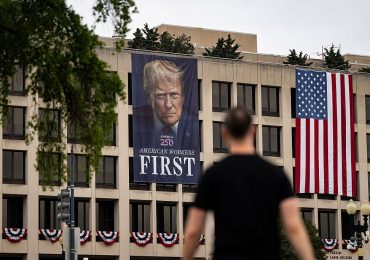
Even as a cease-fire between Thailand and Cambodia brokered by President Donald Trump earlier this year is falling apart, the self-styled “President of Peace” has continued to tout his ability to resolve global conflicts.
Trump has claimed credit for ending multiple wars around the world, but “peace in many of these contexts was secured because of perceived U.S. leverage over other parties,” Mark Cogan, associate professor of peace and conflict studies at Kansai Gaidai University in Osaka, Japan, tells TIME. In the Thailand-Cambodia deal announced in October, Trump leveraged trade relations with the U.S. as political pressure. It also helped to buffer his own domestic case for tariffs, which have been blamed in part for affordability concerns. For Trump, says Cogan, peace is just transactional. A deal between Rwanda and the Democratic Republic of the Congo, which was ratified last week, promised Trump access to Congolese rare earth minerals—which could be key in allowing the U.S. to overcome rival China’s dominance of global supply of the minerals.
[time-brightcove not-tgx=”true”]
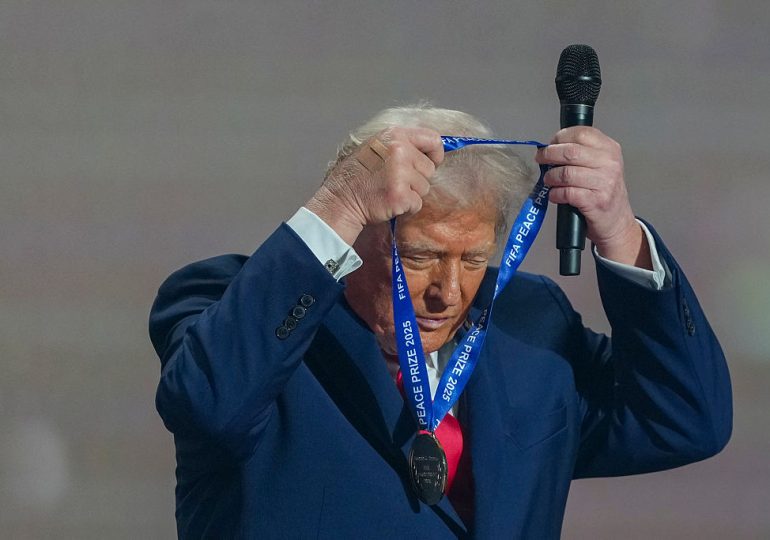
The numerous deals have also given Trump another thing to boast about. Last week, Trump renamed the United States Institute of Peace as the Donald J. Trump Institute of Peace and accepted the inaugural FIFA peace prize, a consolation for losing out on the Nobel Peace Prize he coveted.
To be sure, Trump has been able to broker several deals that led to pauses in violence in the short-term. But his unilateral approach to achieving them—at times bypassing multilateral institutions and enforcement mechanisms—also makes the long-term outcomes uncertain, Cogan says, especially in conflicts that have deep-seated and complex histories.
Here’s where things stand in the various places Trump has touted bringing peace deals this year.
Thailand and Cambodia
Earlier this year, historic tensions over a disputed border between Thailand and Cambodia flared up after a Cambodian soldier was killed during an exchange of gunfire with Thai soldiers, which both countries blamed on the other. The two countries have long disagreed on stretches of their 500-mile border that had been demarcated under French colonial rule, especially around the Preah Vihear and Ta Muen Thom temples, and have clashed several times over the years, including between 2008 and 2011.
Frictions escalated into a diplomatic standoff and in July broke out into the most intense fighting between the two neighboring countries in more than a decade. The conflict, which involved exchanging artillery fire, launching rockets and drones, and ground clashes across the border, killed dozens of people and displaced tens of thousands more.
On July 28, “after the involvement of President Donald J. Trump, both Countries have reached a CEASEFIRE and PEACE,” Trump announced on Truth Social. “I am proud to be the President of PEACE!” The violence continued for months.
Trump has repeatedly claimed credit for brokering a cease-fire between Thailand and Cambodia, even attending the annual ASEAN (Association of Southeast Asian Nations) summit in October to be present for the signing of an official truce known as the Kuala Lumpur Peace Accord. But even experts at the time cast doubt on the longevity of the deal, especially without the guarantee of continued political pressure from the U.S.
The truce has already faltered several times and now appears on the verge of collapsing entirely. Thailand accused Cambodia of planting new landmines and suspending de-escalation measures after a Thai soldier was maimed by a landmine on Nov. 10—claims that Cambodia has denied—and suspended the implementation of the peace agreement.
On Dec. 7, Cambodian officials reported Thai small-arms and mortar fire at a border position near Preah Vihear. Cambodia said it did not return fire. The next day, Thailand launched airstrikes and artillery barrages on Cambodia along the border. At least nine civilians have been killed and 20 injured since Monday, according to Cambodia’s Ministry of National Defence, while the Thai military said three soldiers have been killed and 29 injured since renewed clashes broke out on Sunday. Both countries have evacuated thousands of people on either side of the border. Cambodia said on Tuesday that it began retaliating with strikes against Thailand.
A White House official said on Monday that Trump “expects the governments of Cambodia and Thailand to fully honor their commitments to end this conflict.” But Cogan says Trump’s expectations are a misunderstanding of relations between the two countries.
“He did not understand that domestic political audiences are more important than peace at this point,” Cogan says.
“Politicians in many Southeast Asian countries need some kind of problem to sustain public support for their regime,” Su Mon, Asia-Pacific senior analyst at the Armed Conflict Location & Event Data Project, told Bloomberg. “Having an external threat always works in creating solidarity between the government and the population.”
Rwanda and the Democratic Republic of the Congo
In June, Trump announced that he had brokered a peace treaty between Rwanda and the Democratic Republic of the Congo, bringing to an end “their War, which was known for violent bloodshed and death, more so even than most other Wars, and has gone on for decades.”
“This is a Great Day for Africa and, quite frankly, a Great Day for the World! I won’t get a Nobel Peace Prize for this, I won’t get a Nobel Peace Prize for stopping the War between India and Pakistan, I won’t get a Nobel Peace Prize for stopping the War between Serbia and Kosovo, I won’t get a Nobel Peace Prize for keeping Peace between Egypt and Ethiopia (A massive Ethiopian built dam, stupidly financed by the United States of America, substantially reduces the water flowing into The Nile River), and I won’t get a Nobel Peace Prize for doing the Abraham Accords in the Middle East which, if all goes well, will be loaded to the brim with additional Countries signing on, and will unify the Middle East for the first time in ‘The Ages!’” Trump posted on Truth Social on June 20. “No, I won’t get a Nobel Peace Prize no matter what I do, including Russia/Ukraine, and Israel/Iran, whatever those outcomes may be, but the people know, and that’s all that matters to me!”
Mineral-rich eastern Congo has been wracked by conflict between more than 100 armed groups, including M23 which is widely believed to be backed by Rwanda, although the government denies the claim. Decades of fighting has displaced more than seven million people.
The agreement Trump referenced between the DRC and Rwanda was signed on June 27 and ratified on Dec. 4, with mediation from the U.S. The deal seeks to end hostilities and increase cooperation between the countries; it also involved giving U.S. firms preferential access to Congolese minerals.
But even as the two African leaders met in Washington to ratify the agreement, there were already signs of fraying. Rwandan President Paul Kagame and DRC President Félix Tshisekedi met coldly, avoiding shaking heads or making eye contact, prompting a sarcastic quip from Trump: “Look at the way they love each other!”
Within days of that meeting, the DRC has already accused Rwanda of violating the deal after M23 rebels seized the town of Luvungi near the Burundi border and a bomb explosion in eastern Congo killed more than 30 people and wounded more than 20 others.
Israel and Hamas
The U.S.-brokered cease-fire and hostage exchange deal between Israel and Hamas has been a centerpiece of the Trump Administration’s claimed foreign policy successes after two years of bombardment in Gaza that has killed more than 70,000 Palestinians, according to the Gaza Health Ministry. In the absence of independent monitoring on the ground, the ministry is the primary source for casualty data relied upon by humanitarian groups, journalists, and international bodies. Its figures do not differentiate between civilians and combatants and cannot be independently verified by TIME. More than 2,000 Israelis, including both civilians and combatants, have been killed since the Oct. 7, 2023, Hamas attack in southern Israel, according to the Israeli Defense Forces.
The deal came into force in October, after Trump unveiled a 20-point peace plan for Gaza. The “Trump Declaration for Enduring Peace and Prosperity” was signed by several world leaders at the Gaza peace summit on Oct. 13, although neither representatives from Israel nor Hamas attended.
The plan, which was endorsed by the U.N. Security Council, involves a phased withdrawal of the Israeli military from Gaza, a cessation of hostilities, the establishment of an international stabilization force, the reconstruction of Gaza, and the promise that Israel will not annex or occupy Gaza.
The first phase of the cease-fire is nearly achieved, with Hamas returning 20 living hostages and the remains of 27 others to Israel in exchange for 15 Palestinian bodies for each hostage. Israel still expects the return of the remains of one last hostage taken by Hamas, and Hamas expects the return of 15 bodies of Palestinians.
Israel has signalled that it is ready to move into the second phase of the cease-fire soon, even as roadblocks remain over the disarming of Hamas, the assembly of the international stabilization force, and the future establishment of a Palestinian state. The second stage includes the formation of a temporary Palestinian government overseen by an international board led by Trump and the withdrawal of Israeli troops from Gaza. Israeli Prime Minister Netanyahu said on Dec. 7 that he plans to meet with Trump on Dec. 29. Hamas told the Associated Press that it is ready to discuss “freezing or storing or laying down” its weapons.
The plan, however, has been heavily criticized for failing to establish sufficient protections for Palestinians, who have for decades faced violence and forced displacement by Israel.
“President Trump does not understand peace,” says Cogan. “To him, it merely means the cessation of violence and the beginning of the implementation of some political solution. The problem is that peace is relative.”
“What does peace mean to the Palestinian people in Gaza? A ceasefire does not mean peace. It will not guarantee the rebuilding of their homes, businesses, and local infrastructure,” Cogan adds. “In Gaza, a Board of Peace is supposed to monitor plans for redevelopment, but when? How soon? Will it mean a two-state solution? No. The U.N. Resolution passed in November makes that very difficult.”
While the cease-fire is ongoing in name, Israel has continued localized attacks in Gaza, as well as in the Israel-occupied West Bank. Since the cease-fire was declared on Oct. 10, Israel has launched airstrikes and drone operations over the Jenin refugee camp in the West Bank, according to Al Jazeera. Gaza’s Health Ministry counted 356 Palestinians killed by Israel between the cease-fire and the end of November.
Israel has claimed that its attacks are retaliation for alleged cease-fire violations by Hamas. Netanyahu on Oct. 28 ordered “powerful attacks” on Gaza that killed at least 26 people after accusing Hamas of attacking Israeli forces and violating the cease-fire. In November, Israel said that it killed five senior Hamas officials in airstrikes that killed a total 21 people after a gunman opened fire on Israeli troops in southern Gaza.
A so-called “yellow line” drawn in Trump’s plan, which was meant as a temporary line of withdrawal, has reportedly become a new de facto border, which the Israeli army has declared a lethal boundary and which means Israel remains in control of more than half of Gaza.
Humanitarian organizations have also accused Israel of continuing to restrict critically-needed aid flow to Gaza. On Dec. 8, Israeli police raided the East Jerusalem headquarters of the UNRWA, a U.N. refugee agency that Israel has banned and accused of antisemitism, and seized equipment.
Agnès Callamard, Amnesty International’s Secretary General, said in a November statement that the cease-fire could in fact lead to more violence, not peace.
“The ceasefire risks creating a dangerous illusion that life in Gaza is returning to normal,” Callamard said. “But while Israeli authorities and forces have reduced the scale of their attacks and allowed limited amounts of humanitarian aid into Gaza, the world must not be fooled. Israel’s Genocide is not over.”
Israel and Iran
Israel and Iran went to war in June after Israel attacked Iranian nuclear facilities. The two countries traded strikes that killed around a thousand Iranians and nearly 30 Israelis, according to Iran’s Health Ministry and Israeli authorities.
After the U.S. joined the war, bombing three Iranian nuclear facilities, Trump announced on June 23 that Israel and Iran had agreed to a cease-fire.
“Both Israel and Iran wanted to stop the War, equally! It was my great honor to Destroy All Nuclear facilities & capability, and then, STOP THE WAR!” Trump posted on Truth Social.
Although there were continued strikes traded in the immediate hours after Trump’s announcement, the cease-fire has since appeared to hold with no major fighting.
Still, in spite of Trump’s insistence that Iran’s nuclear sites were “totally destroyed,” it’s unclear how much the war impacted Iran’s nuclear capabilities. The U.N.’s nuclear watchdog said in November that Iran still retains enough highly enriched uranium and technical knowledge and capability to build nuclear weapons. Meanwhile, the 12-day war effectively halted nuclear diplomacy between Iran and the U.S. that had been ongoing.
India and Pakistan
Trump has repeatedly claimed credit for brokering a May 10 cease-fire between India and Pakistan. India had launched airstrikes on Pakistan as part of “Operation Sindoor” in retaliation for an April 22 terror attack in Pahalgam, a town in India-administered Kashmir, that killed 26 people and which India accused Pakistan of backing. Pakistan denied the accusations.
The two neighboring countries traded attacks for nearly a week before Trump’s announcement—and continued attacks immediately after. But while Pakistan has hailed Trump’s effort to broker the cease-fire and publicly said it would nominate him for the Nobel Peace Prize, India has refuted Trump’s claim that the U.S. had any part in negotiating the truce.
Peace between the South Asian neighbors also continues to be fraught with tensions over the disputed Kashmir region. Explosions in New Delhi and Islamabad last month just a day apart from each other raised tensions as Pakistan accused India of perpetrating the attack while India has investigated the blast as “an act of terror.” So far, however, the two countries have not resumed direct attacks on each other.
Armenia and Azerbaijan
Nearly four decades of fighting between Azerbaijan and Armenia over the ethnic Armenian enclave of Nagorno-Karabakh—which has resulted in the ethnic cleansing of more than 100,000 Armenians—ended on Aug. 8, when Armenian Prime Minister Nikol Pashinyan and Azerbaijani President Ilham Aliyev signed a comprehensive peace agreement in the presence of Trump and U.S. officials.
The agreement, which includes the withdrawal of Russian defensive forces by Armenia from the border, has thus far remained in place. It also gives the U.S. exclusive development rights for 99 years to construct a transit route across southern Armenia, which has been named the “Trump Route for International Peace and Prosperity” (TRIPP). The road would give Azerbaijan access to Nagorno-Karabakh. The corridor would also allow for transit from Europe to Central Asia without having to pass through Russia or Iran.
Armenian critics have said that the concessions extracted from Armenia in the agreement legitimize Azerbaijani aggression, calling it “more of a surrender document than a peace treaty.” Aliyev promised on Aug. 8, “you can be absolutely sure … that what has happened today will result in peace—long-lasting peace, eternal peace in the Caucasus,” but Azerbaijan has raised concerns that Armenia is not sincere in wanting to move forward with the agreement. Meanwhile, observers have suggested that Azerbaijan’s leader uses “Donald Trump’s empty ceremonies” and “the mantle of peace to launder his image,” while real peace “remains distant.”
Leave a comment