If you’ve been dreaming of a white Christmas, be warned that it might not become a reality.
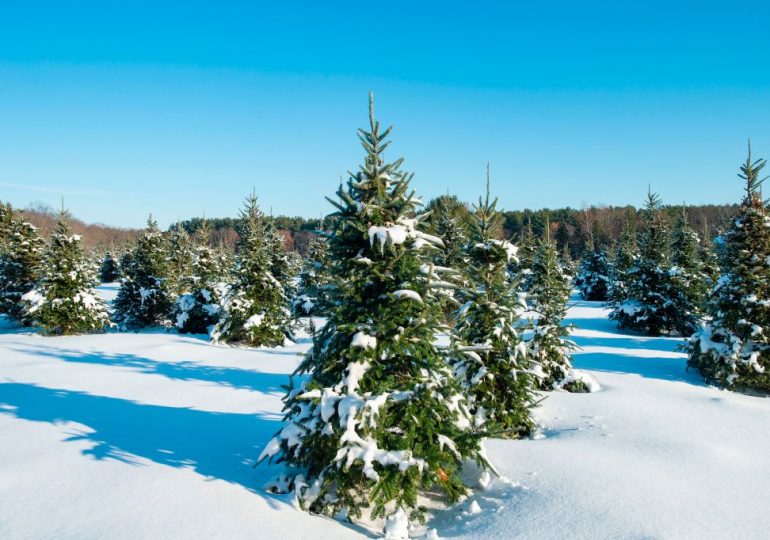
Many people have memories of watching the snow fall on Christmas Day—but data shows that, across the country, a white Christmas occurs less frequently than you might think.
[time-brightcove not-tgx=”true”]
The National Weather Service will only deem it a white Christmas if there is an inch or more of snow cover on the ground Christmas morning—when volunteer observers report the snowfall. Data from the National Oceanic and Atmospheric Administration shows that from 2003 through 2024, the average Christmas morning snow cover blanketed just 36% of the contiguous U.S. states. (That’s because some regions, like the Texas Gulf Coast or stretches of the West Coast, rarely see snow in December.) In fact, according to the Weather Channel, there’s few places beyond the Mountain West, northern New England, and the far northern tier states like Michigan and Minnesota, and northern New England where the odds of a white Christmas are higher than 50%.
In general, if an area has widespread snow and persistently colder patterns leading up to Christmas, it could be a predictor of snow on Christmas, according to the Weather Channel.
But while many people across the country might lament the white Christmases of their youth, the truth is that many places typically don’t see snow in late December—people just think they did.
“People tend to remember that one snowy Christmas, and they forget that it was surrounded by five Christmases that weren’t,” says David Robinson, New Jersey State climatologist and Rutgers University professor whose research focuses on snow cover.
From Hallmark movies to the classic song, pop culture references to a white Christmas abound—making the phenomenon seem more common than it is. And snow doesn’t stick around the same way it used to, which adds to the perception that December isn’t quite the winter wonderland it used to be. “The science of snow removal has improved so people’s lives aren’t as disrupted by snow events today as they were 25-50 years ago,” says Robinson. “I think that gives people the perception that there’s less snow because there’s less inconvenience following the snow.”
That doesn’t mean that winter weather hasn’t changed over the years. Climate change is causing temperatures to rise across the country—and it’s impacting precipitation patterns.
“Decembers have warmed three to five degrees across the country in the last 75 years,” says Robinson.
While a few degrees might not seem like much, it could mean the difference between snow and rain. “With warmer temperatures being recorded across the nation, the odds of a white Christmas are going down,” says Pete Globe, assistant state climatologist at the Colorado Climate Center. “So there is at least some truth to the anecdote that we’re seeing less white Christmases across a lot of the country.”
That’s due to a mix of climate change and climate variability, the natural fluctuations in climate patterns in a given region. The northeast, upper Midwest and New York and New Jersey are some of the areas where this trend is strongest, says Globe. Climate change is also causing shorter, warmer winters. But that doesn’t mean that a white Christmas will become a thing of the past. Some areas that often see snow might see more intense storms due to climate change, as a warmer atmosphere is able to hold more moisture.
“The winter cold snaps never go away entirely,” says Globe. “So I don’t see the odds going to zero in my lifetime.”
Leave a comment