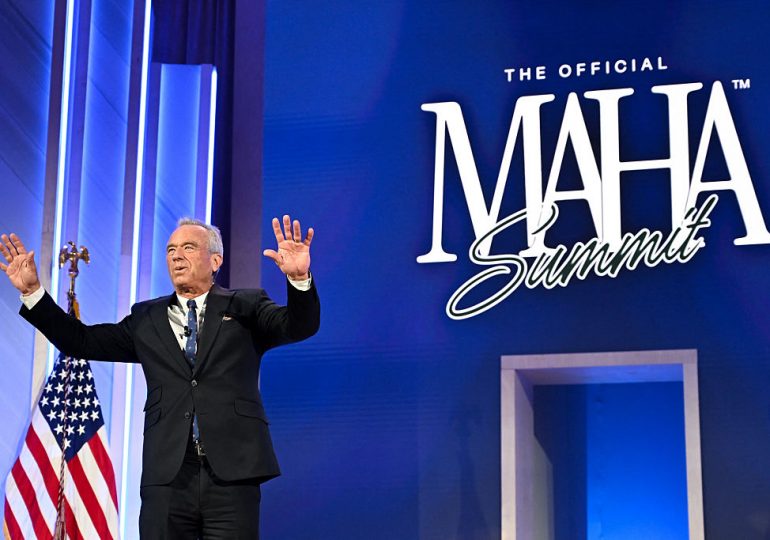
The Make America Healthy Again (MAHA) movement is full of theories about how to transform the wellbeing of Americans. Its strategy report issued this fall has 128 of them, in fact, focusing specifically on how to improve the health of children through changing diet, chemical exposure, a lack of physical activity, and chronic stress. But this roadmap for children’s health largely ignores psychological influences and social contexts, which may be the most important drivers of poor health and which could be, if wisely addressed, the source of kids’ sustained wellbeing. Missing, too, is the input of outside experts—including the children these strategies are meant to serve.
[time-brightcove not-tgx=”true”]
Depression, anxiety, post-traumatic stress disorder (PTSD), autism, eating disorders, asthma, and prediabetes have all increased greatly in kids. All are directly caused or indirectly influenced or exacerbated by the mental and emotional state of children and the conditions under which children live and how they deal with them.
The closest MAHA comes to acknowledging this is to highlight chronic stress, but some of the most important sources of that stress—as determined by authoritative, peer-reviewed surveys of young people—are neglected. Perhaps the most glaring omission is poverty. Children living in poverty are far more likely to face health challenges. They have far less access to high quality education and healthy foods. They suffer from asthma, diabetes, and obesity, as well as cardiovascular and immune disorders, significantly more often than children from well-off families, and are two-to-three times more likely to develop mental-health conditions.
Violence is also absent from the MAHA drivers. And violence, especially when it occurs within the family, is one of the most dramatic and impactful of the much-studied adverse childhood experiences (ACEs). These factors, especially when they are repeated, predispose children to adult psychological disorders, alcoholism, and acts of violence. And gun violence—also unmentioned in MAHA’s guiding document—is the No. 1 cause of death in children.
Read More: We’ve Been Thinking About Gun Violence All Wrong
This excision of context narrows the recommendations for remediation. And this myopia has unfortunately been compounded by MAHA’s failure to consider children’s own understanding of which “environmental factors” and “stressors” trouble them, or, indeed, to seek guidance from the experience and preferred choices of young people.
There’s a big opportunity for MAHA to include real-world experts in future studies and analyses: mental-health professionals, teachers, and parents who are working every day with children, as well as young people who can share their experiences and help to craft solutions that they and other kids would welcome.
To inform decision-making and raise national awareness about issues to which Health and Human Services Secretary and MAHA leader Robert F. Kennedy Jr. is passionately committed, MAHA could consider holding public hearings across the country to solicit input from people of all ages with conflicting but potentially complementary points of view. This is what my colleagues and I did when, after being appointed by President Bill Clinton and retained by President George W. Bush, I chaired the White House Commission on Complementary and Alternative Medicine Policy. The several thousand scientists and members of the general public who testified helped us to shape recommendations for innovative programs which were then initiated by the Department of Defense, the Department of Veterans Affairs, and the National Institutes of Health, as well as in major medical centers.
Similar testimony to MAHA would present instructive and even inspiring examples of the kinds of comprehensive health and wellness programs which are already successfully serving America’s children, examples which reflect MAHA’s stated goals. There are already dozens around the country: some focused on school wellness, others on family health promotion.
Outside experts would bring significant public attention to MAHA’s preeminent concern with nutrition, and expand the scope and effectiveness of their recommendations. Comprehensive programs, which they would likely recommend, could couple exploration of the scientifically demonstrated benefits of a variety of healthy diets with an understanding of the potential damage of ultra-processed and chemically adulterated foods, and a critical look at the economic forces that shape production and marketing of these foods; food shopping accompanied by a critical reading of labels announcing additives and adulterants; and hands on experience of preparing, cooking, and communally eating healthy meals.
The MAHA Strategy is concerned with a perceived “overmedicalization” of children’s behavior. Clinicians and advocates who have studied and used the alternatives that I summarize below would urge that significant government funding be devoted to understanding and studying non-pharmacological approaches to depression, anxiety, ADHD, and the other psychological conditions which may affect as many as 30-40% of our children. They would focus, as many of us have, on educating the public about the evidence base for and practical experience of a variety of stress-management and resilience-building techniques, including various forms of meditation, mindfulness and physical exercise, as well as counseling. All have been shown to create improvements in mental health and positive changes in brain physiology and biochemistry, functioning, and structure that are similar to those produced by some pharmacological agents—without negative side effects, and with significant enhancement of self-efficacy and self-esteem. So far, no new funding has been allocated for this kind of work. It should be.
Read More: Why It’s So Hard to Make School Lunches Healthier
School counselors and clinicians with years of clinical experience should be selected to provide input to MAHA decision making. They would almost certainly recommend that MAHA Strategy includes ensuring that kids have a consequence-free opportunity to share themselves with each other, including their challenges and fears about parental and peer relationships in an increasingly unpredictable and threatening world. I’ve seen these small groups—they can be called “wellness,” “support,” or “mind-body”—be central to helping kids and their families and their schools and communities to contend with mass shootings and climate-related disasters, as well as pervasive violence and poverty. And I’ve appreciated their value for young people who are not contending with crisis, but are living with what are now almost universally high levels of stress.
Public testimony is one way for experts to make a strong case for these alternatives. Hearing it might encourage Kennedy, who has sometimes been bold in his confrontations with legislators and business leaders, to challenge the federal and insurance company patterns of reimbursement which turbo charge the medicalization he deplores. It is hard for psychiatrists or pediatricians to resist a system which provides the same fee for a 12-minute medication check as it does for 50 minutes of counseling. Reversing these toxic incentives would go a long way to reducing the overmedicalization and consequent overprescription with which MAHA is concerned.
To ensure the success of these and other potential MAHA recommendations, it would be necessary to engage and train adults so they can embody and participate in, as well as teach and coach, every aspect of the approach. For example, teachers who are trained in basic school wellness could bring a few moments of mindfulness to a restive classroom, help an uncertain student choose an appealing form of physical activity, or participate with them in comprehensive nutrition education. Parents can be offered similar instruction.
Read More: A Psychiatrist Posed As a Teen With Therapy Chatbots. The Conversations Were Alarming
The training of medical and mental-health professionals could also be refined to include instruction and experience of self-care and mutual support, so this approach could be fully integrated into the care of their young patients and clients—in schools, clinics, private practices, and hospitals.
Enlarging MAHA’s perspective in these ways will lead to recommendations which are truly evidence-based and more firmly grounded in experience than some of those in the strategy document. For example, MAHA’s unequivocal and uncritical promotion of the President’s Fitness Test is poorly justified. The test, which includes calisthenics and running, was created by the Eisenhower Administration in 1956 because of Cold War anxieties about the potential military fitness of young men and women. It was discontinued by the Obama Administration because the best available research showed it did not promote a healthy lifestyle and that the majority of young people who experienced the test found it embarrassing and uninspiring and, in many cases, an actual obstacle to enjoying physical activity.
Kennedy wants children to be far more active and almost certainly believes that physical activity can enhance mental as well as physical health. Why not, then, abandon one-size-fits-all ideas about physical fitness? He could instead champion opportunities for kids to move in ways that give them pleasure and satisfaction, and confidence in their bodies, as well as greater mobility, strength, and endurance: dancing, for example, as well as running, martial arts and football, running on a track and hiking outdoors. If MAHA promoted this comprehensive and individualized approach to fitness, it could offer all of our children the variety of opportunities and benefits that are available to wealthy kids and those in the best-funded schools.
If MAHA received extensive public input and obtained increased popular support for children’s health, it could strengthen Kennedy’s (and Congress’s) hand in advocating privately and publicly for MAHA’s previously championed priorities: a healthy food supply, a clean environment, significant school time for exercise and movement, and appropriate and adequate health care. Perhaps, then, Kennedy would even be encouraged to address the issue of gun violence.
Finally, if MAHA’s perspective widens and its recommendations gain authority and substance, Kennedy might consider reframing the movement itself to reflect a more collaborative approach to the challenges children face. Instead of a guiding document called “Making America’s Children Healthy Again,” which signals our children’s passive acceptance of adult authority, a more forward-thinking title indicating partnership with children—”Partnering With Our Children to Create a Healthy Future,” for example—could help empower them to better understand and care for themselves.
Leave a comment