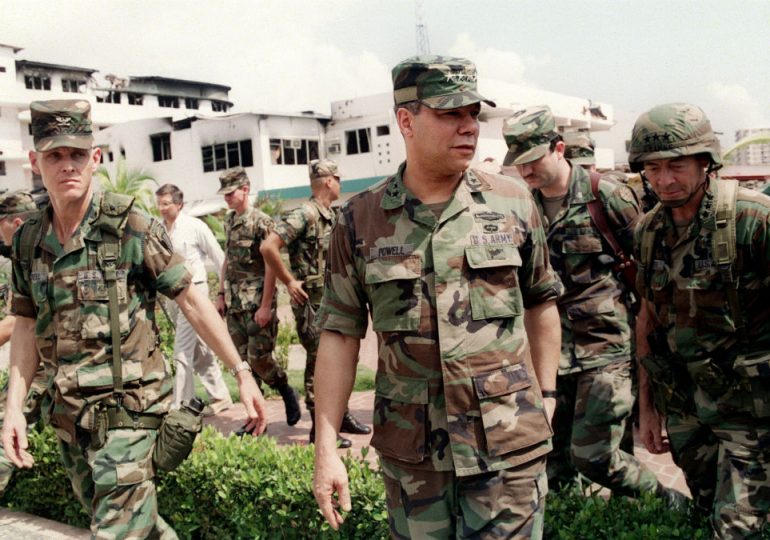
The last time an American president ordered troops to snatch a Latin American strongman, I was a young journalist half a world away, watching grainy footage of Operation Just Cause on a bulky television set. The 1989 invasion of Panama, which resulted in the capture and eventual trial of Manuel Noriega on drug trafficking charges, is remembered in Washington as a model intervention: quick, decisive, and blessedly free of the quagmire that would come to define American military adventures in the decades that followed.
[time-brightcove not-tgx=”true”]
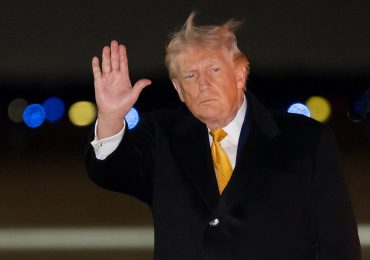
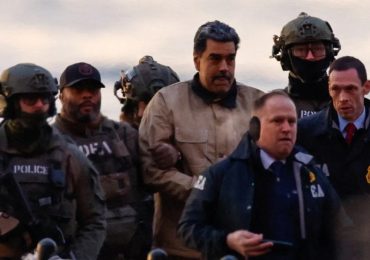
It’s no surprise, then, that the architects of President Trump’s “large-scale strike” on Venezuela are inviting comparisons to Panama. The framing is almost identical: a corrupt narco-dictator, a surgical operation, an extraction to face American justice. On Saturday morning, as smoke rose over Caracas and Venezuelans ran through darkened streets, Trump hailed what he called a “brilliant operation” with “great, great troops.” Nicolás Maduro and his wife, he announced, had been captured and flown out of the country.
But Venezuela is not Panama. And if the Trump Administration believes it can replicate the success of Just Cause, it is setting itself up for a rude awakening.
Read more: Trump Says U.S. Has Captured Venezuelan President Following ‘Large-Scale’ Strike
Start with the most obvious difference: geography and American presence. When George H.W. Bush ordered the invasion of Panama, the United States had more than 10,000 troops already stationed there. The headquarters of Southern Command sat on Panamanian soil. American forces didn’t need to project power across the Caribbean; they were already in place, ready to guarantee a transition of government and install Guillermo Endara as president. They could—and did—dismantle the Panama Defense Forces entirely.
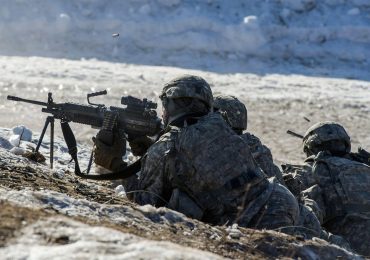
Venezuela presents an entirely different challenge. The USS Gerald R. Ford and the Iwo Jima Amphibious Ready Group may be imposing vessels, but they are floating offshore, not embedded in the country. A smash-and-grab operation can remove a head of state. It cannot, by itself, govern a nation of some 28 million people.
Then there is the matter of what, exactly, replaces Maduro. Panama was a small country that had been, since its founding, effectively under American tutelage. Venezuela has its own complex political ecosystem, one that does not simply default to the opposition the moment the strongman is removed. The Bolivarian Armed Forces—the FANB—remain intact. Defense Minister Vladimir Padrino López has already called for a “massive deployment” of military forces to resist foreign troops. Vice President Delcy Rodríguez is demanding proof of life and insisting the government will not yield.
The FANB is not the Panama Defense Forces. It has been systematically restructured under both Chávez and Maduro to “coup-proof” it—fragmenting command and control, fomenting internal competition based on political loyalty, and purging any officers who seemed to pose a threat to the political status quo. Those who weren’t dismissed were jailed or forced into exile. The bonds between civilian authorities and the military are cemented by the profits of illicit economies that enrich both corrupt government officials and senior officers. They are complicit together, and they know it.
Read more: Trump Advisors and Venezuela Opposition Leaders Plan for Maduro’s Departure
We have seen this movie before. In 2019, the Trump Administration threw its weight behind Juan Guaidó, expecting that a display of American resolve would fracture the regime. It didn’t. The military held. Officers understood that a move against Maduro without clear guarantees of immunity meant risking imprisonment, torture, confiscation of assets, and the ill-treatment of their families. Nothing about Saturday’s operation changes that calculus. The U.S. raid may have removed a head of state, but it cannot offer the FANB’s senior leadership a credible path to safety—and without that, it’s hard to see why they would cooperate with a transition rather than fight to prevent one.
There is also the matter of oil. Panama had the canal; Venezuela has the largest proven oil reserves in the world. Maduro’s government was quick to accuse Washington of seeking to seize these resources—a charge that will resonate across Latin America and beyond, regardless of its accuracy. Cuba’s Miguel Díaz-Canel has denounced the attack as “criminal.” Colombia’s Gustavo Petro is deploying forces to the border in anticipation of refugees. China, which has invested billions in Venezuela and counts Caracas as a strategic partner, will not view American intervention with equanimity.
None of this is to say that Maduro deserved to remain in power. He almost certainly did not win the July 2024 election, and his government’s human rights record is abysmal. The question is not whether he was a legitimate leader—it’s whether this operation will produce a better outcome for Venezuelans, or merely a more chaotic one.
The Trump Administration has pointedly avoided saying whether it sought congressional authorization for the strike. That silence speaks volumes. So does the absence of any articulated plan for what comes next. Maria Corina Machado, the opposition leader in exile, has vocally supported the American pressure campaign. But supporting airstrikes from abroad is rather different from governing a fractured country from Caracas.
I covered Iraq for years, and I learned this lesson there: removing a dictator is the simple part. The hard work—the work that determines whether an intervention succeeds or fails—comes afterward. It requires not just military force but diplomatic engagement, regional buy-in, and a plan for political transition that accounts for the interests of those who held power under the old regime. Operation Iraqi Freedom, despite its name, delivered precious little freedom to Iraqis precisely because the Bush Administration believed that toppling Saddam Hussein was the main event rather than the opening act.
The early hours after Maduro’s capture suggest the Trump Administration has not absorbed this lesson. There are airstrikes and declarations of victory, but no evident plan for the day after. The FANB remains in place. The government is calling for resistance. Regional allies are divided or hostile. Mexico’s left-wing government has condemned the operation, saying any form of military action “seriously jeopardizes regional stability.”
Argentina’s Javier Milei may have posted “Freedom lives” on social media, but freedom in Venezuela will require more than a catchy slogan. It will require the painstaking, unglamorous work of building a legitimate government in a country whose institutions have been hollowed out by decades of authoritarianism.
That work cannot be accomplished from the deck of an aircraft carrier. And it certainly cannot be accomplished by an Administration that believes removing one man from power is the same as changing a nation’s fate.
Leave a comment