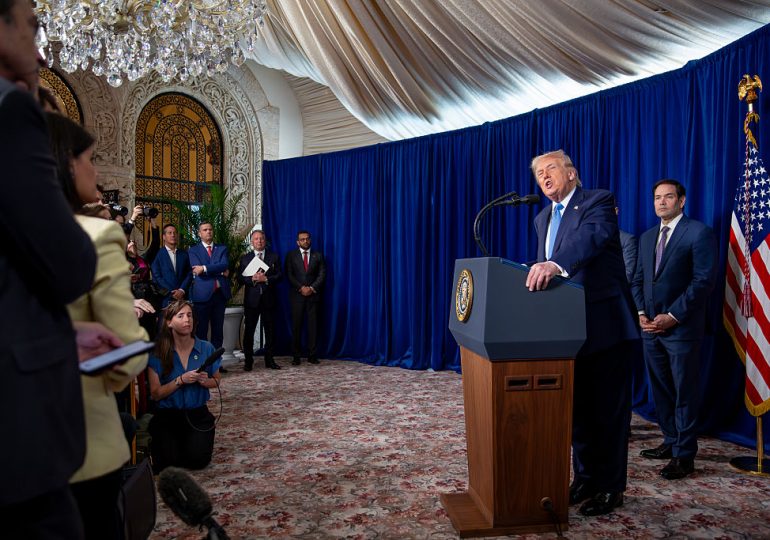
During a triumphant Saturday press conference, President Donald Trump proudly boasted of a U.S. military operation removing the brutal Venezuelan dictator Nicolas Maduro. The news diverted attention from America’s affordability crisis, the loss of health care coverage for millions, and the Epstein files. Instead, all eyes turned to Venezuela.
[time-brightcove not-tgx=”true”]
However impressively efficient the American strike may have been, the president’s motives have been muddled. Was it to curb drug trafficking? Halt Venezuelan migration? Boost democracy?
American oil industry interests quickly became Trump’s primary rationale.
“We’re going to have our very large United States oil companies, the biggest anywhere in the world, go in, spend billions of dollars, fix the badly broken infrastructure, the oil infrastructure, and start making money for the country,” Trump claimed. “We’re gonna rebuild the oil infrastructure, which will cost billions of dollars. It will cost us nothing. It’ll be paid for by the oil companies directly.”
The President repeated claims that the U.S. oil industry is interested in making the needed investment to revive the antiquated extraction and refining operations of Venezuela.
However, the leaders of this industry tell me directly that they had no advance knowledge and have no interest in making the massive investments needed to extract less desirable “heavy” Venezuelan crude oil. It is noteworthy that, while Venezuela holds 17% of the world’s oil reserves, the largest in the world, and yet only produces 1% of the output, no industry leaders have spoken out in favor of the U.S. invasion as an opportunity to regain assets expropriated by Venezuela in 2007.
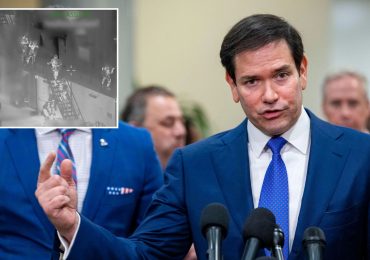
“I haven’t spoken to U.S. oil companies in the last few days,” admitted Secretary of State Marco Rubio the day after Trump’s declaration. “But we’re pretty certain that there will be dramatic interest from Western companies.”
This confidence is at best misplaced, and at worst, fabricated. Simply put: the economic incentives for investing in Venezuela’s oil sector are minimal and the potential costs are astronomical.
The economic state of the oil industry
In terms of incentives, the oil industry currently suffers from a massive supply glut. The International Energy Agency predicts that supply will exceed demand in 2026 by an astounding 3.85 million barrels per day, the equivalent of around 4% of global demand. Plus, OPEC production is soaring, Chinese energy stockpiles are filled, Saudi Arabia plans to increase their oil output by a third, and the oil stored on tankers has risen in recent weeks to its highest point since April 2020, when consumption tanked as a result of COVID-19 pandemic shutdowns.
Because of this supply glut, oil prices are almost half of what it was last year. And with WTI oil prices at $57 per barrel (just a fraction of the $380 per barrel worst-case forecast by JP Morgan after Russia’s invasion of Ukraine) there is little incentive for this invasion to be linked to oil supply needs.
Despite Trump’s chants at pep rallies, there has been no “drill baby, drill” zeal in the oil industry. In fact, it’s much the reverse. For instance, the oil services company Baker Hughes has cut its number of oil rigs to their lowest since September 2021 And the industry-wide oil and gas rig count declined by about 5% in 2024 and 20% in 2023 as lower U.S. oil and gas prices prompted energy firms to focus more on boosting shareholder returns and paying down debt rather than increasing output.
The surge in supply is largely due to increased OPEC production, especially that of the Saudis which had been voluntarily cut by a third during the Biden years despite the paradoxical high prices then.
But rather than being energized by Trump’s “drill baby, drill” chants at pep rallies, the U.S. oil industry has gone into retreat. Many U.S oil giants such as Chevron, Exxon, ConocoPhillips, and Occidental have been forced to lay off thousands of workers over the past year. ConocoPhillips announced plans to cut up to 25% of its global staff. Chevron also announced plans to lay off up to 20% of its workforce by 2026. Halliburton also announced they would be reducing their workforce last year. Lower oil prices have made 22 public U.S. producers in total—not including Exxon or Chevron—cut their capital spending by $2 billion. Many U.S. producers are waiting for oil prices to increase before they raise production, requiring between $70 and $75 a barrel to put rigs back into operation.
On top of this weakened state of the oil industry, the U.S. producers have little interest in Venezuelan reserves because much of it is termed “heavy oil,” a thick, viscous product, which is far harder to extract and move compared to the domestic U.S. sources.
Beyond the limited market demand, the other hindrance has to do with the unknown, but likely astronomical, cost for overhauling the Venezuelan oil infrastructure which has lacked investment for a quarter century as a consequence of government expropriation under Maduro’s predecessor Hugo Chavez. International tribunals awarded billions to the U.S. oil companies at the time, but after the firms ultimately failed to obtain these damages, these Venezuelan assets were largely written off.
Wisely, Senate Minority Leader Chuck Schumer has highlighted these challenges. “These oil fields have been in disrepair for years. We have no idea how long it’s going to take, how much it’s going to cost, and whether we need military troops guarding the oil fields while we do it,” he noted.
However, most of his congressional colleagues have bought Trump’s assertion that the oil industry commercial motives were behind his invasion. For example, Senator Chris Van Hallen complained that “this, from the beginning, has been about getting rid of Maduro, grabbing Venezuela’s oil for American oil companies and Trump’s billionaire buddies.”
“This seems to be mostly about oil and natural resources. Donald Trump’s entire foreign policy is corrupt, Russia, the Middle East, and now Venezuela. It is all about making money for his friends,” similarly stated Senator Chris Murphy.
Though I understand such criticisms they, perhaps accidentally, validate Trump’s claims that Venezuelan oil is a rational, if disagreeable, motivation for his strike. It is not. So why would Trump emphasize oil interests?
Trump’s deflection technique
In my upcoming book, Trump’s Ten Commandments (Simon & Schuster/Worth), I explore how effectively Trump can divert U.S. media attention from topics he finds too dangerous to his reign. I believe he often ignites political fires as means of distraction. Like Phil Spector’s musical “Wall of Sound,” it is impossible to focus on a single instrument all blaring at us at once.
Some critics have termed Trump’s approach akin to distracting Americans with a “shiny new object.” Others refer to it as a “wag-the-dog” technique, in which a president creates a diversion from scandal by manufacturing a crisis, like a fake war, to shift public focus. The expression is drawn from the maxim that if the tail was smarter than the dog, it would wag the dog instead of the other way around. Thus, this term implies a situation where a small or seemingly less important entity (the “tail”) controls larger, more significant events.
U.S. political leaders, business leaders, and media voices must be on-guard for being played by such intentionally effective distractions always. But in the case of Venezuela, with a haunting history of “Ugly American” conduct in Latin America, we should all be especially alert. And given the surge of projected energy demand as America competes in the global AI race, it is of strategic importance that we not allow Trump to twist economic and geopolitical reason.
It is dangerous for Trump to use the oil industry as a foil to divert attention from the domestic issues that are driving down his polling numbers. For Trump, the real victory is likely not that he captured Maduro but that he drove all public discussion of the Epstein files, healthcare coverage, inflation and affordability, the independence of the Fed, and the failures of his tariff regime from the airways and newspapers.
Leave a comment