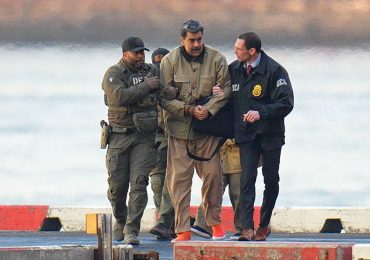
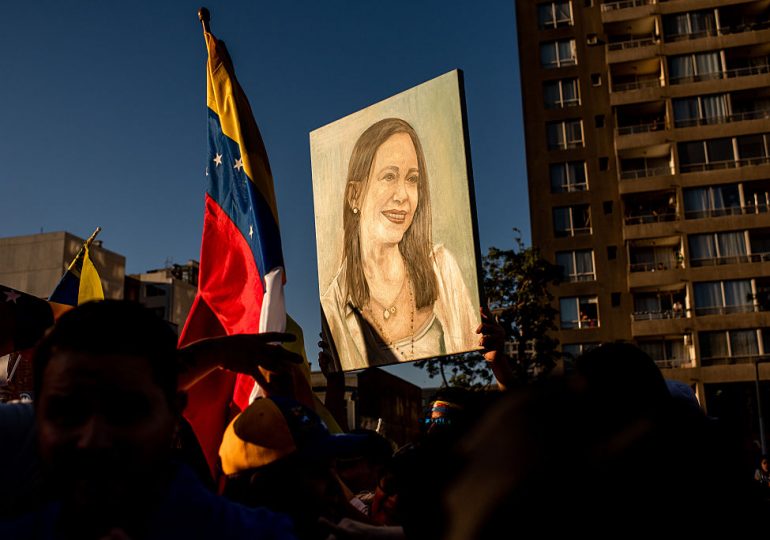
President Trump spoke for nearly an hour on Saturday about why he launched a massive military operation to capture Venezuela’s dictator Nicolás Maduro and fly him to New York to face drug trafficking charges. He said he wanted to end the Venezuelan government’s cooperation with drug cartels and for U.S. companies to take control of Venezuela’s vast oil reserves.
[time-brightcove not-tgx=”true”]
One word he didn’t mention: democracy.
Venezuela has been ruled by a dictatorship for more than a decade. Dissent and free speech is violently suppressed, and the courts and legislature don’t act independently. When Maduro lost reelection to the presidency in 2024, he denied the results and refused to leave office. The duly elected President of Venezuela, Edmundo González Urrutia, has lived in exile in Spain since then. María Corina Machado, González’s ally and the leader of Venezuela’s opposition, was banned from running against Maduro that year, and was living in hiding in Venezuela until last month. That’s when Machado escaped her home country to travel to Oslo to accept the Nobel Peace Prize, which she dedicated to Trump while voicing support for his strikes on alleged Venezuelan drug boats. None of it was enough to convince Trump to back Maduro as Venezuela’s rightful leader.
Asked on Saturday if he thought Machado could run the country after Maduro’s ouster, Trump distanced himself from Venezuela’s most visible democratic figure, saying it would be “very tough” for her. “She’s a very nice woman, but she doesn’t have the respect within the country,” Trump said.
Trump likely showed the world his authentic feelings about Machado, says Mark Montgomery, a senior fellow at the Foundation for Defense of Democracies. “Put on a lie detector, he probably isn’t a big fan because she stole his Nobel Prize,” says Montgomery.
Machado is a trained industrial engineer who was elected to Venezuela’s national assembly in 2010 and became a forceful critic of government abuse of power, one who was able to unite the fragmented opposition in the country. Machado and the opposition have gone to great lengths in recent months to make clear they are ready to lead the country, laying out a plan to restore basic liberties and the private economy and end the government’s cooperation with blackmarket drug smugglers. For now, Trump has cast that plan aside.
“It’s a tremendous strategic and moral mistake” for Trump to distance himself from Machado, says Ian Vásquez, an expert on Latin America at the Cato Institute. To say Machado doesn’t have support inside Venezuela is “patently untrue,” says Vásquez.
Instead of insisting the elected opposition be installed to replace Maduro, Trump’s cabinet is currently trying to work with Maduro’s second in command, Vice President Delcy Rodríguez, to comply with Trump’s orders, under the threat of force. During his Saturday remarks, Trump said Rodríguez “really doesn’t have a choice” and “is essentially willing to do what is necessary to make Venezuela great again.” But within hours, Rodríguez demanded Maduro’s release and said her government is “ready to defend Venezuela” which will “never again” be a “colony” of an empire. Trump threatened Rodríguez on Sunday morning, saying, “if she doesn’t do what’s right, she is going to pay a very big price, probably bigger than Maduro.”
Read more: Who is Delcy Rodríguez, Venezuela’s New Leader?
Venezuela’s future remains in limbo. Trump could still embrace Venezuela’s opposition, particularly if the existing government doesn’t bend to his threats. He could use American leverage to demand Venezuela’s authorities hand over power to a democratically elected leadership. There’s also another audience that may come to mind for Trump later this month: the Nobel Committee. The next Nobel Peace Prize will be given out for actions taken over the last year before Jan. 31. “If Trump were smart and he’s really committed to winning the Nobel Prize,” says Montgomery, ”he would push hard for the installation of democracy in Venezuela—the installation of the properly elected opposition parties over the next month.”
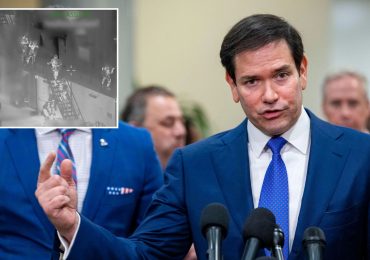
Secretary of State Marco Rubio described Machado as “fantastic,” on Sunday on NBC’s Meet the Press, noting that he’s known her for a “very long time.” But, Rubio said, “we are dealing with the immediate reality. The immediate reality is that unfortunately and sadly…the vast majority of the opposition is no longer present inside Venezuela.”
Instead of installing the democratically elected opposition, the Trump administration is demanding the existing leadership reshape the country’s dealings with Cuba, Iran, Russia and drug smugglers. Asked about when Trump will push for an election in Venezuela, Rubio said that wasn’t the first priority. “The first steps are securing what is in the interest of the United States—and also beneficial to the people of Venezuela—no more drug trafficking, no more Iran/Hezbollah presence there and no more using the oil industry to enrich all of our adversaries around the world,” Rubio said.
Leave a comment