Sexual violence committed by some of the most powerful and visible people in society continues to dominate public attention, from Jeffrey Epstein to Sean Combs to diplomat Robinson Juma Twanga. While these high-profile cases break through the silence and expose the egregious abuses of men whose standing insulated them for years, millions of survivors, particularly migrant women, remain invisible, and countless perpetrators go unpunished.
[time-brightcove not-tgx=”true”]
As we face the realities of sexual violence in our country and learn about cases around the world, where justice for survivors is too often denied or delayed, we cannot continue to ignore the women who are most at risk and least protected. True accountability requires that we also fight for those whose names we may never know, but whose lives and safety matter just as much.
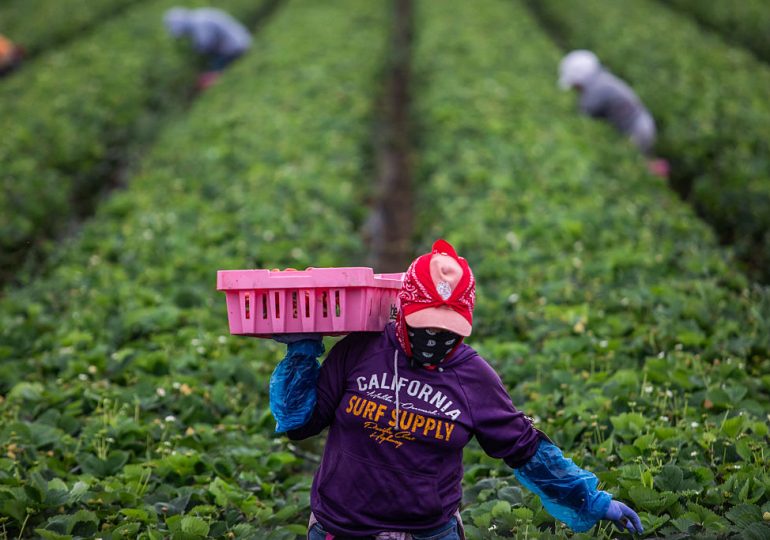
Migrant women in agriculture, food processing, and domestic work face staggering rates of harassment and assault. A recent UN Women article highlights that migrant women are employed in largely unregulated sectors, including as domestic workers and in the care sector, where limited oversight and work inside private homes leave them especially vulnerable to abuse. Similarly, an estimated 65% to 80% of farmworker women experience sexual harassment.
The lack of visibility, oversight and regulation of these jobs often exposes migrant women to exploitation and violence without meaningful protection. Reporting an assault can be dangerous. In many cases, the perpetrator is also the employer who controls not only wages and work hours, but housing and transportation, creating an extreme power imbalance in which retaliation can mean losing a job, losing shelter, or being forced deeper into poverty.
For some survivors, the police may be a reliable source of protection and pathway to justice. On the contrary, an immigrant survivor in the same scenario may avoid reporting an assault due to fear and heightened risks of engaging with law enforcement.
If a survivor in a rural community seeks support from a healthcare provider, they may find the care and resources available are extremely limited, lacking in cultural competence, language access, and the ability to honor their experiences.
Regardless of immigration status or background, survivors share a common fear: being disbelieved or dismissed. We’ve seen how women who speak publicly about sexual assault or harassment are met with disproportionate scrutiny and ridicule, from Christine Blasey Ford’s allegations against Brett Kavanaugh during the Supreme Court confirmation hearings to high-profile actors/activists like my friend Ashley Judd, one of the first survivors to courageously come forward with allegations against Harvey Weinstein.
The Epstein case is yet another reminder of how power can both obscure harm and suppress the voices of survivors.
One notable thing that few people are focused on is the fact that some of the survivors of the violence by Epstein and his network were lured under the guise of employment. Perpetrators used deception to move them across country borders and subjected them to harm under the pretense of employment. For example, the late, brave survivor Virginia Roberts Giuffre, wrote in her posthumous memoir that she was told that she was being taught to be a masseuse when she was recruited to work for Epstein, only to be subjected to sexual violence and other harm. Like Guiffre and the other survivors, migrant women are also often violated and harmed under the pretense of employment, or for the mere opportunity to work.
For years, I have referred to this as workplace sexual violence, but the violence does not always occur at a place of work. Instead, it occurs through the false promises of work, or under the threat of losing continued employment.
All of these elements push survivors into silence, or worse, cause their experiences to go unseen, uncounted, and unsupported.
They are often too scared, too embarrassed, too traumatized, and too uncertain about their rights that they remain in the shadows, left to pick up the pieces and try to heal.
Each time survivors’ stories are made public, we face a dual reality. On the one hand, as survivors, speaking our truth is power. At the same time, as others report on our truths, these details are painful. The public and the press must be gentle and remember that there are people behind those stories, those files, and those facts.
And while some stories may come into the open, millions more will remain invisible, including those of migrant women. Migrant women—and any survivor—should have their stories heard if they choose to share them. They should also be believed. They should be protected, supported, and helped by the legal system, healthcare providers, and by community members where they work and live.
If our country is serious about confronting sexual violence, it must start where exploitation is most routine and accountability is most absent. Migrant women do not need sympathy; they need enforcement, safe reporting mechanisms, and the basic freedom to work without fear.
Leave a comment