Greenland’s prime minister declared on Tuesday that his government would stand with Denmark rather than the United States, a blunt rebuke to President Donald Trump’s push to take control of the vast Arctic island ahead of high-stakes talks with high-ranking White House officials.
[time-brightcove not-tgx=”true”]
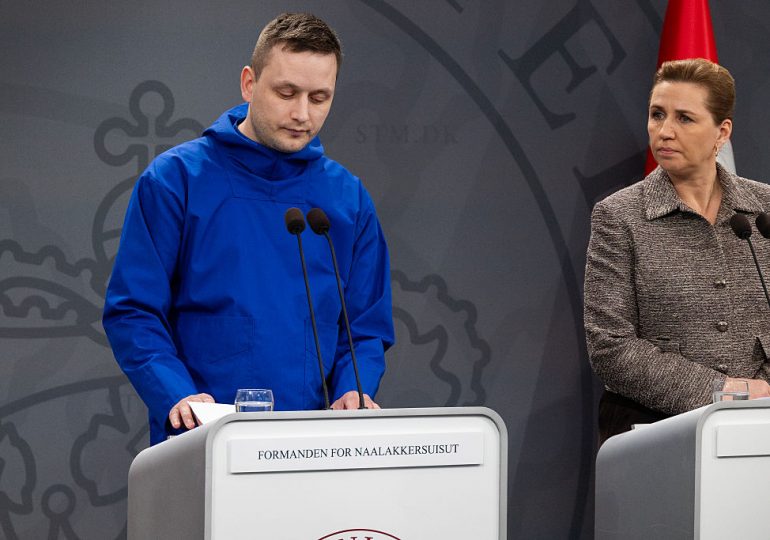
“We are now facing a geopolitical crisis, and if we have to choose between the United States and Denmark here and now, we choose Denmark,” Greenland’s prime minister Jens-Frederik Nielsen said at a joint news conference in Copenhagen with Denmark’s prime minister Mette Frederiksen. “We choose NATO. We choose the Kingdom of Denmark. We choose the EU.”
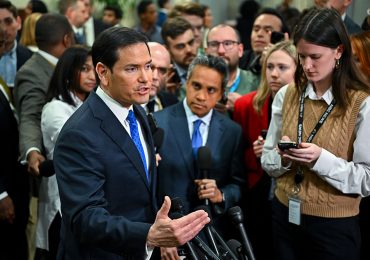
The comments came a day before Denmark’s foreign minister, Lars Løkke Rasmussen, and Greenland’s foreign minister, Vivian Motzfeldt, are set to meet on Wednesday at the White House with Vice President J.D. Vance and Secretary of State Marco Rubio, a gathering sought by Danish and Greenlandic officials after Trump escalated his rhetoric in recent days.
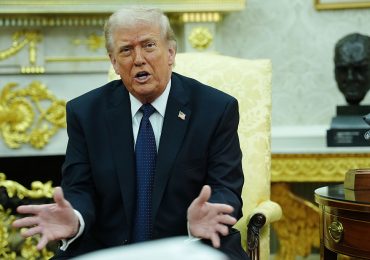
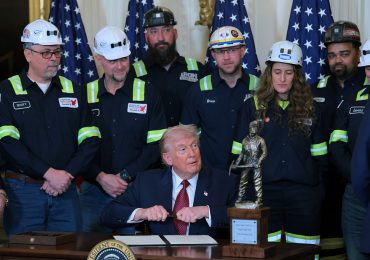
Trump has repeatedly said that Greenland—a semi-autonomous territory within the Kingdom of Denmark since 1953—is vital to American national security and that the United States must own it to prevent Russia or China from gaining a foothold in the Arctic. Over the weekend, he suggested that the U.S. would acquire the island “one way or another.”
“If we don’t take Greenland, Russia or China will take Greenland, and I am not going to let that happen,” Trump said on Sunday. Administration officials have acknowledged that all options remain under consideration, including military force.
Greenlandic and Danish leaders made clear on Tuesday they are taking Trump’s threats seriously. “One thing must be clear to everyone,” Nielsen said on Tuesday. “Greenland does not want to be owned by the United States. Greenland does not want to be governed by the United States. Greenland does not want to be part of the United States.”
Read more: Denmark’s PM Opens Up About Fiery Trump Call, Greenland and NATO’s Future
Frederiksen, standing beside him, said Denmark was facing “completely unacceptable pressure from our closest ally,” a striking assessment of relations with the United States, which has been Denmark’s most important security partner for decades. Denmark is a founding member of NATO and has fought alongside American forces in Afghanistan and Iraq. Greenland, as part of the Danish realm, is covered by NATO’s collective defense guarantees, meaning any use of force against it would reverberate across the alliance and risk a severe rupture in transatlantic relations.
“It is not easy to stand up to the United States,” Frederiksen said. “But there are many indications that the most challenging part is ahead of us.”
Asked on Sunday about the potential consequences of disrupting NATO, Trump suggested the U.S. held all the power in the relationship. “They need us more than we need them,” he said.
“Greenland should make the deal because Greenland does not want to see Russia or China take over,” Trump added. “Basically, their defense is two dog sleds. You know that? You know what their defense is? Two dog sleds.”
Greenland’s coalition government issued a statement this week rejecting Trump’s remarks outright. “This is something that the governing coalition in Greenland cannot accept under any circumstance,” the statement said, adding that Greenland’s defense “must therefore be through NATO.”
Nielsen said on Tuesday that Greenland has “huge faith in the NATO alliance and that NATO supports us in this situation.”
Although Greenland has been ruled by Denmark for centuries, it established its own Parliament in 1979 and gained self-rule in 2009. While all parties in Greenland’s parliament support eventual independence, Greenland has never scheduled a referendum on independence, mainly due to its continued economic dependence on Denmark.
An early 2025 poll found that 85% of Greenlanders do not want to become Americans, and that 56% would vote for independence.
Naaja Nathanielsen, Greenland’s minister for business and mineral resources, said Tuesday that people in Greenland are “concerned” about the U.S. push to annex the island. “It causes a great deal of worry about the future,” she said at a press conference in London. “People are reporting difficulties to sleep. This is really filling the agenda and the discussions around the households. It’s a massive pressure that we are under and people are feeling the effects of it.”
“We are an American ally, but we do not see ourselves as becoming Americans,” Nathanielsen added. “We are quite happy with being part of the Kingdom of Denmark.”
The White House meeting on Wednesday will be hosted by Vance, who visited Greenland last March, and will also include Rubio. Rasmussen said Denmark and Greenland requested the talks to deescalate the standoff.
“Our reason for seeking the meeting we have now been given was to move this whole discussion into a meeting room where we can look each other in the eye and talk about these things,” Rasmussen told reporters on Tuesday.
Nathanielsen suggested that Greenland would be willing to talk with the U.S. about increasing U.S. access to the island’s critical minerals, in addition to Trump’s stated goal of national security.
Trump’s remarks have also drawn pushback from Congress, where several lawmakers have warned that any military action against Greenland would be unconstitutional, noting that only Congress can declare war. A bipartisan group of House members this week introduced legislation aimed at blocking the use of force against NATO allies.
But Trump has shown little sign of retreat. His threats have instead pushed Greenlandic and Danish leaders closer together—and into an unusually public confrontation with the United States.
Leave a comment