
Iranians have taken to the streets repeatedly over the past 17 years to protest their authoritarian government, but the demonstrations now unfolding appear to be the largest yet.
As in previous crackdowns, security forces have responded with riot police, tear gas, and live ammunition. Hundreds, if not thousands, of protesters have been killed.
[time-brightcove not-tgx=”true”]
President Donald Trump has repeatedly said the United States would intervene on behalf of the protesters. So far, it has not.
Why are the Iran protests happening?
Iran’s economy has gone into free fall. On Dec. 28, the rial plunged to 1.48 million to the dollar, triggering protests by merchants in Tehran’s central bazaar who said they could no longer conduct business. Ordinary Iranians, watching their purchasing power evaporate by the hour, soon joined them. Within a week, demonstrations had spread to all 31 provinces.
Read more: From Los Angeles to London: Worldwide Protests in Solidarity With Iranians
As the protests grew, demands shifted from economic relief to calls for the overthrow of the Islamic Republic. Iran’s theocratic regime, in power since 1979, is deeply unpopular among much of the country’s population of roughly 90 million. Analysts point to years of mismanagement and corruption, but say the economic collapse accelerated sharply after the United Nations reimposed sanctions in September over Iran’s pursuit of nuclear weapons.
The unrest has also been shaped by long-standing anger over social restrictions enforced by the state, including strict rules governing dress and personal behavior. Those policies sparked nationwide protests in 2022 following the death of a young woman while in custody.
Is what’s happening now related to the attack by Israel and the United States last June?
Not directly. Israel, which Iran’s leaders have vowed to destroy, targeted military facilities and—with assistance from U.S. bombers—severely degraded Iran’s nuclear infrastructure. Israel also killed senior Iranian commanders and struck symbolic regime targets.
But the 12-day conflict compounded other setbacks for Tehran, including major blows to Iran-backed militias in Lebanon (Hezbollah) and Gaza (Hamas). Together, those losses left the regime politically weakened, even as it moved to project strength at home.
Trump’s decision to deploy B-2 bombers, meanwhile, established a precedent for U.S. intervention beyond the Western Hemisphere, raising expectations among some Iranians that Washington might act again.
How many protestors have died in Iran?
At least hundreds, and possibly thousands. An exact figure remains impossible to confirm.
Iran shut down the internet and phone networks on the evening of Thursday, Jan. 8, as the largest demonstrations were underway and security forces moved to confront crowds. During a similar shutdown amid economic protests in 2019, authorities subsequently used live fire against demonstrators.
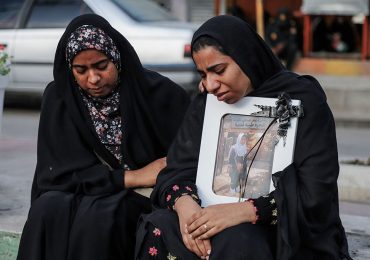
That pattern appears to have repeated. By Friday morning, six hospitals in Tehran alone had received the bodies of at least 217 protesters, a doctor told TIME. Tehran has many more hospitals, but with no additional leaks, the full toll from that night and those that followed remains unknown.
Images smuggled out of the country showed a Tehran-area morgue packed with hundreds of bodies from Thursday night alone. Based on those images and the hospital report, some analysts fear the death toll could reach into the thousands. As of Jan. 11, a respected human rights group operating amid the communications blackout said it had confirmed 544 deaths.
Is anyone leading the protests?
There is no indication the protests were organized by a single group. As with nationwide demonstrations in 2017, 2019, and 2022, the current unrest appears to have erupted spontaneously in response to government actions. In 2019, for example, it was the rise in gas prices. The absence of formal leadership reflects, in part, the state’s systematic arrest of civil society figures.
As the protests gained momentum, Reza Pahlavi, the son of Iran’s last shah, began posting messages calling for a general uprising. Some demonstrators appeared receptive: the largest gatherings coincided with the times and locations he suggested, and crowds in several cities chanted his name.
Pahlavi, 65, has lived in the United States for most of his life since his father, Mohammad Reza Shah, was deposed during the 1979 Islamic Revolution. In social media messages, he has said he does not seek to restore the monarchy, but wants to serve as a unifying figure during a transition to a secular democracy.
Read more: Iranians Are Protesting. Reza Pahlavi Can’t Save Them
Other prominent dissidents, including Nobel laureate Narges Mohammadi, remain inside Iran as political prisoners.
Who runs Iran now? Could he be abducted, like Venezuela’s Nicolas Maduro?
The title carried by Ayatollah Ali Khamenei sums things up pretty neatly: Supreme Leader of the Revolution. Now 86, Khamenei has had the final say on what happens in the Islamic Republic of Iran since being promoted by a panel of fellow clerics in 1989.
Long rumored to be in declining health, he has kept a low profile since the 12-day war, during which Israel’s prime minister said Khamenei could have been targeted but was waved off by Trump. Khamenei is known to live modestly, and sometimes deep underground.
Unlike Venezuela’s former president, Khamenei is not named in U.S. criminal indictments. But according to Justice Department filings in 2024, intelligence units of Iran’s Islamic Revolutionary Guard Corps— which report directly to the Supreme Leader—were involved in plots to assassinate Trump.
Read more: The Danger of the Maduro Model for Iran
Why is the U.S. against Iran?
Before 1979, Iran and the United States were close allies, as was Israel. That relationship ended with the Islamic Revolution, whose leaders defined the new Islamic Republic in opposition to what they saw as Western domination, embodied by the U.S. and its support for the Pahlavi monarchy. American hostility hardened after Iranian students seized the U.S. Embassy in Tehran and held American diplomats hostage for 444 days.
The two countries did made tentative overtures in the late 1990s, when Iranians were electing politicians on promises of greater personal freedom and openness. But Khamenei and fellow conservatives used the powerful levers of clerical rule to derail the Reform movement. Its last gasp was in 2009, when a Reformist president who had clearly won the election was placed under house arrest instead of sworn into office. In protest, hundreds of thousands of Iranians went into the streets and were confronted by security forces with batons and shotguns.
Leave a comment