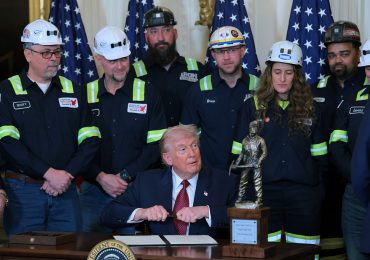
Europe vowed a united response after President Donald Trump said he would impose tariffs on eight of its allies for sending troops to Greenland, an autonomous territory of Denmark that the president has repeatedly threatened to annex.
[time-brightcove not-tgx=”true”]
Trump said Saturday he would introduce 10% tariffs on imports from Denmark, Norway, Sweden, France, Germany, the United Kingdom, the Netherlands and Finland, all of which sent small numbers of military personnel to Greenland in recent days to take part in military exercises.
The move, which comes as Trump has stepped up his campaign to annex the territory, prompted a wave of condemnation from the leaders of the ostensible U.S. allies, which were already subject to tariffs of 10% and 15%. The row could call into question trade deals the U.S. struck with the U.K. in May and the European Union in July.
Read more: On Eve of Crunch Talks with U.S., Greenland Declares: ‘We Choose Denmark’
On Sunday, the eight countries issued a joint statement declaring that they “stand in full solidarity with the Kingdom of Denmark and the people of Greenland.”
“As members of Nato, we are committed to strengthening Arctic security as a shared transatlantic interest. The pre-coordinated Danish exercise Arctic Endurance conducted with Allies, responds to this necessity. It poses no threat to anyone,” the statement said.
“Tariff threats undermine transatlantic relations and risk a dangerous downward spiral. We will continue to stand united and coordinated in our response. We are committed to upholding our sovereignty,” it added.
A day earlier, Trump’s announcement set off a firestorm across European capitals as he threatened tariffs in his latest effort to acquire the territory of Greenland for the United States.
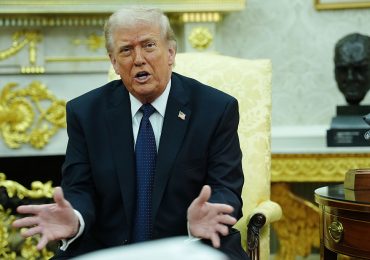
“Denmark, Norway, Sweden, France, Germany, The United Kingdom, The Netherlands, and Finland have journeyed to Greenland, for purposes unknown. This is a very dangerous situation for the Safety, Security, and Survival of our Planet,” Trump said in a Truth Social post Saturday announcing the tariffs.
Trump added that the tariffs would increase to 25% on June 1, and would remain in effect “until such time as a Deal is reached for the Complete and Total purchase of Greenland.”
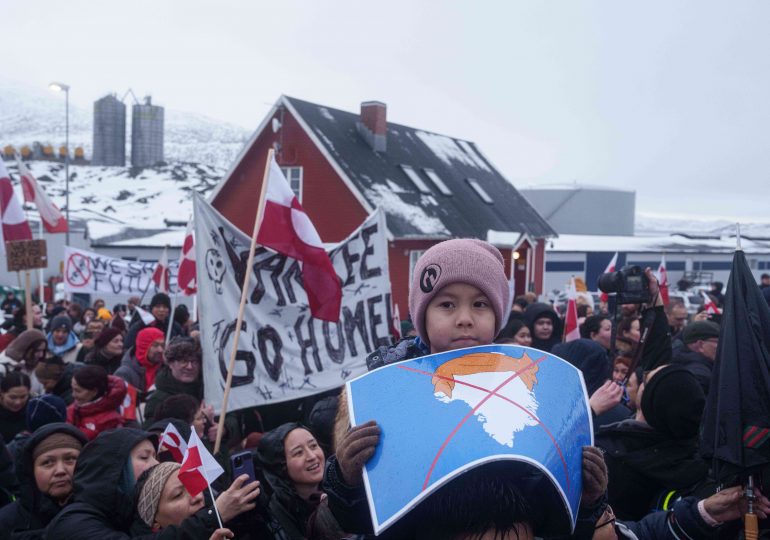
His comments came as thousands rallied on Saturday in the Danish cities of Copenhagen, Aarhus, Aalborg and Odense, as well as in Greenland’s capital, Nuuk, to oppose Trump’s annexation plans. In Nuuk, hundreds marched to the U.S. consulate, some holding signs that read “Greenland is not for sale,” and “Yankees go home!”
The tariff announcement drew unusually blunt reactions from the leaders of some of America’s closest allies on Saturday.
“Applying tariffs on allies for pursuing the collective security of NATO allies is completely wrong,” British Prime Minister Keir Starmer said, adding that he would raise the issue directly with the White House.
“Our position on Greenland is very clear—it is part of the Kingdom of Denmark and its future is a matter for the Greenlanders and the Danes,” he continued.
French President Emmanuel Macron called the tariffs “unacceptable.”
“No intimidation nor threat will influence us, neither in Ukraine, nor in Greenland, nor anywhere else in the world when we are confronted with such situations,” he said.
Trump’s threat is likely to prompt a reciprocal response from Europe. The European Union summoned ambassadors to an emergency meeting in Brussels on Sunday, and Reuters reported the bloc could suspend its work on a U.S. trade deal it struck in July.
European Council President Antonio Costa said Saturday he was “coordinating a joint response from the European Union’s member states on this issue.”
Speaking on Sunday, German finance minister and vice chancellor Lars Klingbeil said: “And so the very clear signal: we will not be blackmailed, and there will be a European response.”
Trump has argued that anything less than total U.S. control of Greenland would be “unacceptable, ” and has said that annexing the territory is necessary for “national security.”
European nations, meanwhile, have strongly opposed the U.S. takeover of Greenland.
Earlier this week, Denmark increased its military presence on the island and conducted joint military exercises with the European allies targeted by Trump’s tariffs.
Denmark’s foreign minister, Lars Løkke Rasmussen, told reporters during a visit to Washington this week that Denmark was reinforcing security in the Arctic “by committing additional funds for military capabilities—not dogsleds, but ships, drones, fighter jets, etc,” referring to an often-repeated jibe by Trump that Denmark’s military presence on the island consisted entirely of dogsleds.
Several European NATO allies announced they were also sending military personnel to the island after Danish representatives emerged from meetings at the White House, declaring they had “fundamental disagreements” with the Trump administration over who should control Greenland.
Announcing France’s involvement in the military exercises in Greenland, Macron took aim at Trump’s ambitions.
“We live in a world where destabilizing powers have awakened,” Macron said.
“We are seeing certainties that sometimes lasted for decades being called into question, and Europe is being shaken in some of its certainties,” he said. Europe “sometimes has allies that we thought were predictable, always by our side, who are now causing us to have serious doubts, or even turning on those who doubted the least.”
The United Kingdom, Germany, Sweden and Norway have also sent troops to take part in the military exercise, Operation Arctic Endurance.
Greenland’s leaders and people have been clear in their opposition to the possibility of the U.S. taking control of the territory. Greenland’s Prime Minister Jens-Frederik Nielsen said this week that the island would choose Denmark over the U.S. if it had to choose, while polls show that Greenlanders overwhelmingly oppose the idea of becoming part of the U.S.
“Our country is not an object of superpower rhetoric. We are a people. A land. And democracy,” Nielsen said earlier this month. “This has to be respected. Especially by close and loyal friends.”
Trump has frequently used tariffs as a foreign policy tool during his second term, negotiating deals with India, China, and the U.K. to lower tariffs in exchange for concessions on his policy priorities.
Leave a comment