
[time-brightcove not-tgx=”true”]
When President Donald Trump promised Iranian protesters that “help is on its way,” he probably didn’t anticipate how those words would trap him. Human rights groups are estimating the number of Iranian protesters killed as ranging from “more than 2,600 people” to “more than 3,400 people” and CBS News is reporting the death toll as “at least 12,000, and possibly as many as 20,000 people.” Trump faces a choice that may define his second term: strike Iran militarily, pursue a hasty nuclear deal, or watch as the regime he threatened to overthrow stabilizes itself through mass violence.
The cold arithmetic of politics suggests none of these options end well. The real cost may be measured in something less tangible: the credibility of American promises to people who risk everything. We may never know whether Trump’s words emboldened these particular protesters but dissidents who rise up in the next upheaval—whether in Iran or elsewhere—will remember that as makeshift morgues were overflowing in Iran, the American assistance that had been promised did not arrive.
And the world is watching.
From my years covering the aftermath of America’s Iraq intervention, I have learned that the space between bold declarations and workable strategy is often filled with the lives of people we claim to want to save. Trump’s rhetoric has raised expectations while simultaneously narrowing his own room for maneuver. The regime in Tehran, meanwhile, has called his bluff by doing exactly what he warned them not to do—and doing it with staggering brutality.
The deployment of the U.S.S. Abraham Lincoln carrier strike group to the Middle East signals Washington’s seriousness. But seriousness about what, exactly? Here’s where the president’s predicament becomes painfully clear: the Trump Administration hasn’t decided whether it wants to overthrow the Iranian regime or negotiate with it. These are fundamentally incompatible objectives, yet the Trump team is pursuing both simultaneously.
Steve Witkoff, the president’s special envoy, has publicly stated that he hopes for “a diplomatic resolution” while outlining demands that Iran reduce its enriched uranium stockpile, curtail missile development, and abandon regional proxies. These are reasonable goals but Iran has spent four decades building its security architecture around precisely these capabilities. Hawks like Secretary of State Marco Rubio argue the regime’s lack of credibility makes any deal worthless. Both positions have merit. Neither resolves the fundamental question: what does America want the day after tomorrow in Iran?
Israel and the Gulf Arab countries—despite their profound hostility toward Tehran—are privately urging caution, telling the Trump Administration that the Iranian regime may not be weakened enough for military strikes to deliver the decisive blow. Trump faces a strategic bind. A limited strike would accomplish little beyond giving the Iranian regime a nationalist rallying cry and potentially salvaging its tattered legitimacy. A comprehensive military campaign would require sustained operations, risk massive civilian casualties, endanger U.S. forces across the region, and almost certainly draw Israel into direct confrontation with Iran.
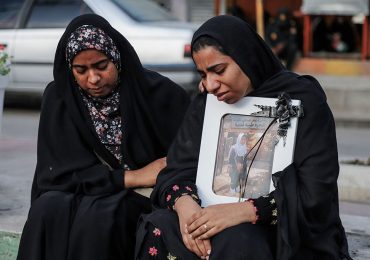
Consider what we know about the Iranian regime’s crackdown on the protesters. Verified videos show improvised morgues filled with hundreds of body bags. Hospitals report being overwhelmed with gunshot victims. The regime imposed an internet blackout to obscure the scale of violence, and has admitted to around 2,000 deaths. Even the lower estimates of number of protesters killed in Iran exceed the death toll in any previous crackdown on protests in the Islamic Republic’s history.
This represents a fundamental break between the Iranian state and its citizens. When a government kills thousands of its own people for protesting economic conditions, it crosses a threshold from which there’s no easy return. The Islamic Republic has weathered protests before by mixing repression with tactical concessions. This time, it has chosen only repression—and at a scale that makes reconciliation impossible.
We have seen this dynamic before. In Syria after 2011, Bashar al-Assad’s regime made a similar calculation: total violence now to prevent uncertain outcomes later. It worked, in the sense that Assad survived. It also created a country that will never be whole again, where hatred of the government became a defining feature of an entire generation.
Trump’s promise that “help is on its way” now rings hollow. When a U.S. president makes threats and fails to follow through, adversaries adjust their calculations. When he makes promises to people in the streets and abandons them, they remember—and so do people in the next country, facing the next dictator.
The history of American rhetoric versus action in the Middle East is long and bitter. Iraqis remember when President George H.W. Bush encouraged them to rise up against Saddam Hussein in 1991, then watched as Saddam’s helicopters massacred tens of thousands of Shiites. Syrians remember when President Barack Obama declared that Assad must go, then did nothing as red lines were crossed. Now Iranians are learning the same lesson.
American power in the region rests partly on military capability but equally on the perception that Washington means what it says. Every unfulfilled promise weakens that foundation. Trump may believe he is being prudent. History may judge him correct. But protesters who believed him will draw different conclusions.
Yet the brute reality is that following through might be worse. The Trump Administration has no clear theory of victory. Limited strikes won’t achieve regime change. Comprehensive military action could destabilize the entire region without guaranteeing a better Iran emerges from the rubble. This leaves negotiations, which Iran has reportedly initiated through back channels. But past negotiations foundered on less ambitious demands.
Meanwhile, the Iranian regime is doing what authoritarian governments do: surviving. The protests have subsided underwhelming force. Security forces are conducting door-to-door searches, confiscating satellite dishes to identify protesters. This grinding machinery of repression is brutally effective in the short term.
Trump’s fundamental problem is that he has created expectations he cannot fulfil without costs he may not be willing to pay. His own advisors can’t agree on what intervention would accomplish. And the carrier group steaming toward the Persian Gulf signals capability without clarity of purpose.
This is why doing nothing may be Trump’s hardest choice—not because it is wrong, but because it contradicts everything he has said. The president who promised that “help is on its way” now confronts the oldest lesson of Middle East interventions: dramatic promises are easier to make than strategic outcomes are to achieve.
From Baghdad, I learned that wars begin with clarity and end in confusion. Trump’s Iran policy seems to have started with confusion. Every day of indecision is a day the regime uses to consolidate control. The protesters deserved better. So did U.S. foreign policy. Trump’s promise may prove more damaging than his silence would have been.
Leave a comment