The U.S. was one of the first countries to join the World Health Organization (WHO) when it was created in 1948 as part of the United Nations. But on Jan. 22, 2026, it officially withdrew from the global health group.
The U.S. has historically been the largest funder to the WHO, through both its assessed and voluntary contributions, so the departure is poised to disrupt both global and domestic health. “This is one of the most penny-wise and billion-dollar-foolish moves,” says Michael Osterholm, director of the Center for Infectious Disease Research and Policy at the University of Minnesota.
[time-brightcove not-tgx=”true”]
Here’s what to know.
Is the U.S. officially out of the WHO?
The WHO’s charter does not contain a clause allowing member states to withdraw. But in agreeing to join decades ago, the U.S. Congress included an option to leave the organization as long as the U.S. gave a year’s notice and met its financial obligations by paying its dues in full.
The first condition appears to have been met: A year ago, President Donald Trump gave notice that the U.S. would withdraw. But the U.S. has not paid its outstanding dues—including from the final year of the Biden Administration.
The WHO’s principal legal officer Steven Solomon said during a press briefing on Jan. 13 that the matter will be discussed by the organization’s executive board, which is scheduled to meet in February, and those talks could extend to the General Assembly that meets in May. “We look forward to member states discussing this,” he said. “Because these questions of withdrawal—questions of the conditions, the promise, and agreement reached between the U.S. and World Health Assembly [of the WHO]—these are issues reserved for member states, and not issues WHO staff can decide.”
Will the U.S. be prevented from working with the WHO?
Dr. Tedros Ghebreysus, WHO Director-General, has said he is open to accepting the U.S. back as a member and hopes it will reconsider the decision to withdraw.
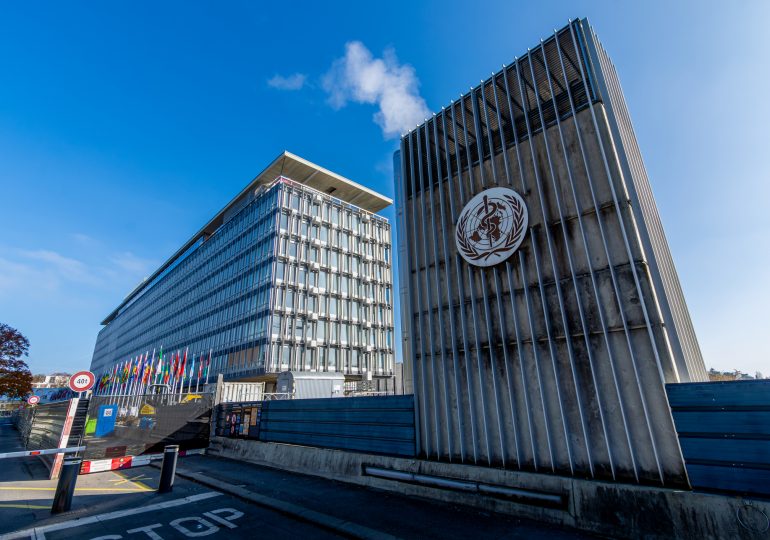
“WHO has signaled—very intentionally, I think—that they want to continue to work with the U.S.,” says Dr. Judd Walson, chair of international health at the Johns Hopkins Bloomberg School of Public Health. “The flag of the United States continues to fly outside the WHO building [in Geneva], and that’s not a mistake. It’s a very intentional signal that they welcome us to re-engage.”
Read More: Bill Gates: I’m Still Optimistic About Global Health
Osterholm says researchers will likely continue to stay in touch with their global-health colleagues, but on an individual level that lacks the coordination and clout of federal-level participation. The yearly update of the flu vaccine is a good example. “The flu world has always been very close globally,” he says. “I am quite convinced that there will be unofficial information-sharing among this group. The question is, at what point does that information have to be official in order for companies to take action deciding which vaccine strains they are going to use?”
Walson sits on a few WHO committees and says he asked his colleagues there whether the U.S. decision changed his ability to participate. “They said absolutely not—that as a U.S. citizen, I still have the capacity to participate in the workings of the WHO. And there are scientists and technical experts engaging to continue to maintain our access [to the WHO] at the individual level. Clearly we have lost the coordination of all of these activities, but we will still have some engagement.”
Solomon echoed that intention. “While there is an open question when and how withdrawal happens, there is not an open question about what the constitution says about WHO’s overall mission. The constitution sets out the objective for the organization, of health for all people, wherever they live and without discrimination.”
What will change now that the U.S. is no longer a member of the WHO?
One of the first things that could change for U.S. scientists is their access to databases that are important for monitoring infectious diseases like influenza, as well as emerging threats that could affect the health of Americans, such as COVID. While many of these data sources are public, and U.S. scientists will continue to access them, they might not have as much insight into how the raw data were collected and processed, says Walson. That could be important for understanding how to interpret the information and for getting a head start on potentially dangerous outbreaks of new infectious diseases.
One major dataset involves tracking influenza strains as they emerge around the world—an important tool for determining which strains of the virus are dominating in a particular year, and therefore which strains vaccine makers should target in the annual flu shot. The WHO makes public recommendations each year to guide manufacturers’ decisions, and it’s unclear how much access the U.S. will continue to have to this data in advance of the WHO’s recommendation.
“By pulling out, we are not just losing our ability to provide data, but also to contribute to the dialogue and make sure we have a say in understanding why the flu vaccine is being composed in the way it is every year,” says Dr. Jeanne Marrazzo, CEO of the Infectious Diseases Society of America and former director of the National Institute of Allergy and Infectious Diseases. “It takes the seat at the table away from us. And those tables are where global health decisions are made.”
The effects on U.S. and global health “will be a slow bleed,” says Walson. “Most Americans will not wake up on Jan. 23 and say, ‘Look what happened when the U.S. withdrew from WHO.’ But the problem is that the impacts will be difficult to reverse once they happen.”
That includes being less aware of emerging disease threats, which could become worse if the U.S. is unprepared for them. Early detection is critical for avoiding large-scale outbreaks and avoiding disease and deaths, says Osterholm. “Early detection is a priceless gift in terms of responding. It’s like a forest fire. If the fire is only five acres big, that’s different from responding to a fire that is 5,000 acres big. Unfortunately, we may now find ourselves in the 5,000-acre scenario when it comes to disease outbreaks.”
That could have implications for how well health officials can respond to those threats. “We are not going to know when the next concerning outbreak of pneumonia happens, and we won’t be able to prepare with a drug or vaccine or whatever response is appropriate,” says Marrazzo. “We won’t be able to tell [Americans] who travel abroad about health risks. I’m worried about missing sentinel events because we pulled back.”
Walson, who is currently collaborating with the WHO on projects in Kenya, says “people are much more skeptical of the motivations of Americans and American institutions in engaging in global collaboration” than they used to be. “There is a sense that we have always been a wolf in sheep’s clothing, and have just now revealed that to the world. It’s harder to say that we are going to work together to resolve problems when people feel we continue to have ulterior, self-serving motives.”
Read More: How a Tiny Worm Helped Unlock the Biology of Aging
The withdrawal of the U.S. from the global health community also has important geopolitical implications. While the WHO’s policies are determined by consensus by all member states, the absence of the U.S. now creates room for other countries to exert more influence, which could affect global health priorities. “Countries like India, Saudi Arabia, Russia, and China are stepping in to make up some of the void left by the U.S.,” Walson says. “That has consequences for who is setting priorities and who has influence in the halls of WHO to guide policy and guidelines.”
Even more damaging than the immediate effects on specific health programs, he says, is the broader economic and political impact of weakening global health programs. Since the U.S. has been the largest funder of the WHO, the withdrawal has forced Ghebreyesus to revise the budget and rely less heavily on dominant donors, which he told TIME in 2025 he had already begun doing before Trump’s decision to withdraw. He said at the Jan. 13 briefing that while the organization now has 75% off its needed budget covered, 25% remains to be raised.
Still, the restricted budget potentially means fewer resources to support the health of low- and middle-income countries, which rely on the WHO for financial support and guidance on health policies and recommendations. “A lot of countries rely on technical expertise from WHO, and as the work force shrinks, that becomes less available,” says Walson. “As countries experience worse health—more mortality and morbidity—economic conditions worsen as sick populations can’t work, and the economic situation of already poor countries deteriorates further. Political instability follows, with mass migration, war, and conflict, and now things start spilling over borders.”
Those countries aren’t the only ones that are likely to suffer, he says. “The degradation of political systems as a result of worsening health will have consequences for U.S. health, as that will further the spread of disease.”
What’s more, Walson says, the economies of developed nations like the U.S. depend on the strength and stability of the developing world, which makes up the market that sustains these economies. “When we are no longer supporting them to help them grow, we are constraining our own markets,” he says. That recognition of the need for a multi-lateral approach to global health was the impetus behind creating the WHO in the first place, based on the reality that countries interact and depend on one another—and the health of one affects the health of all.
“Withdrawal from the WHO is a lose for the United States, and also a lose for the rest of the world,” said Ghebreyesus at the briefing. “It also makes the U.S. unsafe and the rest of the world unsafe. It’s not really the right decision.”
Leave a comment