The Trump Administration repealed the endangerment finding on Thursday, marking its most aggressive climate rollback to date. The landmark legal framework allowed the Environmental Protection Agency (EPA) to regulate greenhouse gas emissions. Revoking the finding now gives the administration authority to erase greenhouse gas pollution limits from cars, power plants, and industries.
[time-brightcove not-tgx=”true”]
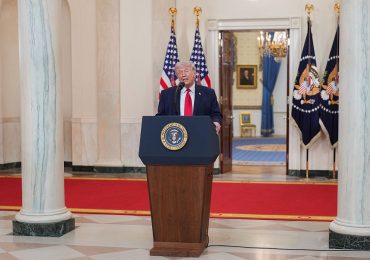
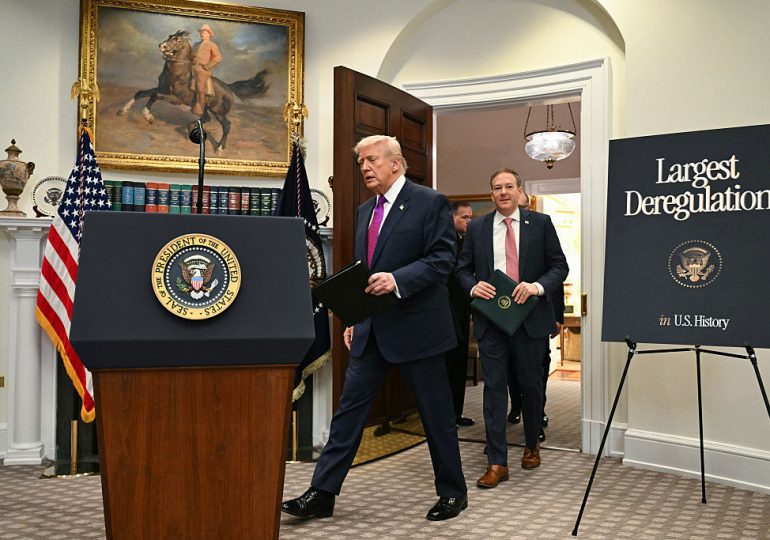
Repealing the rule has been a top priority for the Trump Administration. On the first day of his second term, President Trump signed an executive order directing the EPA to submit a report on “the legality and continuing applicability” of the endangerment finding. On Thursday, he called the termination, “the single largest deregulatory action in American history.”
The decision is a blow to decades of environmental progress in the United States. “It’s the foundation on which all of the other regulations rest,” Chris Field, director of the Stanford Woods Institute for the Environment, says of the endangerment finding. “It is the authorization to regulate greenhouse gasses, and without that authorization the legal basis for regulating emissions from automobiles and power plants, is fuzzy at best and potentially non existent.”
What is the endangerment finding?
The endangerment finding is a 2009 EPA ruling that determined greenhouse gases were a threat to public health. The finding originated from a 2007 Supreme Court case, Massachusetts v. EPA, in which the Court ruled that greenhouse gases qualify as pollutants under the Clean Air Act. Following the ruling, the Court ordered the EPA to determine whether greenhouse gasses endanger public health and welfare. The EPA concluded in the 2009 endangerment finding that six greenhouse gases—including carbon dioxide, methane, and hydrofluorocarbons—posed a threat to the public. The agency was then able to use those findings to regulate emissions from cars, trucks, and power plants.
“They concluded, based on a vast body of information, that greenhouse gas emission from the combustion of fossil fuel and other sources endanger public health and well being, and that sets the foundation for the requirement for the government to regulate the sources of these gasses,” says Field.
How does the endangerment finding protect environmental and public health?
The decision provided the backbone for regulation from everything from pollution from coal and gas-fired power plants to car and truck exhaust. “We have seen dramatic improvements in the efficiency of the electricity sector, in terms of the amount of carbon per unit of electricity produced. We’ve seen dramatic increases in the efficiency of vehicles in terms of miles traveled per carbon dioxide reduced,” says Field.
Overall greenhouse gas emissions have, for the most part, been trending downward in the U.S. over the last decade, he notes, though preliminary estimates show that the same won’t be true for 2025 emissions.
During the announcement, Trump said that the endangerment finding “had no basis in fact.” Science shows, however, that cutting back on all this pollution is proven to bring huge health benefits.
A large body of research has linked air pollution from greenhouse gasses to adverse health effects. Air pollution from burning fossil fuels can cause a number of health issues, including asthma, cancer, heart disease, and premature death. A 2025 study found that air pollution from oil and gas is responsible for more than 91,000 premature deaths and hundreds of thousands of health issues across the United States each year—with Black, Asian, Native American, and Hispanic groups consistently among the most affected. A separate study found that fine particulate matter air pollution declined 24% between 2009 and 2016, before rising due to a decrease in enforcement of the Clean Air Act, coupled with increases in economic activity, and wildfires in the west.
Why does the Trump Administration want to repeal the endangerment finding?
The finding has been challenged a number of times over the years. Most notably, two groups— Concerned Household Electricity Consumers Council (CHECC) and the FAIR Energy Foundation—filed multiple petitions for reconsideration of the endangerment finding in 2017 and 2019. But the U.S. Court of Appeals for the D.C. Circuit dismissed their lawsuits, calling their arguments “inadequate, erroneous, and deficient.” The groups asked the Supreme Court to reconsider the case, but the request was denied.
Project 2025, the conservative policy playbook created by think tank the Heritage Foundation, also lays out a plan to “establish a system, with an appropriate deadline, to update the 2009 endangerment finding.” The Heritage Foundation has said that the EPA “used the finding to justify sweeping restrictions on CO2 and other greenhouse gas emissions across the economy, imposing huge costs.”
The EPA has said that the rollback would save taxpayers over $1.3 trillion and bring car prices down by almost $3,000, though they didn’t provide details on how they came up with the number.
The Trump Administration’s ruling is likely to face legal challenges from environmental groups. The scientific evidence supporting the endangerment finding—and the impact of greenhouse gasses on the planet—can’t be denied. “The science is incredibly strong, stronger now, far stronger now than it was in 2009 when it was already pretty strong,” says Robert Howarth, professor of ecology and environmental biology at Cornell University. “How can you go from science which was very, very strong in 2009 and is only stronger now in 2026 to saying science isn’t strong enough to support it. You cannot. That’s not a scientific judgment. That’s a political judgment.”
The impact cannot be understated, says Dr. Lynn Goldman, professor of environmental and occupational health at the George Washington University, who previously led the Office of Chemical Safety and Pollution Prevention at the EPA from 1993 through 1998 under President Bill Clinton. “One of the most effective things we’ve ever done for public health is lowering air pollution. It has had an incredibly strong payoff,” she says, adding that a reversal of the endangerment finding would put millions of people’s lives at risk from air pollution. “If they’re successful with doing this, there will be a huge economic impact through the cost of not only lives lost, but all the health care costs that will be caused by not addressing climate change here in the United States and worldwide.It’s just a huge multiplier.”
Leave a comment