The International Olympic Committee wants nothing more than to keep political activism, protests, and geopolitics out of the Winter Games spotlight. We should all be celebrating the unifying power of sport, organizers will tell you: admire the exploits of Jordan Stolz, Ilia Malinin, and Breezy Johnson.
But as we approach almost a week into the Milano Cortina competition, the IOC has all but ensured that a political controversy will linger, arguably thanks to its own decision making.
[time-brightcove not-tgx=”true”]
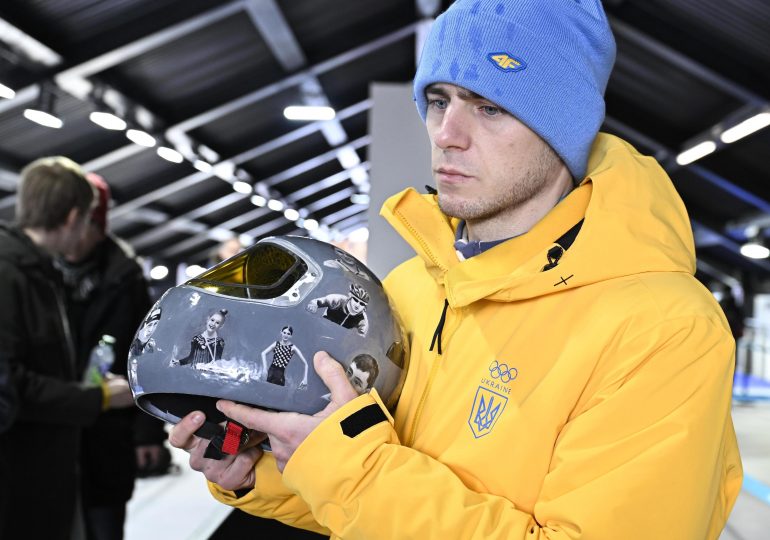
On Thursday morning in Milan, the IOC announced it had withdrawn the accreditation of Ukrainian skeleton pilot Vladyslav Heraskevych, in effect banning him from taking part in the Olympics due to his insistence of wearing a helmet depicting the images of Ukrainian athletes slain since Russia invaded his home country in 2022. According to an IOC statement, the organization’s president, Kirsty Coventry, met face-to-face with Heraskevych at the sliding center in Cortina on Thursday morning, in an attempt to convince him to leave his helmet behind. The IOC says it offered the athlete alternative ways to outwardly display his grief, such as by wearing a black armband or ribbon. When Heraskevych wouldn’t relent, the skeleton heats proceeded without him.
Reacting to his disqualification, Heraskevych, a medal contender, told reporters at the track: “It’s hard to say or put into words. It’s emptiness … In Ukraine now, we also have a lot of tears.” The athlete added that he didn’t want to downplay Coventry’s feelings, but doesn’t believe he violated any rules.
“This is the price of our dignity,” Heraskevych said via social media, alongside an image of himself wearing the much-discussed helmet.
At issue was Heraskevych’s alleged violation of the IOC’s Guidelines For Athlete Expression, particularly rule 50.2 of the Olympic Charter which states that “no kind of demonstration or political, religious or racial propaganda is permitted in any Olympic sites, venues or other areas.”
The IOC has said it worked with more than 3,000 athletes to refine its political expression guidelines in 2021, and notes that Heraskevych was free to make statements on the war and express grief through his own social media channels, and in interviews with the press at the venue before and after his runs.
But Heraskevych wanted to do something more visual.
The IOC knows better than anyone the value, and influence, of images broadcast worldwide. Companies pay the IOC billions for these rights.
“No one—no one, especially me—is disagreeing with the messaging,” Coventry said in a statement. “The messaging is a powerful message. It’s a message of remembrance. It’s a message of memory. It’s not about the messaging; it’s literally about the rules and the regulations. In this case—the field of play—we have to be able to keep a safe environment for everyone. And sadly, that just means no messaging is allowed.”
The sad irony here—and the reason why the IOC’s refusal to make an exception in extraordinary circumstances can arguably be criticized—is that Olympic organizers have taken action against Russian aggression, as Heraskevych is trying to do here. All Russian teams are banned from the Milano Cortina Games. Its men’s hockey team, for example, had medal hopes. A few Russian athletes are competing in individual sports, under the “Neutral Individual Athletes” category. As such, they must meet stringent requirements, including showing no support for the invasion.
Ukrainian athletes here received a rousing ovation in Milan at the opening ceremony, trailing only the host country in vocal crowd support. Sympathy and admiration for Ukraine’s athletes, who have continued to compete over the past four years through trying circumstances back home, abounds throughout Italy and the world.
It begs the question: How much outrage would there have been over the skeleton helmet, had Heraskevych been allowed to compete?
Leave a comment