The Department of Homeland Security is set to shut down at 12:01 a.m. Saturday with no clear path to reopening, as the White House and congressional Democrats remained at an impasse over immigration enforcement reforms and lawmakers left Washington for a scheduled recess.
[time-brightcove not-tgx=”true”]
The resulting partial government shutdown marks the third funding lapse of the current Congress and the second in less than six months, an increasingly routine outcome in a divided government that once would have been seen as politically perilous.
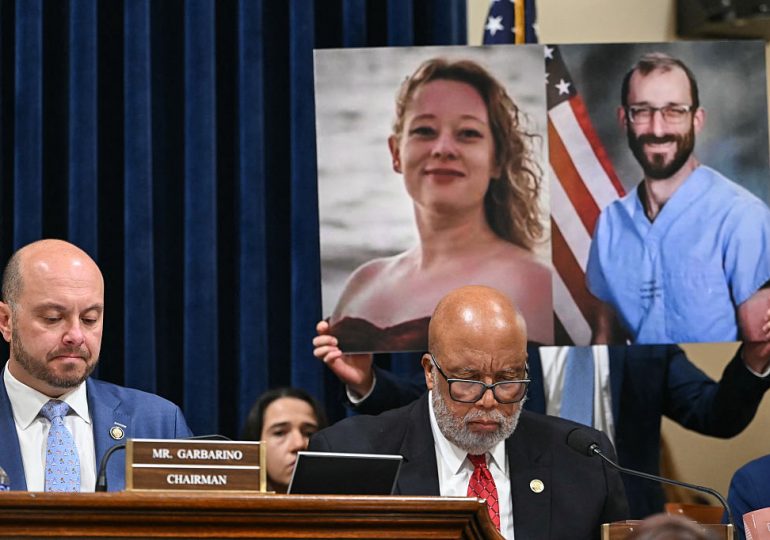
The standoff centers on Democrats’ demand for new guardrails on agents with Immigration and Customs Enforcement (ICE) and Customs and Border Protection (CBP) after the deaths of Renée Good and Alex Pretti in January amid the Trump Administration’s federal immigration enforcement surge in Minneapolis. Democratic leaders have refused to advance the annual Homeland Security funding bill without several measures, including requirements for court-issued warrants before agents enter private property, clear identification and badge numbers for agents, limits on masks, expanded use of body cameras, new use-of-force standards, and ensuring independent investigations of shootings. The White House and many Republicans say the Democrats’ demands would hamper agents carrying out President Donald Trump’s deportation agenda.
The confrontation is unfolding as immigration is expected to be a defining issue in the midterm elections this year. Trump has made aggressive immigration enforcement a cornerstone of his second term in office, while Democrats appear emboldened by new polling showing broad support for new restrictions on ICE.
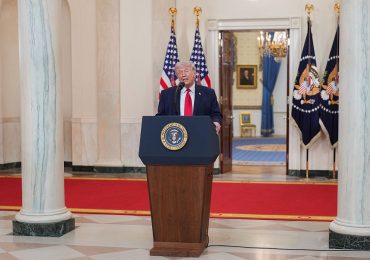
“We’re talking, but we have to protect law enforcement,” Trump said on Friday. “I know what they want, I know what they can live with. The Democrats have gone crazy.”
With talks stalled, lawmakers have left Washington for a scheduled recess, with some senators traveling to the Munich Security Conference in Germany. Leaders in both chambers have said they would recall members if an agreement is reached.
The shutdown is among the narrowest in modern history as only the Department of Homeland Security is impacted. The closest historical parallel dates to 1980, when the Federal Trade Commission briefly became the first agency to close after running out of appropriations. Still, the effects will be felt quickly: Homeland Security oversees about 13% of the federal civilian workforce, including the Transportation Security Administration, the Federal Emergency Management Agency and the Coast Guard. According to the department’s most recent contingency plan, roughly 91% of employees would continue working without pay during a lapse because their roles are deemed essential to public safety or national security. The first missed pay period would arrive in early March if the impasse continues.
Airport travelers could begin to experience strain if TSA officers forced to work without pay begin to call in sick or seek other employment. FEMA’s disaster response capabilities would be curtailed in areas like nonemergency planning and mitigation work. The Coast Guard would continue maritime security operations, but service members would not receive paychecks.
Read more: Why the Latest Shutdown Could Mean Airport Delays
Yet the agencies at the center of the political fight—ICE and CBP—are positioned to continue their enforcement operations largely uninterrupted. Last year, Republicans passed a tax and spending law known as the Big, Beautiful Bill that provided DHS with $170 billion, including $75 billion specifically for ICE, giving the Trump Administration a substantial funding cushion to continue immigration enforcement even in the absence of a new appropriations bill.
Democrats have insisted that they are unwilling to vote for additional ICE funding without significant changes following months of clashes between federal agents and protesters in Minnesota during “Operation Metro Surge.” Viral videos and images showing aggressive tactics, including the detention of a 5-year old boy and the killings of Good and Pretti, have fueled widespread public unease with the enforcement tactics, intensifying pressure on lawmakers to act. A recent survey conducted by Hart Research for a Senate Democrat-aligned group found that 54% of likely midterm voters support blocking Homeland Security funding unless reforms to ICE are adopted, and nearly eight in 10 favor requiring judicial warrants before agents can search private property. The same polling showed 57% of voters disapprove of Trump’s deportation policies and 60% hold an unfavorable view of ICE.
A separate poll by Data for Progress found that 56% of voters support a proposal to fund the TSA, FEMA, and the Coast Guard while conditioning additional ICE money on reforms. Majorities in both surveys backed specific measures such as body cameras, independent investigations of use-of-force incidents, and restrictions on operations near schools and hospitals.
“The American people are tired of seeing these horrific videos,” Senate Democratic Leader Chuck Schumer said Thursday. “I have looked at the polling data… the public is crying out for change.”
For Democrats, those numbers suggest that a shutdown centered on immigration enforcement may not carry the same political risks as past funding lapses. Last fall, during a 43-day shutdown over expiring Affordable Care Act subsidies, Democrats ultimately relented after public frustration mounted and airport travel snarled ahead of Thanksgiving. The promised vote to extend the subsidies failed, as was widely expected.
This time, Democrats argue, the public is more firmly on their side, and the images from Minneapolis have shifted the political terrain. “We’re going to keep pushing back on Donald Trump,” Sen. Elizabeth Warren of Massachusetts told TIME on Thursday. “Is it really the case that the Trump Administration wants to defend and continue defending ICE agents who gassed little babies, who sweep through neighborhoods and pick up American citizens, and who shoot people in the back in the middle of the day?”
Republicans are less certain that their usual shutdown playbook applies. Some concede that public opinion on ICE has softened in ways that could complicate their messaging. But White House officials have sought to reframe the dispute as a “Democrat-driven shutdown,” arguing that the Trump Administration has already shown flexibility and that Democrats are holding airport security and disaster response hostage to unrelated policy demands. Trump was elected, aides say, on a promise to crack down on illegal immigration, and he has little appetite for curbing agents’ authority in ways Republicans warn could expose them to harassment or violence.
Tom Homan, the Trump Administration’s border czar, announced this week that the enforcement surge in Minnesota would end—a step Republicans hoped would unlock a short-term funding patch. DHS Secretary Kristi Noem also announced last week that her department would begin deploying body cameras to federal law enforcement, starting in Minneapolis, partially satisfying at least one demand from Democrats. But testifying before Congress this week, acting ICE director Todd Lyons acknowledged that despite the announcement, nearly 80% of ICE agents still do not wear cameras.
Leave a comment