“I am alone, and miserable; man will not associate with me; but one as deformed and horrible as myself would not deny herself to me. My companion must be of the same species, and have the same defects. This being you must create.”
So commands the Creature to his creator Victor Frankenstein in Mary Shelley’s novel. The Creature thinks his suffering can only cease if it is replicated in another, and expresses this desire through possessive, dehumanizing language. His companion must be female because he needs her submissive, and also wretched so she cannot escape to a more rewarding and peaceful life. Victor ultimately doesn’t build this second creature, but the Creature’s wish hangs in the air with a chilling, electrified sense of possibility.
[time-brightcove not-tgx=”true”]
When English director James Whale made a sequel to his 1931 film Frankenstein, it was almost inevitable it would include this second, unrealized resurrection—in Bride of Frankenstein, the Monster (Boris Karloff) flees angry mobs and takes refuge with a blind hermit, eventually demanding alongside the devious Dr. Praetorius (Ernest Thesiger) that Henry Frankenstein (Colin Clive) should build him a mate.
The actor Elsa Lanchester bookends the film, first as Mary Shelley introducing this next chapter to Percy Shelley and Lord Byron, then reappearing as the newly animated Bride in the final scene—bug-eyed, with a black beehive streaked with white, shrieking and unambiguously rejecting her condition. A woman brought back from the dead as the companion of a lonely monster is a perfect Gothic romance, but like a traumatized child or animal in shock, the Bride senses only danger. The Monster changes his mind; he announces, “We belong dead,” and destroys the laboratory with them both inside.
But if Bride of Frankenstein introduced this idea, others would have to flesh it out. With a few minutes on screen and no dialogue, the Bride leaves a lot off the table, something that inspired The Bride! director Maggie Gyllenhaal when she watched the film and tore through Shelley’s novel straight after. “I’m not speaking for Mary Shelley, but there must have been some other, naughtier, wilder, more dangerous things that Mary Shelley wanted to say that weren’t said in ‘Frankenstein,” the director told Los Angeles Times. “What else might she have wanted to express?”
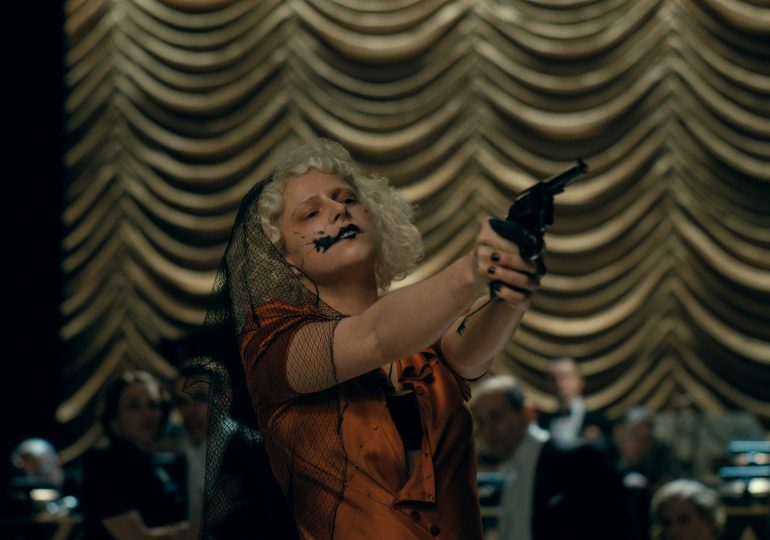
The Bride! takes tropes and motifs from Frankenstein and Bride of Frankenstein and electrifies them back to life—arm in arm with Christian Bale’s Monster, Jessie Buckley’s Bride is an amnesiac, a righteous avenger, a vessel for possession, and a survivor of callous, misogynistic violence. The Bride! digs into the tension underpinning the female Frankenstein—that her resurrection robs her of agency in a way that feels particularly violent, and gendered. Gyllenhaal has mentioned frequently on The Bride!’s press tour that the film is about consent and body autonomy, but hers is far from the only attempt to expand and interrogate the character in the last 90 years.
If Frankenstein purists lament every time the sensitive, articulate Creature of the novel is turned into a bolt-necked brute, less fuss is made when the Bride is reduced to a ghoulish, beautiful caricature because there’s so little original source material to betray in the first place. Filmmakers get to reimagine her look and purpose whenever she appears, and because patriarchal societies are built on the social and political subjugation of women, her creators’ attempts to control her are easily read as a symbolic reflection of the world around them. These pronounced gendered and psychosexual power dynamics partly explain why the cinematic canon of the Bride (though she is rarely, if ever, actually married) is filled with such bizarre, provocative, and original works. Her repression is more strongly enforced, her anguish is often more pronounced—while the Monster had no say on his own creation, he asked for the Bride to share his suffering for his own gratification. Frankly, he should have known better.
But today, the female Frankenstein is better associated with the vampy, playful wives of pop culture that partly took note from Elsa Lanchester’s performance, like Morticia Addams or Lily Munster. In the Mel Brooks parody Young Frankenstein, the Bride is referenced only by her hairdo, as an intelligent, domesticated Monster (Peter Boyle) watches as his human wife (Madeline Kahn) racily dance to bed, her nightie and white-ribboned beehive an amusing indicator of their freaky love life. The prefix “Bride of” was attached to 90s horror-comedy sequels like Bride of Re-Animator and Bride of Chucky, movies that were aware of their sordid B-movie sensibilities or proximity to gimmicky exploitation genres. Frank Henenlotter’s Frankenhooker, which depicts a neurotic scientists resurrected his decapitated wife with the body parts of sex workers, is the crassest of the Bride offshoots, but it’s savvy enough to update the Bride’s horrified epiphany from the 1935 film, doling out a gruesome punishment for her perverted creator.
The Bride’s design is simply too iconic to avoid being condensed into a marketable caricature, and unlike the Creature, there is no thoughtful and complex original version of her for audiences to turn back to—she exists in the novel only as a conceptual articulation of the book’s other themes. She’s a classic Halloween costume because no actual characterization gets in the way of the ubiquitous reference and striking look. But the brand of the Bride continues without the iconic 1935 look—when Fortnite and Universal collaborated on a Universal Monsters miniseries and skin pack, the Bride was front-and-center—even though her iconic look has been simplified to something appropriate for an action game, they were still cashing in on the Bride brand.
The reason why the Bride is so ripe for pastiche is because, in the years after her debut, attempts to definitively expand her story were often strange and lopsided. The most provocative and explicitly political depictions of a female Creature came in Andy Warhol’s Flesh for Frankenstein (Warhol did not write, direct, or produce; it was written and directed by Warhol associate Paul Morrisey). Udo Kier plays an incestuous, fascist version of Baron Frankenstein, whose male and female creatures are designed to create the master Serbian race, but are also fit to be molested and mutilated for the gratification of him and his wife.
The in-your-face sleaziness of Flesh undermines its bold politics, but although the Bride is largely a passive object, her passivity is linked to Nazi race science—she is no longer an intended companion, but a tool to breed the Baron’s vision of perfection. Social commentary, albeit in a compromised form, also makes its way into the 1973 television film Frankenstein: The True Story and the forgotten 1985 film The Bride (no exclamation mark). In both, the Bride is reanimated after the Monster, and attempts are made to integrate her into proper society. The fact that both films feature scenes where the Bride vies for the approval of the upper classes is satiric commentary on how artificial and shallow the rules of conduct are for the elites, but still, both Frankenstein and the filmmakers are making the Bride a tool for commentary rather than giving her a voice of her own.
The Bride not looking like a monster and retaining her desirability after reanimation is common, but only sometimes interrogated. The Creature is typically an ugly monster whose humanity slowly emerges, while the Bride is imagined as a beautiful woman without a soul. Hollywood’s sexist casting, which demands its female characters be attractive before they are complex, mirrors the misogyny of the Bride’s creators, as she is a woman built from a patriarchal understanding of femininity. Desire cannot be separated from her creation, but it is rarely her own.
When we break free of the legacy of Shelley and Whale, the Bride’s potential takes shape. In the 1950s, Frankenstein took residence in the British studio Hammer Films, and the films made Victor Frankenstein (Peter Cushing) an amoral protagonist. In 1967’s Frankenstein Created Woman, Victor’s assistant Hans is tried and executed for a murder he did not commit and his lover Christina, an innkeeper’s daughter with facial paralysis, drowns herself. Victor transplants Hans’ brain into Christina’s body, curing her paralysis but giving her amnesia.
The film makes a point of showing how Hans—the son of a hanged convict—and Christina are subject to constant degradation, and thus their merging by Frankenstein is an acknowledgement of their shared suffering—instead of Hans and Christina being reanimated as companions, their symbiosis means that both of them have been robbed of agency. But despite the lowbrow ambitions of this horror sequel, this “Bride” maintains a compelling ambiguity—even though Hans’ vengeful spirit is dominating her newly healthy body, Christina’s kills are still personally gratifying because the men who framed Hans also killed her father. When Christina drowns herself for a second time, Baron Frankenstein is confronted by the unpredictability of stitching together dead flesh—his female creation is capable of reckoning with her past suffering.
The idea that the Bride has a stronger connection with their mortal life—and therefore, the suffering that led to their death—appears more frequently in modern depictions of the character, as they often focus on the realistic, harmful dynamics of a patriarchal society. In Showtime’s Penny Dreadful, which features many famous characters from Gothic literature, Irish immigrant and sex worker Brónagh Croft (Billie Piper) is dying from tuberculosis when she’s suffocated by Victor Frankenstein and resurrected as “Lily” Frankenstein. Like Christina, her resurrection leads to her becoming violent, but here the “Bride” is aware of her mortal suffering and takes control of her immortality away from the men—both Victor and his vengeful Creature—who she was initially intended to serve.
But even when she is trying to reckon with and overcome her suffering while mortal, the majority of Brides we’ve seen stick closely to the conventions of Gothic revenge horror—with the Bride almost always turning to violence and self-destruction. Genre expectations demand a certain level of peril and bloodshed, but seeing Monster register his suffering doubled at the end of Bride of Frankenstein is too poignant to only depict the Bride as violent and vengeful thereafter.
A recent outlier is Yorgos Lanthimos’ Poor Things, where Emma Stone plays Bella Baxter, a pregnant woman who jumps off London’s Tower Bridge, and is brought back by by transferring her child’s brain into her adult skull. She acts and speaks like an infant, before showing a hunger for knowledge, experience, and sexual liberty which frustrates the men who try to possess her. When she returns from a far-flung voyage to marry her meek fiance, she learns that she is already a bride, and is still technically the property of the army general who she once killed herself to escape from. Bella’s hunger for self-knowledge brings her back to General Blessington’s home, where the abuse she suffered as “Victoria” is repeated.
Bella is notable among the various Brides for having been an actual bride—in Kenneth Branagh’s Mary Shelley’s Frankenstein, Victor’s fiancé Elizabeth (Helena Bonham Carter) is killed on her wedding night, and when she’s resurrected, she sets herself on fire. But Bella is led back to a place where she suffered realistic gendered abuse, not because of naivety but more that she earnestly desires to learn how she belongs in the world—especially by rediscovering what she once knew about herself. Although Bella does use violence to escape her abusive husband, the film ends on a vision of paradise back in Godwin’s house, with Bella confident that neither her past nor her status as a Victorian woman can dictate how she will live.
The lack of a rich, fully articulate origin text for the Bride, not to mention how imperfect and compromised her movie history can be, is what makes her still such a rich, volatile, and appealing cultural object—with every bold revision of Shelley’s ideas, there’s a giddy hope of discovering a new interpretation of the Frankenstein mythos that’s been hiding in plain sight about a character we know best through her design and her thwarted agency. When it comes to Frankensteins, blood may be thicker than water—the Creature’s destiny may be forever twinned with his creator’s, but the bonds of conjugal devotion expected from the Bride are easier to break. We may not have seen the Bride’s final form, but we know she will live forever.
Leave a comment