
The International Olympic Committee (IOC) on Thursday announced that transgender women athletes will not be allowed to participate in women’s events.
“Eligibility for any female category event at the Olympic Games or any other IOC event, including individual and team sports, is now limited to biological females,” the IOC said.
The new policy will be applied beginning at the 2028 Summer Games in Los Angeles. The IOC noted that “it is not retroactive and does not apply to any grassroots or recreational sports programs.”
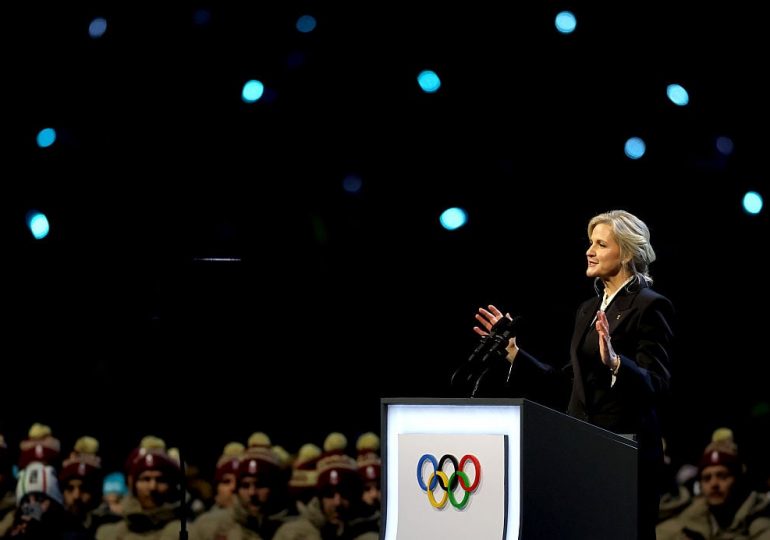
IOC President Kirsty Coventry, a former Olympic swimmer, called the policy “a protection of the female category” and acknowledged the “very sensitive” nature of the topic in a video accompanying the IOC announcement.
The White House celebrated the decision, which aligns with an Executive Order President Donald Trump signed after returning to the White House last year, and credited Trump for the move—though the IOC made no reference to the President in its announcement.
“President Trump’s Executive Order protecting women’s sports made this happen!” White House Press Secretary Karoline Leavitt wrote on X.
Read more: Inside the Right-Wing Movement to Ban Trans Youth From Sports
Human rights groups have previously spoken against using sex testing to determine athletes’ eligibility, however, and advocacy organizations have condemned the IOC’s plans to develop genetic testing requirements and prohibit transgender athletes from competing. Last week, ahead of the committee’s announcement, dozens of groups decried such a move as an “astounding rollback on gender equality” that would “set women’s sport back 30 years.”
Here’s what to know about the Olympics committee’s new policy.
How will athletes be screened under the new policy?
Under the new policy, “eligibility for any female category event at the Olympic Games or any other IOC event, including individual and team sports, is now limited to biological females, determined on the basis of a one‑time SRY gene screening,” the Olympics wrote.
In a 10-page document outlining the policy, the IOC states that “the most accurate and least intrusive way currently available to screen for biological sex is by
screening for the SRY Gene, which is a segment of DNA that is almost always on the Y chromosome, initiates Male sex development in utero, and signals the presence of
testes/testicles.”
SRY, which stands for “sex determining region Y,” is described by the IOC as “a highly accurate, non-invasive screen for biological sex,” which can be attained using saliva, cheek swabs, or blood samples.
The IOC said the screening would be a “once-in-a-lifetime test” for athletes who screened negative, except in cases where “there is reason to believe that a negative reading is in error.”
“Athletes who screen negative for the SRY gene permanently satisfy this policy’s eligibility criteria for competition in the female category.,” the committee said.
The IOC outlined “rare exceptions” to this eligibility criteria. Athletes with “a diagnosis of Complete Androgen Insensitivity Syndrome (CAIS) or other rare differences/disorders in sex development (DSDs) who do not benefit from the anabolic and/or performance-enhancing effects of testosterone” will remain eligible to compete in the female category even if they screen positive for SRY. All other with SRY-positive screens will be barred from competing in women’s events.
World Athletics, the international body that governs athletics competitions including track and field, previously announced that it would require SRY gene screening to determine eligibility to participate in women’s events. Other sporting organizations have also adopted forms of gender testing.
Why is the IOC implementing the ban?
The new IOC’s policy is based on the findings of a working group that was formed to look into “protecting the female category” following a meeting of the committee last year.
“There was overwhelming support from all of the Members who were present here, and those who were able to share with us before they left, that we should protect the female category,” Coventry said at the time.
The working group consisted of “specialists in sports science, endocrinology, transgender medicine, sports medicine, women’s health, ethics and law,” according to the IOC, and reviewed “the latest scientific evidence, including developments since 2021,” as well as conducting interviews with “impacted athletes from around the world.”
The committee said Thursday that based on its work, the group had “reached a clear consensus” that “male sex provides a performance advantage in all sports and events that rely on strength, power and endurance.”
“The scientific evidence is very clear. Male chromosomes give performance advantages in sports that rely on strength, power, or endurance,” Coventry said in the video shared with the announcement on Thursday. “At the Olympic Games, even the smallest margins can be the difference between victory and defeat, so it’s absolutely clear that it would not be fair for biological males to compete in the female category. In addition, in some sports it would simply not be safe.”
Pushback from advocates
Last week, following reporting on the working group’s recommendations, 90 organizations, including the International Commission of Jurists and the Sport & Rights Alliance, issued a joint statement urging the IOC not to require genetic testing for athletes or bar trangender athletes from women’s events.
“A sex testing and blanket ban policy would be a catastrophic erosion of women’s rights and safety,” said Andrea Florence, Executive Director of the Sport & Rights Alliance, in a statement. “Gender policing and exclusion harms all women and girls, and undermines the very dignity and fairness the IOC claims to uphold.”
Read more: What to Know About Nikki Hiltz and the History of Trans and Nonbinary Olympians
The organizations noted that bodies including the United Nations High Commissioner for Human Rights and World Medical Association have criticized the use of sex testing in sports, and said that the policy would also contradict the IOC’s own 2021 Framework on Fairness, Inclusion and Non-Discrimination.
The groups also contended in the joint statement that mandatory genetic testing would build on a history of sport eligibility regulations disproportionately impacting women of color from “the Global South” in recent years.
“The IOC must not turn its back on women and girls of color,” said Olympic medalist Francine Niyonsaba in a statement. “I gave so much time and effort to building the 2021 Framework and have repeatedly shared my views. I hope the IOC will not ignore us.”
Leave a comment