
This article is part of The D.C. Brief, TIME’s politics newsletter. Sign up here to get stories like this sent to your inbox.
Donald Trump is in trouble.
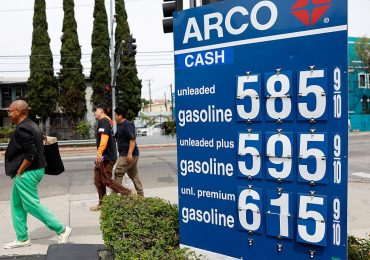
Poll after poll show him posting his worst numbers yet. Record crowds took to the streets this weekend in the single largest day of political protest in the nation’s 250-year history. His Department of Homeland Security remains shuttered because his allies in the Republican-led Congress cannot sort out a spending plan. Construction projects like a West Wing ballroom and proposed Miami skyscraper of a presidential library are roundly mocked. Gas prices seem to be coasting toward $5 a gallon, consumer confidence is in freefall, and the joint U.S.-Israeli war against Iran remains deeply unpopular.
Oh, and state legislative seats? Democrats have picked up 30 seats in the last 15 months while Republicans have snagged zero.
Yet Democrats might still stumble their way to falling short of their base’s sky-high expectations as they head toward November’s elections. The Blue Wave seems primed, but that’s not because of anything the party has done. No, the structural problems that bedeviled the Democrats in 2024 remain. And their decision last year to shelve an internal autopsy of Kamala Harris’ loss to Trump remains emblematic of Democrats’ continued unwillingness to address its problems head on.
“It’s not like our party is popular,” says Mandela Barnes, a former Wisconsin Lieutenant Governor who is looking to move up to the state’s top job. “People aren’t happy to vote for someone just because they’re a Democrat. We have to be real with ourselves.”
Barnes is not alone among Democrats trying to navigate this tricky terrain. Voters don’t like the people in charge, but remain less than excited about the alternative. “I don’t think you’re over-reading it,” Barnes tells me of the national mood. “It feels impossible.”
Like so many others in his party right now, Barnes sees voters more motivated by what they are against than what they are for. “It’s about who is going to show up to be a fighter. People feel like they’re powerless right now. They feel like their voices don’t matter.”
It’s that tension that keeps Democratic strategists on edge: the Republicans in command of the House, the Senate, and the White House are in the gutter when it comes to polling, but being a Not Republican is not necessarily enough to best them. When it comes to partisan affiliation, polls find none-of-the-above is the largest party ID.
The situation is actually worse than that. Even as Trump sees his polling crater, the pool of Democrats is still shrinking as a share of the total population. In Florida, where voters register by party, there are now 5.5 million Republicans and 4 million Democrats, a wild swing from 2016 when there were 4.6 million Republicans and 4.9 million Democrats—and Trump carried the state both times.
Although Nate Silver’s polling warehouse has a generic Democratic candidate faring about 5 points better than the GOP rival, that’s still a long way from a slam dunk—particularly given just how gerrymandered House districts are these days. After all, the gold-standard Cook Political Report counts just 17 House races this year as true toss-up seats.
To put that 5-point tailwind in perspective, that number was closer to 7 points at this moment in 2018, when Democrats netted 41 House seats. Four years earlier, Democrats were up by a little more than 1 point and would lose nine House seats. And in 2010, when Democrats would lose 63 House seats, they were down by just 2 points.
Democrats need to net just three seats to take control of the House, but four seats to do so in the Senate, where the prospect of Democrats fully flipping Congress could come down to the nominees they settle on in states like Maine, Michigan, and Iowa.
Cast another way: Democrats are still positioned to have a good election year but may be viewed in hindsight as having let a true blowout slip through their grasp. Millions of people in the streets signal strength but guarantee nothing, especially with a laundry list of thorny issues like environmental rights, reproductive freedoms, good governance, foreign policy, LGBTQ rights, and economic insecurity all getting lumped together in a sea of posters.
The true problem here is that the party hasn’t really carried an identity since the era of Barack Obama. Nothing has really glued the Democrats’ identity together in more than a decade as bridges between the corporate liberals and the in-the-streets progressives have proven impossible to maintain. Ideological, generational, and geographic tensions have become so piqued that Axios made public what many Democrats have been saying in private for more than a year about their next presidential nominee: it has to be “a straight, white, Christian man.”
More immediate, though, is this year’s midterm elections that historically punish the party in the White House. Which is why Barnes, who is locked in a tight Democratic primary to vie for Wisconsin’s open race for governor, also sees a silver lining in that the GOP frontrunner is Rep. Tom Tiffany, who will have to run on his record. “Being a member of Congress running for office is a tough sell with what people are going through.”
Still, a party can’t run the table in elections across the country without the money to do it. Democrats’ fundraising advantage in competitive races is real, but incumbency has its privileges—chiefly favors to dole out in short order. The GOP campaign ecosystem outraised its Democratic peers last year. And Trump remains a from-the-gut political force that can motivate millions.
The question for Democrats creeping toward election season is if Trump’s gravitational power will bring voters back toward his cause this fall or repel them into Democrats’ waiting arms. The latter is how Joe Biden won the nomination in 2020, by using the threats of Trumpism to unite his party. The numbers this year point to a good environment for Democrats, who are giving off big 2006 vibes when voters flipped 31 House seats and made Nancy Pelosi the first female Speaker. But it’s also worth comparing their standing to the GOP in 2022, when the Republicans had a generic poll advantage of a little less than 4 points; the Red Wave that year turned out to be a mirage—with Republicans gaining a meager nine House seats and losing a seat in the Senate.
Make sense of what matters in Washington. Sign up for the D.C. Brief newsletter.
Leave a comment