If the U.S. continues to attack and kill Iran’s leaders, more than a dozen leading American technology firms could become targets for retaliation, the Islamic Revolutionary Guard Corps, which is part of the Iranian Armed Forces, warned on Tuesday.
The IRGC said it will target 18 tech firms, including Apple, Google, Meta, and Microsoft, in retaliation “for every assassination in Iran” starting on Wednesday at 8 p.m. Tehran time (12:30 p.m. E.T.). The IRGC’s statement was released by semi-official, IRGC-linked Tasnim news agency.
The companies were named because of their alleged involvement in enabling the assassinations of dozens of Iranian leaders since the U.S. and Israel launched a war against Iran on Feb. 28. The U.S. and Israel have killed Supreme leader Ali Khamenei, Revolutionary Guards commander-in-chief Mohammad Pakpour, and top security chief Ali Larijani, among others. U.S. President Donald Trump has also hinted that his aims in Iran include regime change, while Israel has threatened to target any future leader of the Iranian regime, including Khamenei’s successor and son Mojtaba Khamenei.
Read More: Why Iran Thinks It’s Winning
“You ignored our repeated warnings about the need to stop terrorist operations, and today, a number of Iranian citizens were martyred in both your and your Israeli allies’ terrorist attacks; since the main element in designing and tracking terror targets are American ICT and AI companies, in response to these terrorist operations, from now on, the main institutions effective in terrorist operations will be our legitimate targets,” the IRGC said. “Companies that actively participate in terrorist plots will be targeted for retaliation against any terrorist attack.”
The IRGC added that employees of these firms should leave their workplaces immediately and residents “in all countries in the region” should evacuate from a one-kilometer radius around these institutions. The advisory suggests that the IRGC’s targets may include the infrastructure of these tech firms across the Middle East but not necessarily in the U.S.
The companies on the list include Cisco; HP; Intel; Oracle; Microsoft; Apple; Google; Meta; IBM; Dell; Palantir; Nvidia; JP Morgan; Tesla; GE; Boeing. Two companies headquartered in the United Arab Emirates were also named: G42, an Abu Dhabi-based artificial intelligence company, and Spire Solutions, a Dubai-based cybersecurity company.
TIME has reached out to the companies on the list for comment.
All of the companies have operations in or commercial ties to Israel, although most have denied allegations that their technology is used by Israel for military applications. Several of the companies, including Palantir, Microsoft, Google, IBM, and G42, also have documented links to the Israeli military or defence firms. In 2024, Palantir’s Executive Vice President Josh Harris told Bloomberg that the company signed a strategic partnership with the Israeli Defense Ministry to provide “advanced technology in support of war-related missions.”
The IRGC’s threat comes as Trump has issued mixed messages on the future of the conflict. The U.S. President suggested he would end the broadly unpopular war on Iran in two to three weeks amid soaring oil and gas prices. Secretary of State Marco Rubio said on Tuesday that the “finish line” in the war is near. Trump has repeatedly said he is in talks with Iranian leaders aimed at ending the war. He also reportedly suggested that the war could end even if Iran does not reopen the Strait of Hormuz, the world’s most important energy corridor that Iran has effectively closed since the war began.
Iranian President Masoud Pezeshkian reportedly said Iran has the “necessary will” to end the war provided guarantees that the U.S. and Israel will not attack again. Iranian Foreign Minister Abbas Araghchi told Al Jazeera on Tuesday that he is in contact with U.S. officials but “this does not mean that we are in negotiations,” and that Iran has not responded to the 15-point cease-fire proposal sent by the U.S.
“We do not have any faith that negotiations with the U.S. will yield any results. The trust level is at zero,” Araghchi said. “We don’t see honesty.”
Read More: How Much the War in Iran is Costing Americans
But the U.S. and Israel have also indicated in the past week that they would scale up their attacks on Iran, while U.S. Defense Secretary Pete Hegseth said on Tuesday that the U.S. would continue ‘negotiating with bombs” while working out a deal. While Iran attacking U.S. firms would mark an escalation in the war, the conflict has already broadened beyond military targets after all parties appear to have targeted civilian sites and business infrastructure.
U.S.-Israeli attacks have killed nearly 2,000 people in Iran, including 240 women and 212 children, according to Iranian authorities and humanitarian organizations. An eight-month-old baby became the youngest victim last month, Iranian authorities said. Investigations by the New York Times and other media outlets found that U.S. bombs on Feb. 28 hit a girls’ primary school in the town of Minab and a sports hall in Lamerd city, both of which the U.S. denied. Trump has also threatened to bomb Iran’s electric generating plants, seize its key oil terminal, Kharg Island, and even attack Iranian water desalination plants, which would constitute a war crime under the Geneva Conventions.
Israel has bombed oil depots in Tehran, shrouding the city in toxic black smoke, and attacked Iran’s South Pars gas field. Iranian authorities also alleged that the U.S. and Israel have bombed civilian facilities and commercial infrastructure across Iran, including a pharmaceutical company in Tehran, steel factories in Isfahan, and a passenger pier in Bandar Abbas.
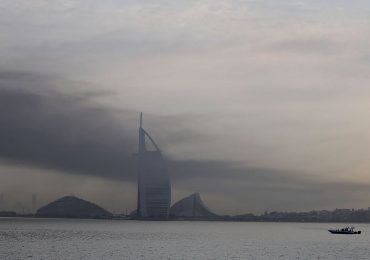
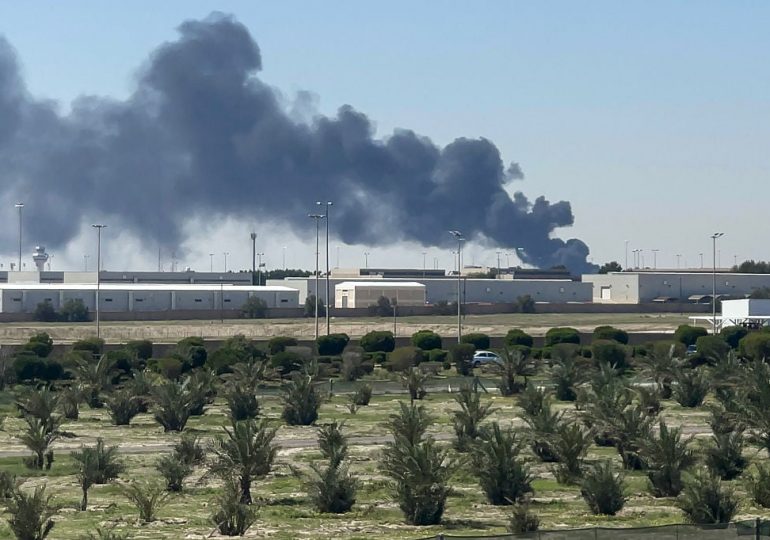
Meanwhile, Iran has threatened and attacked commercial and industrial infrastructure across the region, killing dozens of people. On Tuesday, Iran’s military said it targeted communications, telecommunications, and industrial centers in Israel in retaliatory drone attacks. These facilities included that of industrial giant Siemens near Ben Gurion international airport and communications company AT&T in Haifa. Israel has not yet confirmed whether these areas were hit. On Wednesday, Kuwait said that an Iranian drone attack hit Kuwait International Airport’s fuel depots, causing a “massive” fire, and Bahrain said an Iranian drone attack on an unnamed company facility caused a fire.
Some American companies have already asked employees at offices in Gulf countries to work remotely or limit travel. On March 3, Iranian drone strikes disrupted power to Amazon Web Services cloud facilities in the U.A.E. and Bahrain.
Iranian state media has also reported that tech billionaire Elon Musk’s satellite internet company Starlink, which has a presence in several Middle Eastern countries, is considered a “legitimate” target by Iran.
Last month, Iran said it will target American and Israeli economic interests and political centers in the region in retaliation for an alleged Israeli strike on a bank building in Tehran and other attacks. Iranian state-linked media reportedly said that the scope of Iran’s “legitimate targets” could expand to include offices and infrastructure for cloud-based services of American companies with links to Israel, including Google, Microsoft, Palantir, IBM, Nvidia, and Oracle.
Leave a comment