
A smartphone screen displaying the MarineTraffic map on March 27, 2026. —Samuel Boivin/NurPhoto—Getty Images
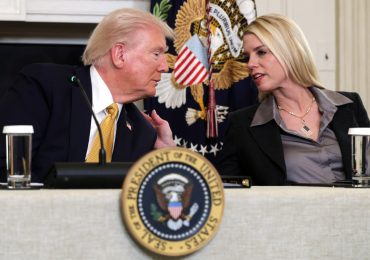
On Wednesday, after America’s NATO allies refused his call to help unblock the Strait of Hormuz, a furious Donald Trump said he might withdraw the United States from the alliance.
No other American president has even hinted at taking such a step: they all considered NATO vital to American national security as well as to global, particularly European, stability. Even if Trump does not act on his threat—his address to the nation left that question unresolved—Trump has broken new ground simply by making it.
Even the quarrel over the Strait of Hormuz likely won’t sink NATO. Still, Trump has put the alliance in a more precarious position than it has ever been in before.
Trump’s long-game against NATO
Before turning to the alliance’s current crisis, it’s worth reviewing how things got to this point.
By the time Trump was first elected in November 2016, the proposition that America’s NATO allies had to spend more on defense was axiomatic within the Washington establishment. Successive administrations insisted that allies get serious about “burden sharing.”
At the alliance’s 2014 Wales summit, NATO agreed that each ally would allocate 2% of GDP to its defense budget by 2024. By 2023, however, only a third of its 31 members—there are now 32—had met that goal. But ahead of the Vilnius summit that July, the entire alliance reaffirmed the 2% commitment.
Burden-sharing had created discord within the alliance well before Trump’s first term began, but once his first presidency got underway, relationships started to deteriorate. What had been admonitions from Washington on defense expenditure turned into bluntly-delivered ultimatums. Trump publicly accused Europe of free-riding, and even called NATO “obsolete.” He took back that last criticism but piled on the pressure for additional allied defense spending. He questioned the alliance’s value to the United States and even sowed doubts about whether he’d protect Europe in the event of a Russian attack. At times, Trump did offer reassurances and affirmed NATO’s importance, but mostly, he was mercurial, dismissive, and confrontational. No other president has rattled America’s NATO allies to this extent—not even close.
During Trump’s second term, the allies resorted to placation in response to his fulminations. Like courtiers paying homage to a king, leaders of NATO countries visited Washington bearing gifts, resorting to flattery, and enduring his tirades. NATO secretary-general Mark Rutte even called him the alliance’s “daddy.”
All to no avail. Trump continued to frame the allies as freeloaders. At the January 2025 Davos Summit, he demanded that they raise defense spending to 5% of GDP. He terminated direct military assistance to Ukraine, whose security most European countries consider inseparable from their own.
That wasn’t all. Trump proposed that Canada become America’s 51st state, and Scott Bessent, his Treasury Secretary, suggested that Alberta, its resource-rich province, secede and join the United States. Trump laid claim to Greenland, an autonomous part of Denmark, and even threatened to annex it by force if need be.
Trump’s Lonely War on Iran
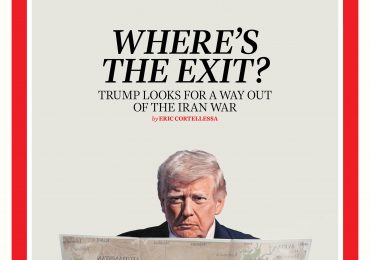
Transatlantic relations were tense before the February 28 U.S.-Israeli attack on Iran. But the Iran war turned what was already the most turbulent period in transatlantic relations into a full-blown crisis and even raised doubts about NATO’s survival.
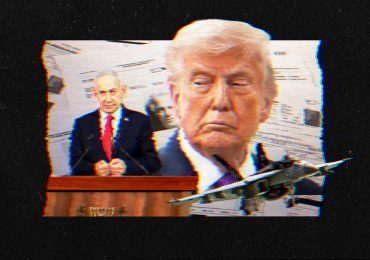
Trump launched the war without consulting Washington’s allies but then demanded that their navies reopen the Strait of Hormuz, which Iran had closed off, bottling up at least a fifth of global oil exports. Soon after ships ceased transiting the Strait, the price of crude oil and diesel started soaring. So did the cost of other commodities, including liquefied natural gas, fertilizer, aluminum, and helium, which is essential for manufacturing high-end semiconductors. As the economic fallout worsened, Trump kept pressuring the allies for not reopening the Strait. They, in turn, bristled at Trump’s badgering. Not only had he failed to consult them before starting the war, they had no obligation to join it. Article 5 of the NATO treaty—the collective defense clause—kicks in only when an ally is attacked and was invoked for the first time a day after 9/11. But Iran had not attacked the United States.
The NATO allies stayed clear of the war for at least three reasons. First, had they tried to reopen the Strait, Iran would have targeted their warships. They would then have been drawn into a war they’d played no part in starting and indeed considered needless and reckless. Second, the world was already reeling from spiraling energy prices, and if the allies had entered the war, Iran would have intensified its drone and missile attacks on the Persian Gulf monarchies. That would have increased the price of energy and other critical commodities at an even faster clip—but with no guarantee that, in the face of Iranian resistance, the Strait would be unblocked. Third, public opinion in Europe opposed the war. Had the leaders of NATO countries acceded to Trump’s demand, they would have taken a militarily hazardous, politically unpopular decision—one with no upside, not even American gratitude, a quality Trump is not known for in any event.
Washington’s allies did more than turn Trump down. When he scolded them and warned that the United States would not forget what he saw as a betrayal, they finally put aside their conciliation playbook. Even the mild-mannered Keir Starmer, the prime minister of the United Kingdom, which has long touted its “special relationship” with Washington, didn’t mince words. He refused to risk British soldiers’ lives for an “offensive against Iran,” implying that it lacked “a legal basis” and “a proper, thought-through plan.”
Spain’s prime minister, Pedro Sánchez, was even more outspoken. He painted Trump’s Iran war as much more dangerous than George W. Bush’s 2003 invasion of Iraq, and predicted that its wider consequences would be “far worse,” adding that, unlike then-prime minister José Maria Aznar, he wouldn’t drag Spain into an American war just to “feel important.”
German Chancellor Friedrich Merz strongly backed Trump at the beginning, but as the economic strains mounted, and amidst searing criticism from political parties on the left and the right, he began backpedaling. After Trump’s call for allied intervention, he declared that “the war in the Middle East is not a matter for NATO.”
The NATO allies haven’t limited themselves to verbal defiance. Spain’s defense minister Margarita Robles announced that her country’s military bases, and even its airspace, would be off-limits to U.S. warplanes and slammed Trump’s war as “profoundly illegal and profoundly unjust.” Robles’s Italian counterpart, Guido Crosetto, refrained from bashing the war, but he denied American warplanes landing rights at Sigonella airbase—in Sicily—citing Washington’s failure to seek Italy’s approval beforehand. Italian Prime Minister Giorgia Meloni, noted for her rapport with Trump, went further, saying that she would seek parliamentary approval before allowing U.S. military aircraft to use Italian bases. Germany’s government has permitted the U.S. to use Ramstein airbase for coordinating drone and missile strikes, but its defense minister, Boris Pistorius, ruled out direct German participation in the war, adding that “This is not our war, we have not started it.”
Rutte, whose unconditional support of Trump has made him resemble a lackey, stood by the president on this occasion as well but has cut a lonely figure.
The future of NATO
This doesn’t add up to an all-out rebellion by Washington’s allies, who, moreover, don’t have identical views on Trump’s Iran war. Still, taken together, Trump’s continual disparagement of the alliance, key NATO allies’ refusal to help reopen the Strait, and, above all, Trump’s threat to ditch the alliance, have created the gravest internal crisis in NATO’s history. The alliance will likely survive it. Even if it does, Europe should start figuring out how it will defend itself if the American security guarantee it has counted on for nearly 80 years doesn’t last much longer.
Europe has the economic and technological resources to defend itself should Trump withdraw from NATO—if not immediately, then at some point before his second term ends. For all the talk of Russia’s abiding threat to Europe, Vladimir Putin’s army remains mired in Ukraine’s Donbas region, unable to defeat a far weaker opponent despite trying for more than four years. Russia has paid dearly in blood and treasure and will spend years recovering. That gives non-U.S. NATO countries time.
They have already boosted defense spending by nearly 20% combined in 2024 and 2025. Europe has adopted a Defense Industrial Strategy, and discussions are underway on an Anglo-French nuclear deterrent for the continent. Though there’s much left to do, the lesson Washington’s NATO allies should take from this crisis is that they must forge ahead. They can no longer assume that American protection will remain rock-solid.
Unlike the United States, which feels it must be able to project power worldwide, all Europeans need to do is protect their continent—a far more feasible task.
Leave a comment