The last time human beings took pictures in the vicinity of the moon the world was an awfully analog place. Apollo astronauts would hand carry cameras into space and hand deliver them back to Earth, where NASA technicians would hand develop the physical film inside. No images could be released to the public until after all of that happened. (That’s why TIME ran a painting on the cover of its July 25, 1969 issue, after Apollo 11 achieved the first crewed landing on the surface of the moon.)
Things are different today. The crew of Artemis II—the first astronauts to venture to the moon since the flight of Apollo 17 in December 1972—have been beaming back images captured both on digital cameras and iPhones since their launch on April 1. Yesterday, April 6, they swung around the far side of the moon and fired back a fusillade of photos of the moon, the Earth, and life inside the cockpit from which the crew of four observed both worlds through their spacecraft’s five windows. Here are a few of the most remarkable images from their rhapsodic journey.
—NASA
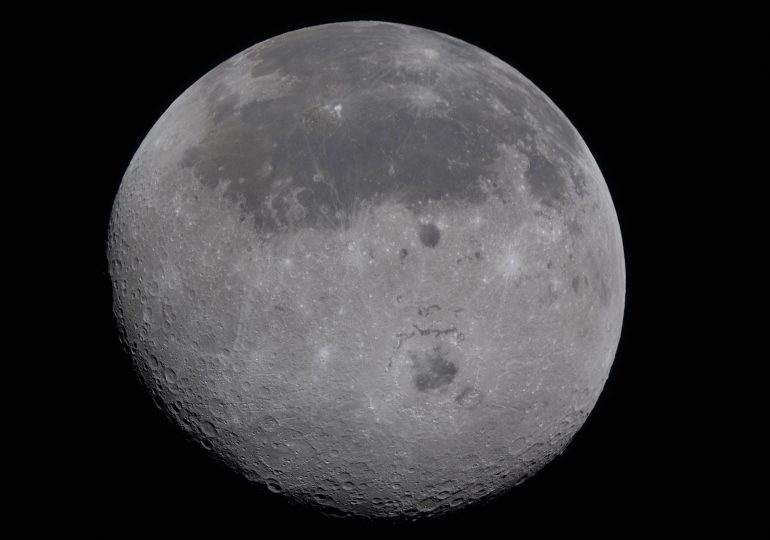
If you’ve never been to the moon you can’t see this part of the moon. At the top of the image are the large basins, or seas, that characterize the lunar hemisphere that always faces us. The bottom half of the image is part of the moon’s far side, which is always turned away from the Earth. The dark patch in the middle of the image is Orientale basin, an ancient 600-mi.-wide lava flow that straddles the near and far sides.
—NASA
Three hours into their swing around the far side of the moon, the crew captured this striking, high-angle image. The terminator—the line that separates the light and dark sides of the moon—is visible at the top left. The sharp angle of the sun creates long, stark shadows that throw the rugged lunar terrain into relief. Shadows of this kind helped the Apollo crews read the landscape as they descended.
—NASA/AP
Shortly before concluding their rendezvous with the moon, the crew was treated to a rare solar eclipse, with the dark bulk of the moon obscuring the bright disk of the sun. From Earth, the sun and the moon appear to be the same size in the skies, which accounts for the blazing solar corona that appears around the moon during an eclipse. From the Artemis II crew’s perspective, the moon was far larger than the sun, making for very little coronal flare.
—NASA
Just before lights-out at the end of a long work period on day five of their mission, the crew captured this pictue of the moon through one of their spacecraft’s five windows. As they slept, they glided into what is known as the moon’s sphere of influence, the point at which the gravity of the moon takes hold of the ship, pulling it away from the grip of the more-powerful, but now distant, earthly gravity.
—NASA
At 7:32 p.m., April 6, during the crew’s lunar flyby, they observed the blue and white crescent of the Earth rising above the moon. The ragged lunar horizon at the top of the image partly obscures the Earth. The image is oriented with the two bodies’ north poles to the left and the south poles to the right.
—NASA
At the center of this image is Vavilov crater, near the smoother Hertzsprung basin. Flat, relatively crater-free areas on the moon were formed by ancient lava flows. Once again, the sharp angle of the sun makes for long, jagged shadows.
—NASA
Another partial view of the total solar eclipse the crew observed during their flyby. On Earth, the totality portion of a solar eclipse rarely extends past four minutes—and usually much less. From the crew’s perspective, this eclipse lasted a full 54 minutes. The bright spangle to the left of the image is the planet Venus.
—NASA
Pilot Victor Glover, left, and mission specialist Christina Koch take their turns at the windows observing and photographing the moon. The crew spent a total of seven hours accumulating lunar images. At their closest approach they were just 4,067 miles from the surface of the moon.
—NASA
Recalling the celebrated Earthrise picture taken during the 1968 mission of Apollo 8, the crew captured “Earthset” as they observed the crescent Earth above the moon at 6:41 p.m. on April 6. The portion of the Earth that is illuminated covers the Australia and Oceana region. Ohm crater is visible on the lunar surface.
Leave a comment