
Warning: This post contains spoilers for 28 Years Later: The Bone Temple.
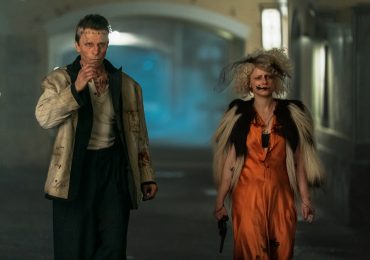
If you thought the blond wig-sporting gang of parkour-proficient, tracksuit-outfitted teens who popped up in the final minutes of 28 Years Later to rescue young Spike (Alfie Williams) from a swarm of infected were going to be the heroes of the sequel to Danny Boyle and Alex Garland’s horror franchise revival, 28 Years Later: The Bone Temple, certainly has a surprise in store for you.
[time-brightcove not-tgx=”true”]
The 2025 first installment in the 28 Days Later legacy sequel trilogy explored the fallout from the Rage Virus contagion nearly three decades after the infection originally ravaged U.K. society, following 12-year-old Spike as he left the safety of the secluded Holy Island community behind to investigate what lay beyond the only home he had ever known. Now in theaters, The Bone Temple, directed by Nia DaCosta (Hedda, Candyman) from a script once again written by Garland, picks up pretty much immediately after the events of its predecessor, with Spike being put to a vicious test by the sadistic leader of the so-called Jimmies, the self-styled Sir Jimmy Crystal (Jack O’Connell). The rules of the game are simple: Spike must fight and kill one of Jimmy’s seven followers—or fingers, as he refers to them—and take their place in his crew, or die. A petrified Spike manages to pull this off, mostly out of sheer luck. But that’s only the tip of the terror iceberg where the Jimmies are concerned.
As the group traverses the British countryside—inching ever closer to an inevitable encounter with Dr. Ian Kelson (Ralph Fiennes) and his increasingly domesticated Alpha infected Samson (Chi Lewis-Parry)—they come across an unsuspecting group of survivors who have taken up residence at a nearby farm. What follows is an intensely gruesome testament to one of the zombie zeitgeist’s most tried and true tropes: humans, not the undead or infected, are the real monsters.
This is nothing new for the 28 Days Later franchise, which established that idea as a core theme of the series way back in 2002. DaCosta likens the actions of Jimmy and his acolytes to those of Major Henry West (Christopher Eccleston) and his soldiers, who turned to enslaving and raping women in the wake of society’s collapse in the first movie. “What the military guys in 28 Days Later are doing is completely unnecessary,” she says. “But they’ve created a dogma. They’ve created a way of living that helps them to organize and hold the weight of the meaninglessness they feel in the wake of the infection. That’s exactly what Jimmy does, and he pulls these kids into it as well. They’re a cult. So there’s a real parallel.”
What happens in The Bone Temple barn scene?
Compelled by what Jimmy claims is the voice of Old Nick, or Satan, speaking directly into his head, the Jimmies gag and string up their four captives in a barn and proceed to slowly flay three of them alive—a ritual act of “charity” they perversely refer to as “removal of the shirt.” Day turns into night as the torture draws on and a panic-stricken Spike cowers outside with the only other Jimmy who seems to still possess an ounce of humanity, Jimmy Ink (Erin Kellyman). At long last, with his skinned companions still agonizingly clinging to life beside him, the Jimmies’ final victim, Tom (Louis Ashbourne Serkis), is offered an out. He must challenge a Jimmy of his choosing to a fight to the death. If he refuses, he will receive charity. If he loses, again, charity.
Tom unwisely selects a female Jimmy nicknamed Jimmima (Emma Laird) as his opponent and is promptly and methodically disarmed as painfully as possible. After pinning Tom to the ground, the psychopathic Jimmima suggests to Jimmy she should perform the charity of “removal of the pants”—we’ll leave that one to you—and prepares to carry out the dreadful deed. Thankfully, at that moment, the one survivor who escaped the Jimmies’ clutches, a pregnant woman named Cathy (Mirren Mack) who has been hiding in the rafters watching these horrors unfold, unhitches a large hook that swings down and impales Jimmima in the back of the head. Chaos ensues as Tom manages to crawl over to a nearby gas canister and uses it to set a few of the Jimmies, his tormented companions, and the barn on fire before he is killed. Cathy escapes, the Jimmies’ numbers are diminished, and the stomach-churning barbarity finally comes to an end.
Read More: 28 Years Later: The Bone Temple Is Sometimes Poetic, But Too Often Sadistic
“The beauty and the bloodshed”
Watching the Jimmies’ penchant for senseless violence and prolonged cruelty play out on screen is brutal enough as is. But, according to DaCosta, the movie’s R rating is a step down from what it could’ve been. “Gore doesn’t bother me. I didn’t realize until we were going through the rating process how intense that scene was coming off to people,” she says. “It has to be violent because the movie is the beauty and the bloodshed. The bloodshed has to be as intense as the beauty is for characters like Kelson and Samson. So when we got the original rating back from the ratings board, we had to figure out how to get it where we wanted it. I thought I’d made it chill. But we definitely wanted it to have impact.”
As for whether she’s worried about scaring viewers to the point that they walk out of the theater, DaCosta maintains that with a horror film, “you want to make sure you’re horrifying people.”
“What you don’t want to do is be gratuitous. You don’t want to be reveling in it,” she says. “But we need to understand the brutality of these people so that when they intersect with a character we care about, we know what the stakes are.”
Leave a comment