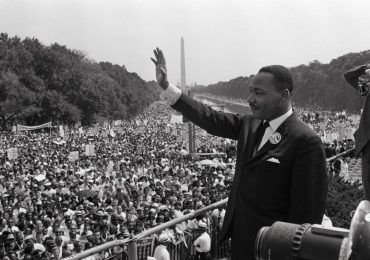
Jan. 19, 2026 marks the 40th year that Martin Luther King, Jr. Day has been observed as a federal holiday on the third Monday of the month.
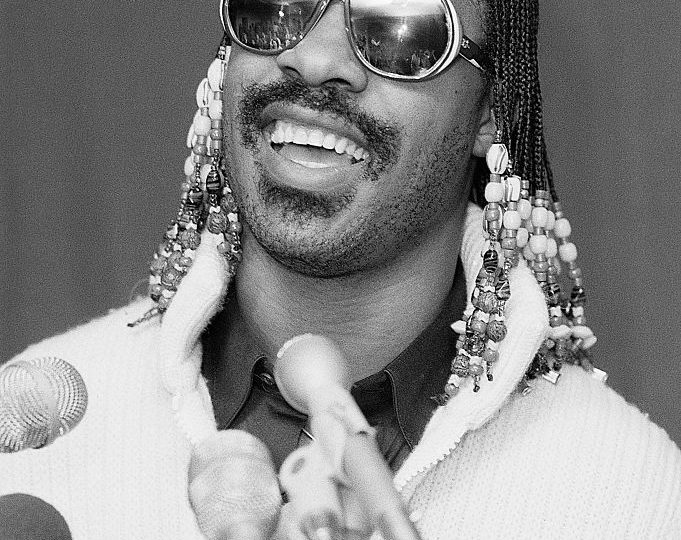
MLK Day, which honors the civil rights activist’s Jan. 15 birthday, was made a federal holiday in 1986 after years of activism from politicians, celebrities, civil rights activists, and the public. A key figure in the effort was the legendary R&B singer Stevie Wonder, who testified before Congress, held rallies, and even wrote the song “Happy Birthday,” which specifically called for a national holiday for King’s birthday.
[time-brightcove not-tgx=”true”]
Here’s what to know about the Grammy Award-winning singer’s role in the creation of MLK Day.
A song in the key of life: Composing “Happy Birthday”
While efforts to push for a federal holiday in King’s name began shortly after he was assassinated on April 4, 1968, they were stalled for years. After a bill introduced by Rep. John Conyers of Michigan failed in September 1979, Wonder reached out to King’s widow Coretta Scott King to propose an idea. As he recalled to CNN’s Anderson Cooper in 2011:
“I said to her, you know, ‘I had a dream about this song. And I imagined in this dream I was doing this song. We were marching to — with petition signs to make for Dr. King’s birthday to become a national holiday.’
And she was excited about it. And she said, you know, ‘I wish you luck, you know. We’re in a time where I don’t think it’s going to happen.’
I said, “Well, no, I really believe it will.’”
In 1980, Wonder recorded the tribute “Happy Birthday”, specifically calling for a national holiday around King’s birthday in the lyrics. He singled out critics, singing, “There ought to be a law against anyone who takes offense at a day in your celebration.” And he issued a direct call to action:
I just never understood
How a man who died for good
Could not have a day that would
Be set aside for his recognition
Because it should never be
Just because some cannot see
The dream as clear as he
That they should make it become an illusion
And we all know everything
That he stood for time will bring
For in peace our hearts will sing
Thanks to Martin Luther King
Happy birthday to you
Happy birthday to you
Happy birthday
In a 1980 TIME review, the magazine wrote, “The song is a declaration of independence and a celebration of pride, and it is one measure of Wonder’s gifts that his music not only honors the memory of a great man, but enhances it.”
Signed, Sealed, Delivered: Passing MLK Day in Congress
On Jan. 15, 1981, more than 15,000 people marched from the foot of the Capitol to the Washington monument, carrying signs that said “Let’s Make This Day a Celebration – Happy Birthday to Martin Luther King.” The event concluded with Wonder singing “We Shall Overcome” and “Happy Birthday.” Wonder backed two more rallies for the holiday in 1982 and 1983.
In 1983, a bill to create the holiday made it to the U.S. House floor, thanks to a petition led by Coretta Scott King, the Congressional Black Caucus, and Stevie Wonder. However, in the Senate, one of the most vocal opponents of the holiday was Senator Jesse Helms (R-NC), who expressed concern about dedicating a national holiday to a man who’d had communist sympathizers as advisors. Accusations that King was a communist were one reason why the civil rights leader was the subject of constant FBI surveillance in the final years of his life. At a 1983 Radio City Music Hall concert, Wonder slammed Helms, arguing, “Each day that you can feel any kind of hatred for anyone is a day that God has given you that you have wasted.”
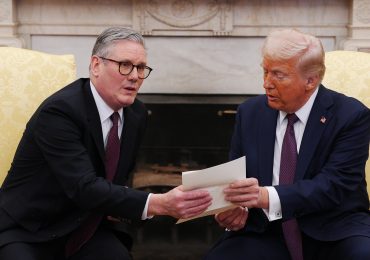
Wonder was 33 years old when, on Nov. 2, 1983, Ronald Reagan signed a bill into law that designated the third Monday in January Martin Luther King Day, starting Jan. 20, 1986. As TIME previously reported, Reagan may have thought that, with the 1984 presidential election coming up, establishing the holiday might make moderate white voters more inclined to vote for him.
Higher Ground: Why Stevie Wonder fought for MLK Day
Shortly after the Senate approved the bill, Wonder told reporters, “We can remind ourselves on [King’s] birthday of our responsibility and our desire to live up to our responsibility.” He said that King was smiling in heaven because “Americans were moving in the right direction.”
He described the purpose of the song in a 1984 UPI interview: “I wanted to rekindle his principles in a song that would be good enough to publish, and strong enough to inspire people to remember the dream. I hope the song did what it was meant to do, but I think the feeling and desire were there for a long time before the song came out.”
Reflecting on the song’s impact to the Los Angeles Times in 1985, Wonder said it was about more than the push for a national holiday: “I never connected it with the movement too much, even though I know it’s connected. Music creates a vibration and energy, and I think people were just singing it to themselves even before I wrote the song. Their spirits were singing that kind of celebration because we wanted it to happen.”
To Wonder, King represented a type of civil discourse that he thinks gets lost in a 21st century audience with so much social media vitriol. As he explained to Anderson Cooper in 2011, King “spoke of finding solutions nonviolently, and as well, he believed in a place of peace that had to exist between all people of this country. We can disagree without feeling that we have to spew words of bitterness, of hatred. I mean, that doesn’t represent a place of unity.”
In 2017, during an appearance on the radio program What’s Good With Stretch & Bobbito, Wonder said he hoped that the holiday would be meaningful to people of all racial and ethnic backgrounds: “I never saw it as being political — I just saw it as being the right thing to do. I just felt that a man who had fought for the economic, social and civil rights for all people should be recognized for the greatness that he did, and for those like himself who lived and died for that, should be recognized. And when people would say to me, ‘Hey, a black holiday!’ I’d say ‘No, this is a holiday for everyone.’”
Leave a comment