
Tired from work and craving a sweet treat or a spa day? Young people in China have a new mantra for that: “Ai ni laoji!”
The phrase, meaning “love you, dear friend,” took off on Chinese social media at the end of last year as users tacked the phrase onto videos, posts, and comments to justify spending on the dearest friend of all: themselves.
[time-brightcove not-tgx=”true”]
It’s a familiar concept to many outside of China: through the 2010s, Western social media was inundated with the phrase “YOLO” (You Only Live Once) and “Treat Yo’Self”—popularized by the sitcom Parks and Recreation—and in recent years, the concept of self-care has powered a booming wellness industry.
Read More: Self-Love Is Making Us Lonely
But the Chinese phrase reflects a starker generational shift in the East Asian nation of 1.4 billion, where older generations have long emphasized hard work and personal sacrifice and where younger generations are now struggling to build their lives according to traditional expectations amid a sluggish job economy and rapid urbanization.
The self-love memes resonate because of their irony, says Sylvia Zhu, a 25-year-old from Beijing who now lives in Seattle. Many of the stories people share online are “about struggling in life and slowly getting through it by relying on yourself,” which many young people in China can relate to, she says, adding that some of her friends have also started saying “life is too short” or “you never know what will happen tomorrow.”
Zhu tells TIME that she and her friends in China enjoy spending on things for themselves like Pop Mart’s viral Labubu dolls, personal luxuries like handbags, or hobby-related gear like camera lenses.
“After I started working, I realized that to keep life feeling exciting, material things sometimes play a role,” Zhu says. “If it’s something you can afford, it’s often seen as a self-reward.”
The mentality is just one example of how young people in China are reacting and adapting to a fast-changing and often atomizing urban society. Ashley Dudarenok, who runs a China- and Hong Kong-based consumer research consultancy, tells TIME that these trends among China’s Gen Z are a “rational response” to a hyper-competitive job market, stagnant wages, and rising costs of living.
“When traditional markers of success like marriage and homeownership become structurally inaccessible for many, young people are forced to redefine what a ‘good life’ means,” Dudarenok says. “If they cannot afford a house, they can at least afford to treat themselves to a nice meal or a Pop Mart toy that brings them joy.”
Read More: Party of One: As Some Restaurants Bemoan Solo Dining, Others Embrace It
Modern anxieties
Chinese families have traditionally lived close to each other, at times with several generations living under one roof. But in recent decades, many Chinese, especially younger generations, have left their homes in rural areas to live and work in big cities like Beijing and Chongqing.
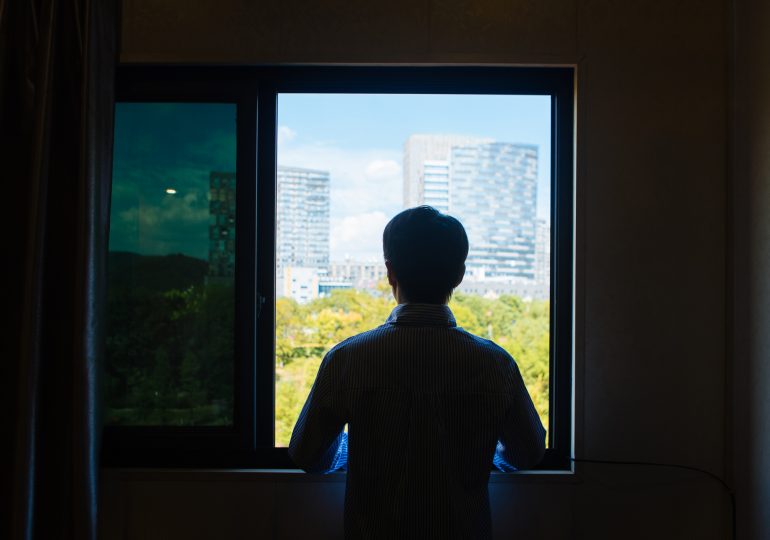
The country has seen a dramatic rise in people living alone, with more than 100 million single-person households, according to an annual report from the National Bureau of Statistics of China in 2024, a number that is estimated to reach 150 to 200 million by 2030.
“People enjoy having their own space and being able to live at their own pace without family pressure,” Zhu says, but living alone “can also be isolating, especially in big cities where social connections can feel shallow.”
That reality has also fueled a surge of products and services catering to people living alone, including restaurants catering to solo diners, a fast-growing pet market, and even AI pets.
“Rapid urbanization and the rise of the digital economy have created a new social landscape,” says Dudarenok. The Chinese government has taken steps to regulate AI companions amid global concern over AI-fueled psychotic delusions and self-harm. The move, Dudarenok adds, is “recognition that these new forms of companionship and social interaction are becoming a permanent feature of Chinese society.”
The app “Si le ma”—Are you dead yet?—has attracted worldwide attention as it’s become one of the most downloaded apps in China in recent weeks. It has just one function: users tap a button on their phones everyday as virtual proof of life to their social network. If a user fails to do so for two consecutive days, the app automatically sends an email to a chosen emergency contact.
Ian Lü, one of the app developers, told the Associated Press that the app serves as an effortless way to let your loved ones know that you’re safe.
But to Zhu, who lives across the globe from her family, the app’s popularity is proof that social isolation has become an accepted reality. The idea of living, and dying, alone may be most closely associated with the elderly, but the app is largely marketed to the young.
“It reflects a sense that young people also feel they could die at any time while living alone, and that because of isolation, friends or family might not notice or do regular wellness checks,” Zhu says. “Rather than making me feel more secure, it shows how lonely and disconnected modern life can be, even for people who are young.”
The app may take a unique approach but it addresses a phenomenon that is not unique to China, underscored by its popularity in places like Singapore, the U.K., India, the Netherlands, and the U.S., and by the wave of copycat apps that has followed. Last week, the app’s developers said they planned to change its name to “Demumu”—a portmanteau of the word “death” and the babble-like naming pattern of Labubu—to cater more to a global market. The announcement disappointed many users, who have commented on social media that they could connect with the matter-of-fact name. Developers said they would crowdsource name suggestions in exchange for a 666 yuan ($96) reward.
“Some netizens say that the ‘Are you dead?’ greeting feels like a carefree joke between close friends—it’s both heartfelt and gives a sense of unguarded ease,” writer He Tao wrote in a commentary for Yicai, the Chinese Business Network. “It likely explains why so many young people unanimously like this app.”
Whether or not young people in China are actually concerned about a premature death, He wrote, the app’s success “serves as a darkly humorous social metaphor, reminding us to pay attention to the living conditions and inner world of contemporary young people. Those who downloaded it clearly need more than just a functional security measure; they crave a signal of being seen and understood.”
‘Reshaping’ traditional values
The individualism taking form among Chinese youth is different from the “rugged, self-reliant individualism often associated with the West,” Dudarenok says. “Chinese youth are not necessarily breaking from their families or culture,” but “they are carving out more space for personal expression and emotional needs within those structures.”
The Spring Festival or Lunar New Year, which begins this year on Feb. 17, is the most significant holiday in China, and it has historically centered on family and relatives. That view hasn’t changed among young people, according to a 2025 survey of Gen Z’s attitudes towards the Spring Festival or Lunar New Year, but some of their ways of celebrating it have. More than a third of the nearly 6,000 respondents said they spend more time socializing online than in person during the holiday, while digital traditions like sending virtual hongbaos or red packets and celebrating with “cyber relatives”—group chats, online communities, and even influencers that young people digitally “visit” during the festive period—have become more popular.
“The tradition is still there, but the social unit has shifted from family to chosen communities,” says Zhu. “It’s less about rejecting tradition and more about reshaping it.”
Many young people in China also value the holiday for more personal reasons, with the extended eight-day break from work or school ranking as their top reason to celebrate, according to the survey. Around half of the respondents also said they spend more during the holiday, particularly on livestream shopping or gaming.
The self-love memes are just another example of how young people are rewriting traditional values.
For older generations, “self-love had to be earned,” Zeng Yuli wrote about the trend in an op-ed for Chinese magazine Sixth Tone.
“If you wanted to treat yourself, you had better first finish the project, get a promotion, or reach your weight loss goals,” Zeng wrote. But among China’s younger generations, “regardless of your success, laoji still deserves compassion, is still worth that milk tea or hotpot, and is still allowed an afternoon of doing nothing.”
Familial expectations are still there, Zhu says. The survey notes that young people, especially young women, find themselves overwhelmed by questions about their careers or marriage at family gatherings during the Lunar New Year. The country’s birthrate fell 17% last year to the lowest level since 1949 when the People’s Republic of China was established, in spite of government efforts to encourage couples to have children.
Read More: China Is Desperate to Boost Its Low Birth Rates. It May Have to Accept the New Normal
But increasingly, those pressures are butting heads with an economic reality that is pushing many young people to reconsider what success means for them. A growing “lie flat” movement of young people in China are choosing a “low-desire life,” moving out of big cities to more rural areas or even out of the country, and rejecting the common grueling work hours of “9 9 6,” or 9 a.m. to 9 p.m., six days a week.
For Zhu’s parents, success “means stability: owning a home, having a stable career, getting married, and raising children.”
“For me,” she says, “success is more about personal fulfillment and mental well-being. Having financial independence, time for hobbies, meaningful relationships, and a sense of freedom.”
Leave a comment