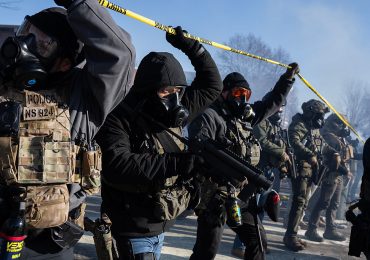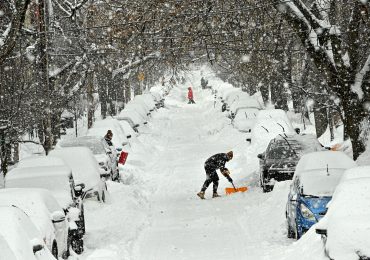
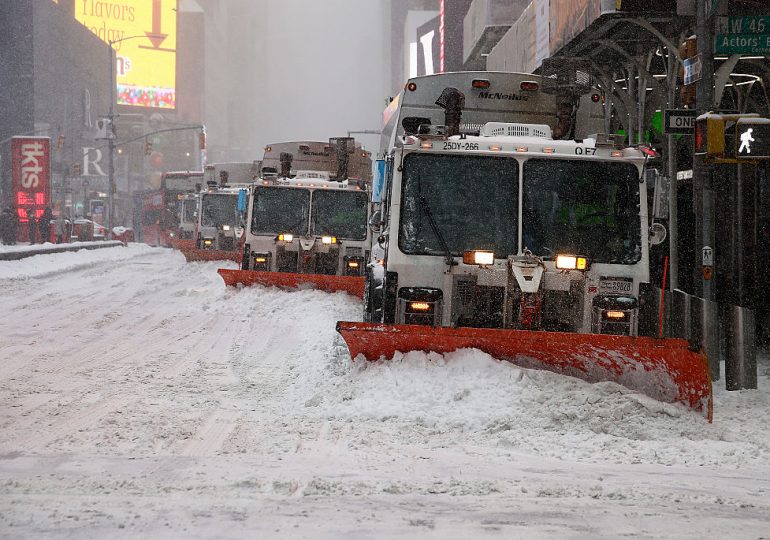
A massive snowstorm blanketed much of the U.S. in snow and ice over the weekend. At least 12 deaths have been attributed to the storm, and more than one million are without power.
As of Monday afternoon, Bonito Lake, New Mexico received 31 inches of snowfall, the most in the U.S., according to the National Weather Service. Napanoch, N.Y. received the second highest total of 30 inches while Jennerstown, P.A.. received 24.7 inches. The agency notes that snowfall totals can lag by a few days, as it takes time for stations to report their data.
[time-brightcove not-tgx=”true”]
The storm broke records in many parts of the country. In New York City, Central Park saw 11.4 inches of snow in Sunday’s storm, the most ever recorded, while Dayton, Oh. where 12.4 inches of snow fell in one day broke its record established during the Blizzard of 1978. Cities in Pennsylvania also set records—Harrisburg recorded 14 inches of snow, breaking a one-day record of 5.4 inches set in 1988. Meanwhile Pittsburgh and Philadelphia, which received 11.2 and 9.3 inches of snow respectively, also broke one-day snowfall records set in 2014 and 2000.
Though snowy conditions are subsiding, the impacts of the storm will linger in the coming days—especially as many regions that saw snowfall are beginning the week with single-digit temperatures. At the peak of the storm on Sunday, one million households were left without power—particularly in southern states that rarely see heavy snowfall like Tennessee, Mississippi, Louisiana, and Kentucky. It could be days—or even weeks—before some areas see power restored. In Mississippi, utility company Tippah Electric Power said there was “catastrophic damage” and that it could be “weeks instead of days” to restore everyone. The storm also brought widespread travel disruptions—the number of cancelled flights rivaled the early days of the pandemic.
Ahead of the storm, President Donald Trump used the storm as an opportunity to express his long held skepticism on climate change. “Record Cold Wave expected to hit 40 States. Rarely seen anything like it before,” he wrote in a post on Truth Social on Friday. “Could the Environmental Insurrectionists please explain — WHATEVER HAPPENED TO GLOBAL WARMING???”
But a winter snow storm doesn’t disprove that the planet is, overall, warming. And climate change could help drive record levels of precipitation like snow.
On average, climate change is leading to shorter and milder winters. But research shows that climate change can make some extreme weather events—including heat waves, heavy rainfall, severe floods, droughts, extreme wildfires, and hurricanes—more intense and more frequent.
Global warming from greenhouse gasses is contributing to a rise in global average temperatures. A warmer atmosphere can carry more moisture, which then is released as precipitation.
During the wintertime, that could mean some regions see storms that dump rain instead of snow as temperatures rise above freezing, while others simply see more heavy snowfall.
Leave a comment