Welcome back to In the Loop, TIME’s new twice-weekly newsletter about AI. If you’re reading this in your browser, why not subscribe to have the next one delivered straight to your inbox?
What to Know: Waymo crosses the pond
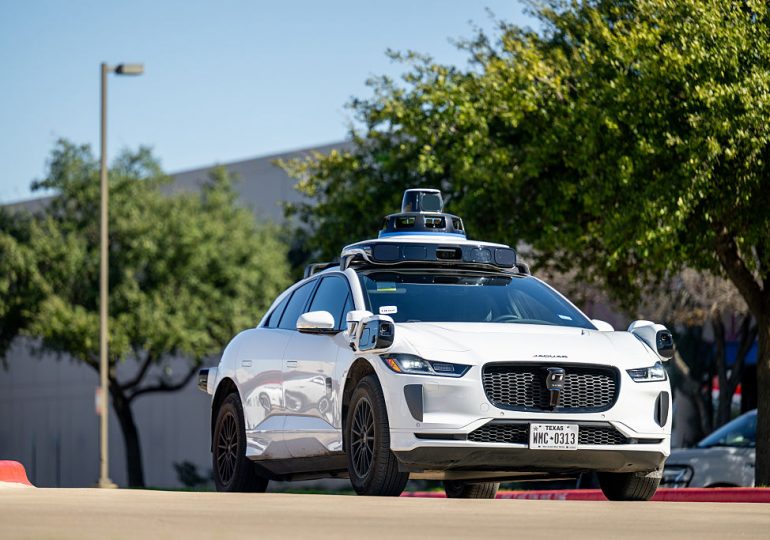
On Wednesday night, I went to a press event in London hosted by the Google-owned robotaxi firm Waymo, which announced it was aiming to make driverless taxis available to Londoners by the fourth quarter of 2026.
[time-brightcove not-tgx=”true”]
Bellwether city — Even though Waymos have been driving autonomously in a handful of U.S. cities for years now, it’s worth paying attention to what’s going on in London. If all goes to plan, it will be the first European city where Waymo launches. It may also be Waymo’s first international launch, depending on how quickly Waymo can launch in Tokyo, where cars are currently in a testing phase. London is a bellwether, in other words, of how easy it will be for American autonomous vehicles to be ported to foreign environments—and therefore, how quickly we can expect to see robotaxis take over the world. It’ll be fruitful to return to this story in a year’s time, to see whether Waymo has met its goal.
A new (old) world — As a Londoner, I can tell you firsthand: this city is very different from its American cousins. It is not based on a grid. Instead, it is a culmination of about 2,000 years of haphazard building and rebuilding, with roads that can be winding and narrow. Jaywalking is legal here, and cycling is far more common. It has a much greater population density than many of the cities where Waymo currently operates, meaning your typical road is not just narrower, but busier too.
Quietly confident — In spite of all that, Waymo is confident that its vehicles won’t take too much coaxing to get used to London roads. The wealth of training data it has collected from 20 million rides so far, the company says, have taught the AI powering its cars to understand dynamic road situations and adapt in real time. Tweaking those systems to account for new rules, Waymo officials contend, is comparatively easy. They say this will happen in three phases. Right now, in phase one, a couple of dozen Waymo cars are being driven by humans around London, mapping the roads and collecting AI training data that will help them understand how the city differs from its American counterparts. Then, in phase two, Waymos will begin test-driving autonomously, with a human “safety driver” behind the wheel, just in case. Only after that process is finished—and after the government grants a final seal of approval—will Waymo enter phase three, with the cars being made available for public use.
By the book — It’s worth noting that robotaxis seem to be a rare case of tech regulation doing its job properly. Unlike Uber, which charged into cities around the world and forced regulators to play catch-up, Waymo is intentionally launching slowly, with government buy-in. Partially, they had no choice: in most places, driverless cars had to be made legal from a baseline of illegality. And despite there being more than a million human-caused road deaths worldwide every year, even one fatality is capable of causing a robotaxi firm’s downfall. Still, it’s a far cry from the playbook we usually see with software, where social media platforms or AI chatbots can launch first and tidy up safety problems later. So far, it has been remarkably safe. At Wednesday’s event, the company touted statistics showing its U.S. cars were involved in 90% fewer crashes causing a serious injury or worse, compared to human drivers, by the mile. “We feel like our record really speaks for itself,” says Ben Loewenstein, Waymo’s head of U.K. and European public policy. “We want to be a great partner to London.”
Who to Know: Dario Amodei, Anthropic CEO
Earlier this week, Anthropic CEO Dario Amodei published a sobering essay on his personal blog, titled The Adolescence of Technology. It is a sequel, of sorts, to an essay he wrote last year, which painted a picture of a future in which the risks of creating advanced AI had been avoided, and humanity lived in a state of utopia. This more recent essay, though, is less cheery. It’s perhaps the clearest account of the dangers our increasingly unstable world faces as thinking machines come roaring into existence.
“Humanity is about to be handed almost unimaginable power,” Amodei writes, “and it is deeply unclear whether our social, political, and technological systems possess the maturity to wield it.”
The essay is long, but worth your time. It is a comprehensive and well-reasoned look at the risks humanity faces from the accelerating pace of AI development. In five chapters that build on one another, Amodei describes different vectors of potential danger.
First, there is AI alignment, or the risk that powerful AI systems work against human interests. Second comes misuse risks, or the possibility that AI could empower the same types of people who today commit school shootings to instead kickstart global pandemics, for example. Even if those are avoidable, third comes the risk of powerful AI systems enabling total surveillance, totalitarian rule, and geopolitical upheaval. And fourth, if by some miracle the world can muddle through, there is also the risk that advanced AI will displace most people from their jobs, increasing the chance of political backlash that, Amodei writes, might make the task of sensibly addressing the other risks even more difficult. (Fifth, he notes, there are probably many “unknown unknowns” along the way, too.)
Despite the gloom, Amodei—who peppers the essay with examples of the ways he believes Anthropic is addressing those risks—ends on an optimistic note.
“The years in front of us will be impossibly hard, asking more of us than we think we can give,” he writes. “But in my time as a researcher, leader, and citizen, I have seen enough courage and nobility to believe that we can win—that when put in the darkest circumstances, humanity has a way of gathering, seemingly at the last minute, the strength and wisdom needed to prevail. We have no time to lose.”
AI in Action
Tesla is converting its California car factory into a hub for manufacturing its Optimus line of humanoid robots, in a sign that Elon Musk’s crown jewel is going all-in on robotics. Tesla will also cease manufacturing its Model S and Model X lines of electric cars to devote itself more fully to building the robots that Musk believes will turn Tesla into a $25 trillion company. But just like Tesla’s car business, which recorded its first- ever drop in annual revenue this week, the robotics effort faces stiff competition from China—which is producing humanoid robots that are both comparatively cheap and highly capable. (Not to mention the American startup Figure AI, which I profiled last year.)
What We’re Reading
Artificial Intelligence and the Great Divergence, by the White House
President Trump’s Council of Economic Advisers published a document this week that claims AI may lead to a “great divergence” between nations — in which those that control powerful AI systems and infrastructure leap far ahead, economically, of nations that do not.
Leave a comment