French prosecutors carried out a search on the offices of Elon Musk’s social media platform X on Tuesday morning and summoned the billionaire owner to attend a hearing in April.
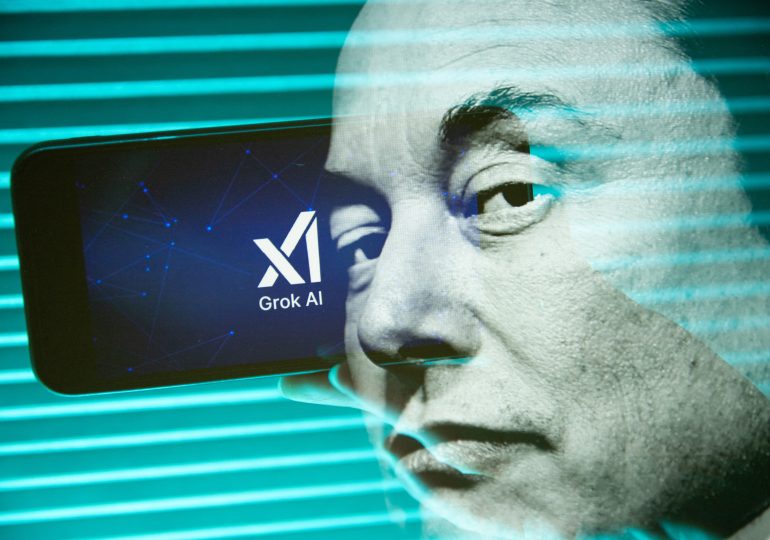
Conducted by the cybercrime unit of the Paris prosecutor’s office, along with the French national cyber unit and European Union police agency Europol, the search marks an escalation of the ongoing investigation into X over suspected abuse of algorithms, plus allegations related to deepfake images and wider concerns over posts generated by the platform’s AI chatbot, Grok.
[time-brightcove not-tgx=”true”]
The office said the search was carried out with “the objective of ultimately ensuring the compliance of the X platform with French law” and in particular, a focus on X’s Grok, designed by xAI, which chief prosecutor Laure Beccuau says has led “to the dissemination of Holocaust denial content and sexually explicit deepfakes.”
Europol spokesperson Jan Op Gen Oorth is quoted as telling Associated Press that the police agency “is supporting the French authorities in this.”
Musk and former CEO of X, Linda Yaccarino, have both been summoned for “voluntary interviews” with French prosecutors on April 20. (Yaccarino stepped down from her role in July last year.) “Employees of platform X were also summoned during the week of April 20-24, 2026, to be heard as witnesses,” the Paris prosecutor’s office stated.
Upon confirming the raid this morning, the office also announced it was leaving X, formerly known as Twitter, and encouraged the public to find them on alternative platforms.
TIME has contacted X and Musk for comment.
After the initial investigation was launched early last year, the French national police became involved in July to look into alleged disruption of data processing system operations and fraudulent data extraction.
In a statement issued via the social media platform, X said it “categorically denie[d] these allegations.”
Alleging that the investigation was “politically motivated,” the platform said it “egregiously undermines X’s fundamental right to due process and threatens our users’ rights to privacy and free speech.”
Taking aim at Éric Bothorel, a lawmaker who was pivotal in the launch of the probe, X said: “Mr. Bothorel has accused X of manipulating its algorithm for ‘foreign interference’ purposes, an allegation which is completely false.”
“X believes that this investigation is distorting French law in order to serve a political agenda and, ultimately, restrict free speech.”
In response, Botherel said: “Do you believe yourselves above French, European, and even American laws? There is no freedom without responsibility and oversight.”
The potential crimes that the Paris prosecutor’s office is now investigating include complicity in the possession of images of minors of a pornographic nature, complicity in the organised distribution, offering, or making available of images of minors of a pornographic nature, and defamation of a person’s image (deepfakes of sexual nature).
Shortly after news broke from France on Tuesday morning, the Information Commissioner’s Office (ICO)—a U.K. data privacy watchdog—announced it is opening investigations into X “in relation to the Grok artificial intelligence system and its potential to produce harmful sexualised image and video content.”
The ICO said it is conducting these investigations “following reports that Grok has been used to generate non‑consensual sexual imagery of individuals, including children” and that “the reported creation and circulation of such content raises serious concerns under U.K. data protection law and presents a risk of significant potential harm to the public.”
The ICO’s probe follows that of U.K. regulator Ofcom, which launched a formal investigation into X on Jan. 12.
“Ofcom was one of the first regulators in the world to act on concerning reports of the Grok AI chatbot account on X being used to create and share demeaning sexual deepfakes of real people, including children, which may amount to criminal offences,” said Ofcom in a new statement published Tuesday. “Our investigation remains ongoing and we continue to work closely with the ICO and others to ensure tech firms keep users safe and protect their privacy.”
Grok’s deepfake crisis has come under significant scrutiny in recent months after X users took to employing the AI chatbot to digitally disrobe women. The flurry of non-consensual deep fakes produced on the platform prompted outrage and concern across the globe.
After U.K. lawmakers demanded action be taken, X limited Grok’s deepfake ability to paid subscribers only. The measure did “not go anywhere near enough” to address the issue, according to British Technology Secretary Liz Kendall.
“The Data Act, passed last year, made it a criminal offence to create—or request the creation of—non-consensual intimate images. And today, I can announce to the House that this offence will be brought into force this week and that I will make it a priority offence in the Online Safety Act too,” Kendall announced on Jan. 12.
“This means individuals are committing a criminal offence if they create—or seek to create—such content, including on X, and anyone who does this should expect to face the full extent of the law,” she added.
Days later, X announced it would aim to block its AI from undressing images of real people.
“We have implemented technological measures to prevent the Grok account from allowing the editing of images of real people in revealing clothing such as bikinis, read a statement. “This restriction applies to all users, including paid subscribers.”
Serious concerns remain, and the European Commission launched a formal investigation into X under the Digital Services Act (DSA) on Jan. 26.
In an earlier controversy, Musk’s AI company apologized last year after Grok published a series of “horrific” antisemitic posts on X. Amid the outcry over the posts, Musk told X users that “Grok was too compliant to user prompts. Too eager to please and be manipulated, essentially.”
Leave a comment