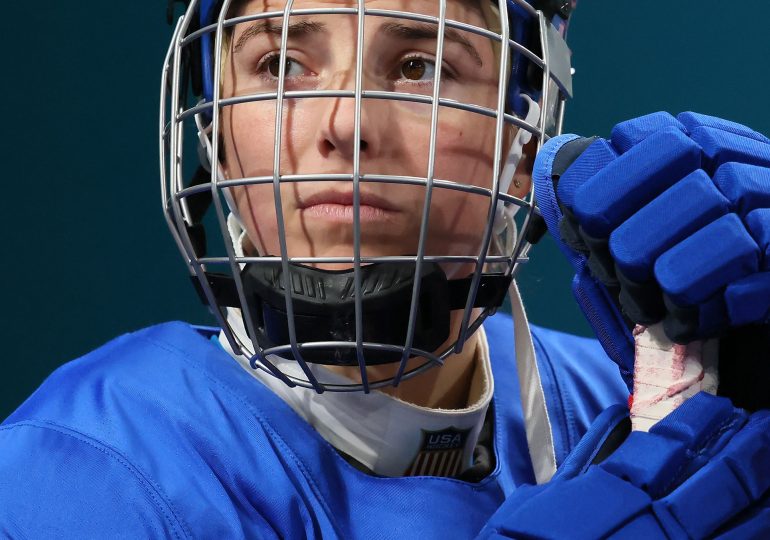
As a 10-time world champion who’s entering her fifth, and final, Winter Olympics, American hockey star Hilary Knight, 35, has played a key role in energizing one of the greatest rivalries in all of sports. Since women’s hockey debuted at the 1998 Nagano Games, Canada and the United States have met in the gold-medal match in every tournament but one, in 2006, when Canada defeated Sweden for the title. Canada has won four of the six Olympics championship duels with its southern neighbors, with the 2006 victory giving the country five overall Olympic women’s hockey golds. The United States, meanwhile, has won two, in 1998 and 2018.
[time-brightcove not-tgx=”true”]
In Beijing, a U.S. comeback against Canada fell just short; Knight scored a shorthanded goal in a 3-2 loss. With women’s hockey now ascendant—average attendance in the Professional Women Hockey League (PWHL), which debuted in 2024, rose 27% in 2025, and merchandise sales doubled—the Americans carry momentum going into Milan. They swept the Canadians in a four-game tune-up series, played in November and December, and also won the 2025 World Championship.
Knight, the Team USA captain and 2023 International Ice Hockey Federation Player of the Year, and captain of the PWHL’s Seattle Torrent, talked to TIME last fall about the history of the U.S.-Canada rivalry, players to watch at this year’s Winter Games, and going to the Olympics with her girlfriend, American speedskater Brittany Bowe. The couple owns a half-dozen Olympic medals between them and could add more to their collection in Milan.
(This interview has been edited and condensed for clarity).
What’s your spiciest memory of the U.S.-Canada rivalry from over the years?
Top of mind is our game in Grand Forks, N.D. [in late 2013, in the lead-up to the Sochi Olympics], where this insane fight broke out. Just madness. One of our players got not a great hit. And there was some history that boiled over from the under-22 or under-23 series. And so our coach is like,“Green light.” [Laughs]. What does that mean?
She’s sending me out with the twins. [Jocelyne and Monique Lamoureux, American players known for their physicality and willingness to tussle]. At the time, I don’t think the twins and I played together. And we’re going into a face-off, and they’re looking at me like, “Why are you on the ice?” I don’t know what I’m doing out here either. I’m just like, “Green light, green light.” There’s some crazy hits. It was just game on from there. Tempers festering and building. We were trying to put our line in the sand. “Hey, we’re standing up for our teammates. The USA is here to play.”
That’s why this rivalry is so great. There’s always something that just ignites or sparks the group, and then that’s what everyone’s holding onto as we lead up to the Olympics. Whenever you throw on that jersey, whenever you get to represent your country, there is just so much pride. There’s so much pride playing the Canadians. You’re really getting best-on-best. We feel it. The fans feel it as well. It just sort of comes through the TV screen. It’s beautiful from a competitive standpoint. When we meet each other, it is absolute war.
In your first Olympics, in 2010 in Vancouver, Canada beat the U.S. 2-0 in the gold-medal game. The Canadians celebrated with beer and cigars on the ice, and an IOC official said he didn’t think the scene was “a good promotion of sport values,” sparking a bit of a row. Did Canada’s celebration bother you?
No. You just won. It was on your home ice, at the time a record-breaking crowd. Pretty incredible. The hardest thing for us was we couldn’t go anywhere to kind of celebrate our season as a team. Because the fans were just crazy up there. When you go to the Olympics, you have all the garb. You’re plastered with Team USA. There isn’t a bar where you can hide in anywhere.
After the heartbreaker in Sochi—the U.S. lost 3-2 to Canada in overtime after giving up a late 2-0 lead—your team rebounded to beat Canada in PyeongChang, 3-2, in a back-and-forth classic in 2018 that ended in an overtime shootout. It was the first Olympic hockey gold for the American women in 20 years. What stands out to you now about that game?
There was the pressure of that storybook ending from what we had done as a team in 2017. [The U.S. women had threatened to boycott the World Championships that year if they did not receive a better pay deal. USA Hockey and the players reached an agreement right before the start of the event.] We really wanted to get it done for everybody in that room and who obviously helped us get to where we were. We were playing for a bigger purpose. Everything we had gone through, we needed to stamp this thing with a win, to really solidify everything.
Whatever obstacle was going to present itself, or whatever momentum shift in the game, we were going to find a way to overcome it. It was just such a powerful group to be a part of. And then Maddie [Rooney, the U.S. goaltender] touching the glove so the puck stops its trajectory forward, and it was just like this massive relief and excitement. All these crazy emotions built into one moment. I wasn’t able to sleep for a really long time. I was just amped up.
Did the 2018 win ease the pain of your team’s loss in Beijing four years later?
Beijing was just so hard because we had a handful of players get COVID right before. What we knew about COVID at the time and how to participate in sport in China, it was just so hard to figure out if half of our team was actually going to be able to go to the Olympics. We were practicing in groups of two, at different ends of the ice. It just didn’t feel like we were going to an Olympic Games given all the rules and sort of the hurdles we had to overcome. People were getting ice outdoors in Minnesota to have safe practices. So it was just a really weird time.
Then we were also trying to shift the internal focus of the team to be “we’re not going to focus on how different this Games is.” We just want it to feel like another tournament without all the extra pressure. From a human standpoint, a competitor standpoint, when you go through all that and you lose, you’re like, “Oh, this just sucks.”
So what’s at stake here this time around?
We have an unbelievable team. Anything less than gold, that’s underperforming for us. I don’t want to sound too confident, but we’re just so good that anything less than that would be us falling short. Internally, the pressures of that, that’s not something we’re infusing necessarily into the room. But when I remove myself and look at the talent that we have, we have a really remarkable group.
For those unfamiliar with the U.S. team, who are some of the players, besides you, they should be watching?
KK Harvey would be a great one to watch back there with the D. We have Lee Stecklein back, who’s a great anchor. Megan Keller is really steady back there as well. I’m looking forward to Jan-ey [Tessa Janecke] up front to take more steps. She got the OT winner [at the 2025 World Championships]. She’s a phenomenal talent. Joy Dunne is another player to keep your eye on. She’s got this awesome frame and awesome build. She’s like 6 ft. Just a powerhouse, with this amazing tenacity. And also a skill set that would make her a finesse player as well.
You still have your go-tos. You have Kendall [Coyne Schofield] and Carpy [Alex Carpenter] and sort of the day-oners that have been through it, tried and tested. And we’ve got the other Secretary of Defense, [goaltender] Aerin Frankel. She’s back there. And [Gwyn Philips] had an awesome [2025] PWHL season at the end. She really carried the Ottawa Charge.
When we play together, and combine that with our speed, we are just a lethal combination. So we have the opportunity to push the pace and inflict the tempo that we want, which puts us in a really good position.
What are the challenges that Canada provides?
They’re a really well-studied team. They have really hard game plans to play against. They’re very prepped all the time. They’ll be ready for whatever attack there is. And they just have experience. As I learned in 2014, having more experience can tend to shift the odds in their favor. And so you combine that with already amazing players, it leads up to a really good matchup and rivalry game.
One of those players, Canada’s Marie-Philip Poulin, is an all-time great. She scored both goals in Canada’s 2-0 win in Vancouver, scored the game-tying, and game-winning, goals in Sochi and also scored twice in the gold-medal win for Canada in Beijing. What makes her so special?
That team, without her, it looks completely different. She’s one of those generational talents, someone that’s hard to play against, and finds herself in awesome positions towards the end of the game. So you have to figure out where she is on the ice. If you take her out of the equation, last 10 years, I don’t think Canada is capable of doing what they have done. That’s a testament to what she brings to the table and her caliber of play.
While you and U.S. Olympic speedskater Brittany Bowe knew of each other before the Beijing Games, your relationship really blossomed during that time. What happened?
We started off going on these distanced walks. Because you’re scared of COVID. Being in the village, I don’t want to screw up my chances, or her chances. We just went on a ton of walks and bonded that way. At any other Olympics that wouldn’t happen because you’re not just in the village not able to do anything else. So it was sort of unique.
What is like being in a relationship with a fellow Olympian also preparing for the Games?
It’s cool. As we get closer, when we feel a little bit of the pressure, we’ll have an understanding of being like, “Hey, you’re stressed out because of [the Olympics].” You get it. We’re not necessarily training together on the same ice. But we’re training in the same facility. So she gets to give me a hard time here and there –not getting low enough on my squats. I consider her the real athlete.
What can fans expect when they tune in to watch your team in Milan? What might look different than in past iterations of the Olympics?
You’re going to see a faster game than you’ve ever seen before. Now, the level skill and speed continues to outskate itself, so to speak. Now that we’ve got players coming over here from other countries, it’s only going to elevate the game long-term. When I look back at 2010 and look at what’s on ice now, I’m like, “Whoa.” It has evolved into its own thing. These younger players are introduced to more coaches at a younger age, so they’re getting different types of feedback. The way that they’re thinking about the game and seeing the game is completely different. You combine that with the best players in the world, it’s just this incredible display of athleticism. People will feel empowered by the way that we play.
Leave a comment