Bad Bunny, the headliner of the Super Bowl LX halftime show, has never been subtle about where he’s from. He brings Puerto Rico to the global stage in his music and his style choices.
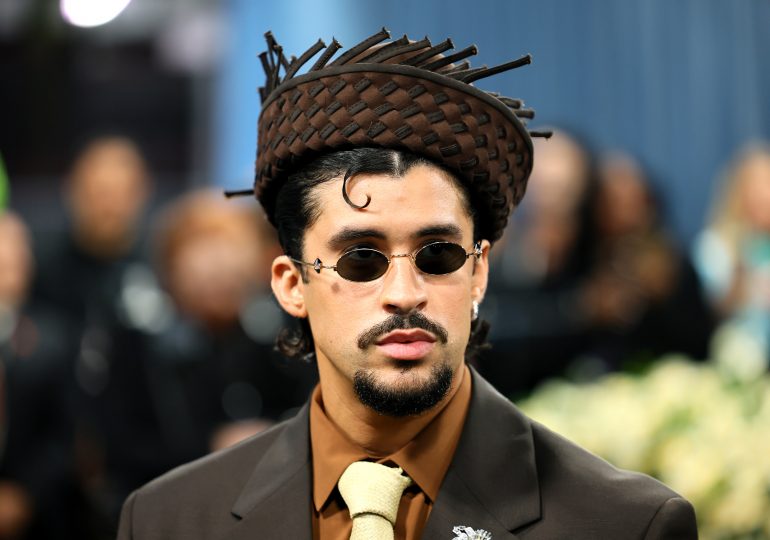
One of the clearest examples is his embrace of jíbaro fashion. The jíbaro, a rural farmer who historically worked the land, has long occupied a complicated place in Puerto Rican culture. When Bad Bunny wears a pava (straw hat) designed by Neysha de León at the 2025 Met Gala or a guayabera (shirt with four pockets) designed by Yazmín “Yayi” Pérez, the impact goes far beyond style. By centering a once-exploited and later stigmatized symbol of rural Puerto Rican life in global pop culture, he reverses centuries of elite appropriation and erasure.
[time-brightcove not-tgx=”true”]
The jíbaro is no longer a folkloric caricature. Carried into global pop culture by Bad Bunny, it has become a living symbol of dignity and resistance—especially for younger generations—asserting that Boricua identity belongs on the world stage without apology.
That shift is visible on the archipelago. Walking through Viejo San Juan, it’s now common to see young boys wearing pavas casually, not as costumes but as fashion. The image echoes Bad Bunny himself, sitting confidently on a goalpost in a commercial for the Super Bowl halftime show, pava tilted with ease.
Until recently, such a scene would have been unthinkable outside folkloric performances or school celebrations like La Semana de la Puertorriqueñidad. For decades, the pava had been confined to caricature, tourism imagery, or nostalgic display. Its return as casual, aspirational fashion coincided with the release of Debí Tirar Más Fotos in 2025—a Bad Bunny album that honors Puerto Rico’s musical traditions while delivering pointed critiques of inequality, displacement, and political failure.
Bad Bunny’s subsequent residency in San Juan reinforced that cultural shift. From July to Sept. 2025, across 31 nights at the Coliseo de Puerto Rico José Miguel Agrelot, more than 14,000 attendees per show witnessed not just infectious rhythms but a sustained performance of Puerto Rican identity. With over 82 billion streams and 2.6 million tickets sold across 18 countries, Bad Bunny leveraged his global platform to demonstrate Puerto Rican pride on an unprecedented scale.
The residency also had tangible economic effects. Hundreds of thousands of fans traveled to Puerto Rico, boosting tourism and energizing local businesses during what is typically a slow season. San Juan’s City Hall estimates the economic impact at $379 million, while a separate Gaither International study places it closer to $713 million. Culture, in this case, translated directly into material benefit.
In the Debí Tirar Más Fotos tour, Bad Bunny’s performance wardrobe invoked the jíbaro. To grasp the weight of that gesture, it’s essential to understand the figure’s long and conflicted history.
The jíbaro has never been a neutral symbol. Under Spanish colonial rule, rural peasants were routinely described by elites as uncivilized, lazy, and backward. Yet by the late eighteenth century, the jíbaro entered elite cultural production, not as a subject with agency, but as an image to be appropriated.
In 1776, Spanish artist Luis Paret y Alcázar, exiled to Puerto Rico, painted himself dressed as a jíbaro: loose white shirt, worn trousers, straw hat, plantains in one hand, machete in the other. Historian Francisco Scarano describes this as “jíbaro masquerade”—the elite adoption of peasant identity for symbolic political gain. While the image projected endurance and connection to the land, real jíbaros remained marginalized.
Nineteenth-century Puerto Rican criollo elites continued this pattern. In El Gíbaro (1849), writer Manuel A. Alonso romanticized rural simplicity while erasing the racial and class realities of jíbaro life. These portrayals often Europeanized the jíbaro’s features, transforming him into a noble but static emblem: useful for defining national identity, yet detached from the lived experiences of Black and Brown agricultural workers.
Later, in the 1930s, Luis Muñoz Marín recast the jíbaro as a populist symbol. In 1938, he commissioned artist Antonio I. Colorado to make the pava the centerpiece of the Popular Democratic Party’s red logo. The party’s slogan—Pan, Tierra, Libertad—cast the jíbaro as the moral heart of the nation, even as modernization policies steadily undermined rural life.
The contradiction was stark. Muñoz Marín, who came from a privileged family and held immense political power, often wore a guayabera while meeting subsistence jíbaros, many of whom lacked basic necessities, including shoes. The 1950s brought Operation Bootstrap, rapid industrialization, and mass displacement. Rural populations were labeled backward, their ways of life devalued in favor of urban-industrial growth.
Communities once elevated through romanticized jíbaro imagery were largely excluded from the prosperity modernization promised. While monuments celebrated the figure, rural Puerto Ricans faced poverty, educational neglect, and economic marginalization. In urban contexts, jíbaro even became slang for ignorance, reversing its earlier nationalist meaning.
It is against this history that Bad Bunny’s reclamation must be understood. When he wears the pava or guayabera, he is not romanticizing or erasing the jíbaro. He is reclaiming it on his own terms.
Bad Bunny has transformed a symbol of shame into a cultural movement, boldly declaring that ser Boricua está de moda. His cultural politics center marginalized Puerto Rican voices, from Afro-Caribbean heritage to LGBTQ+ and working-class communities. When he takes the Super Bowl halftime stage, rural and urban landscapes will merge. Reggaetón will flow into bomba and plena. Puerto Rican identity will be presented not as a relic, but as dynamic, contemporary, and defiantly alive.
Leave a comment