Before the 2018 PyeongChang Winter Olympic Games, the South Korean Women’s National Ice Hockey Team received little media attention. They qualified due to their host-country status, their odds of winning were slim, and hockey was not a popular sport in South Korea.
But a month before the games started, an unexpected announcement thrust them into the international spotlight. Kim Jong Un, the leader of North Korea, appeared on state-run television a month before the games and stated that he intended to send North Korean athletes to the 2018 Olympics.
[time-brightcove not-tgx=”true”]
This was a shock. The last time South Korea hosted the Olympics in 1988, a suspected North Korean terrorist bombed a plane in an attempt to disrupt the games. Flashforward roughly 30 years, and North Korea tested intercontinental ballistic missiles and touted a miniaturized hydrogen bomb—just months ahead of the 2018 games. The test raised safety concerns not just for the athlete delegations heading to the Olympics, but for citizens all over the world.
Despite these sky-high tensions, Kim Jong Un’s desire to send athletes to the games made the 2018 Olympics the impetus for a rare deal between North and South Korea, which included a stipulation that 12 North Korean athletes would join the South Korean women’s national ice hockey team.
This seemingly small step towards peace on the Korean peninsula unified the Korean team and symbolized much more. The athletes marched under one flag during the opening ceremonies and fans proudly chanted “We Are One.” As one player, Randi Griffin, remarked: “Sporting events have a huge impact on public opinion, and public opinion has a huge impact on politics, so…[this moment] can change the hearts and minds of South Korean [and] North Korean people.”
Griffin was right. The 2018 Olympics improved sentiment for both nations and created public pressure for diplomatic talks. While attending the Olympics, the South Korean President, Moon Jae-In, received his first-ever invitation to visit North Korea, ultimately catalyzing the April 2018 Inter-Korea Summit, the first inter-Korean summit in over a decade.
This story drives home an important point: the Olympics are an arena of diplomacy. Indeed, the games have a knack for delivering more than just sports—they consistently provide a public stage to amplify stories of unity and expose injustices. Now, amid pressing international conflicts, the Olympics is one of the most significant geopolitical events of the year.
The diplomatic power of the Olympic Games is no accident. The first-ever Olympics promoted principles of peace. In 776 BC, in the area around Olympia, two kings were at war. To ensure the safety of the games, the kings established the “Olympic Truce,” an agreement that promised protection to all participants. The truce ensured the host city would not be attacked and guaranteed that athletes and spectators could travel safely to and from the games. This created a rare occasion in which warring groups could coexist in a shared space, watch sports together, and safely sit down at the negotiating table.
In the modern era, the diplomatic power of the Olympics is much more subtle. Today, countries use soft power tactics to sway public sentiment and promote curated cultural ideals and the Olympics offer one of the most significant public stages for such soft power campaigns. Consider the last Olympics in Paris. More than half of the global population followed the Paris 2024 Olympics, and those Games generated over 12 billion social media engagements. Notably, over one hundred dignitaries attended the 2024 Paris Games, with more unique delegations than at the G20 summit. Broad visibility, swanky dignitary dinners, and viral athlete narratives made Paris the perfect garden to plant soft-power seeds.
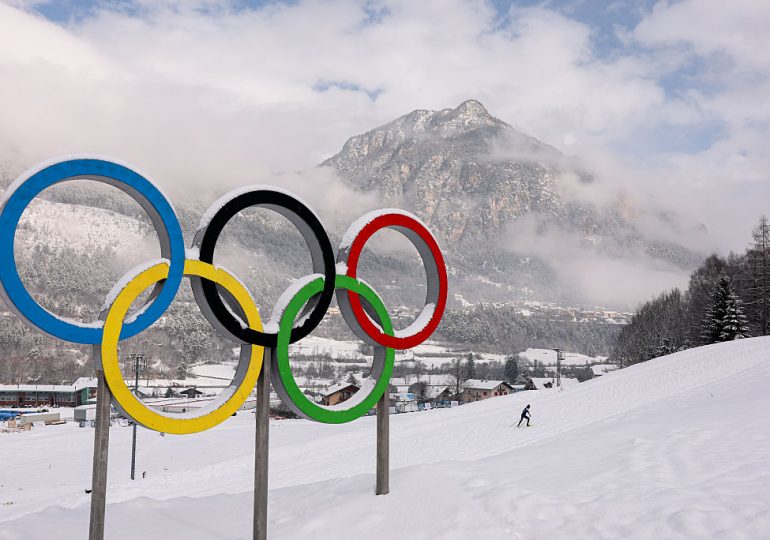
As we head into the 2026 Winter Games in Milan and look ahead to the 2028 Summer Games in Los Angeles, history teaches us to anticipate the shows of soft power, cultural controversy, and diplomacy—mixed in with curling and volleyball, of course.
For instance, the Olympics can help highlight smaller countries when seldom news-covered nations make headlines for their athletic prowess. In the past two Winter Olympics, Norway became the center of attention as it dominated the medals table, while in most Summer Olympics, Jamaica earns the spotlight for its sprinting prowess and Kenya for its distance running. Researchers have found that Olympic coverage can improve a country’s image and even have positive economic effects.
Countries can also use uniforms to their benefit, like in the 2016 Olympics, when Tonga’s “shirtless Tongan” outfit worn by Pita Taufatofua led to 230 million Google searches for “where is Tonga?” With increased online searches about Tonga, Taufatofua used the moment to spread awareness about Tonga’s challenges with climate change.
Host countries also tend to leverage the games to make a diplomatic statement. For example, Japan successfully used the 1964 Olympics to engage new potential allies by demonstrating to the world its technologically advanced, peaceful post-World War II direction. China used the 2008 Olympics to strengthen its geopolitical positioning among fellow Asian and African nations. Italy could use the 2026 games to have back-channel meetings with the U.S. about pasta tariffs, or with Morocco to strengthen its relationship with a key Mediterranean partner.
Importantly, the 2026 games could be used to highlight injustices or to raise awareness for human rights violations. One of the most iconic sports protests in history was staged during the 1968 Mexico City Summer Olympics when sprinters Tommie Smith and John Carlos held their fists up during the American national anthem to protest institutionalized racism and police brutality. In 2016, 2020, and 2024, refugee athletes marched under a neutral flag during the summer games, amplifying a global humanitarian message. For those who feel unheard, their messages could echo through the sports and political arenas.
The International Olympic Committee (IOC) has imposed bans on countries it deems to be human rights abusers. While the IOC is far from perfect, many in the international community supported a multi-decade string of bans and boycotts resulting from the South African apartheid and a ban due to the Taliban’s restrictions on women’s rights in Afghanistan. Individual countries could send a message as well, like when over a dozen nations declined to send any diplomatic dignitaries to the 2022 Beijing Winter Games due to human rights concerns. This year, a ban is in place—Russian and Belarusian team-sport athletes are barred from the games.
So what else can we expect for the upcoming 2026 Italy-hosted winter games? Countries making their Winter Olympic debuts, such as Guinea-Bissau, Benin, and the UAE, may make a media splash.
We may see heightened discussion of immigration policy as the U.S. prepares to welcome fans from around the globe for the world’s subsequent major international sporting events: the 2026 World Cup and the 2028 Summer Games.
Watch for loud, proud reactions to Ukrainian athletes, as they will likely use these Olympics to demonstrate determination on the international stage. With Russia and Belarus officially banned, and the games taking place in Europe, there will likely be significant diplomatic attention on Russia’s aggression in Ukraine.
Let the diplomatic games begin.
Leave a comment