
As the Lunar New Year approaches, Sherry Zhu, a 23-year-old Chinese American living in New Jersey, has begun sharing Chinese cultural practices to an unusual audience.
“First Chinese New Year kinda nervous,” one person commented. Another proclaimed that “as a newly Chinese baddie,” February was no longer about Valentine’s Day, but about the Lunar New Year, which begins on Feb. 17 and is the biggest annual multi-day period of festivities celebrated in China and other countries in Asia as well as by Chinese diasporic communities around the world.
[time-brightcove not-tgx=”true”]
It’s also—as of a new trend—going to be celebrated by a new cohort of self-identifying “Chinese” non-Chinese social media users, primarily from the U.S., who have embraced the moment as their “Chinese era” or are “Chinamaxxing.”
Observers tell TIME that the trend reflects a growing fascination with China as the country opens up and rises in soft power. For Americans that are disillusioned by a state of affairs marked by aggressive immigration crackdowns, fractured domestic politics, and controversial foreign policy, observers say it also reflects a desire for an alternative model to the U.S.
“China feels much more present in everyday American life than it did even a decade ago,” says Caroline Ouellette, a researcher at University of California, Los Angeles. “China looks different in the American imagination than it did in previous generations,” in large part, she adds, because social media has made information about and from China more accessible. “Online, you see sleek public transit, walkable cities, aunties dancing in parks, bustling night markets—everyday scenes that complicate older stereotypes.”
The Chinese government has also made a concerted effort to disseminate more positive portrayals of China over social media. And China’s Foreign Ministry endorsed the “becoming Chinese” trend, with spokesperson Lin Jian noting that flights to China for the festive Chinese New Year period have dramatically increased this year.
Participants in the trend are “engaging with a hyperreal China, a symbolic version that absorbs everything Americans fear that they’re losing: community, structure, competence, limits, cultural continuity and care for elders,” Ouellette said in a video for anthropology channel AnthroDorphins. By contrast, today’s China “feels contemporary, dynamic, even aspirational in certain ways,” she adds to TIME.
Memes related to the trend have been circulating for nearly a year, but they’ve grown in intensity in recent months.
Zhu has gone viral since December for her TikTok videos in which she teaches presumably non-Chinese, often non-Asian viewers how to embody their “Chinese baddie” selves using traditional Chinese medicine (TCM)-based practices, like boiling apples to produce a digestion-aiding tea and wearing house slippers to avoid placing your bare feet on a cold floor. But Zhu’s viewers aren’t just adopting Chinese lifestyle habits, they’re “turning Chinese,” she declared in a clip at the start of January.
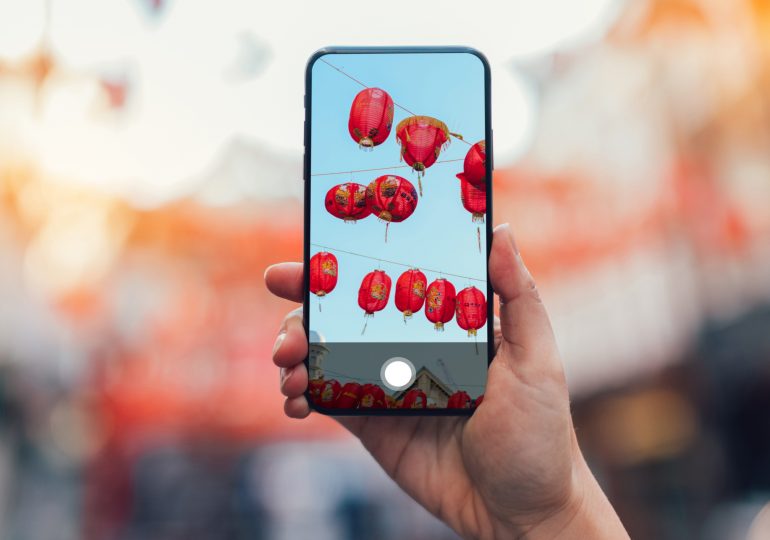
“Since you’re a Chinese baddie, how are you celebrating Chinese New Year?” Zhu asked in a video earlier this month, anticipating the upcoming holiday. Wear red for luck, avoid cutting your hair for a month after the first day of the Chinese New Year, and exchange red packets filled with money with family, she has advised. In her comments, one person shared the red manicure design they planned to get for the occasion, while another posted photos of red paper lanterns and banner decorations they put up around their home. “Cousin Sherry,” some have asked, adopting a familial tone with Zhu, “what are we doing for Chinese New Year?”
Other non-Chinese users have made videos showing themselves wearing red for good luck, marking Feb. 17 on their calendars, and discussing their Chinese zodiac forecasts for the “Year of the Horse.” Meanwhile, both Chinese Americans on TikTok and Chinese users on RedNote have shared more tips on what to do and not to do over the Chinese New Year.
“Found out I was Chinese a few days ago,” one TikTok user captioned a Jan. 14 video, “so OUR new year is coming up.”
‘There’s pride, but there’s also memory’
Zhu often gets comments asking if wearing house slippers or eating hot pot can make someone Chinese, to which she enthusiastically replies in the affirmative. But not everyone is as supportive of the trend.
Vanessa Li, a 26-year-old Chinese Australian content creator who has written and spoken about the “becoming Chinese” memes, says criticism of the trend tends to stem from a fear that Chinese culture is being appropriated and treated as little more than an internet fad.
Li says the meme has coincided with other aspects of Chinese culture going viral but being decontextualized from their Chinese origin or history, like the Tang jacket which has been refashioned by Adidas.
But many like Zhu are happy for Chinese identity to be held up as an ideal among Americans, when it often hasn’t been. They just hope it lasts.
Ouellette tells TIME that growing up in the Midwest as a half-Chinese person, she was no stranger to being told her lunch smelled strange or that her eyes looked weird. And in mainstream entertainment, aspects of Chinese culture or identity were often turned into the butt of the joke.
“When there’s a sudden 180-degree shift and the same cultural markers become trendy, it can feel jarring,” Ouellette says. “There’s pride, but there’s also memory.”
The recent history of anti-Asian racism, sinophobia, and violence during the COVID-19 pandemic remains at the top of many Asian Americans’ minds, says Kathy Pham, a 23-year-old Vietnamese American artist from Colorado.
Pham sees the meme as a form of “eating the other,” a reference to an essay by feminist author bell hooks on how dominant groups “consume” marginalized cultures, reinforcing existing power structures. Especially against the backdrop of deepening political polarization in the U.S., Americans may be participating in the trend in order to distance themselves from a politic that they disagree with, Pham tells TIME.
“The over-riding fear is that cultural, ethnic, and racial differences will be continually commodified and offered up as new dishes to enhance the white palate—that the Other will be eaten, consumed, and forgotten,” hooks writes in the essay.
Pointing out that many of the aspects of Chinese culture that have been popularized have been bite-sized, easily digestible pieces like—if not literally food—wellness habits or fashion items, Li says she tries to instead emphasize the deeper, at times less glamorous parts of the Chinese experience, like observing filial piety.
There’s “thousands of years of history that led the culture to what it is today” that risks being commodified or reduced to a passing trend, Li says.
The trend is ultimately rooted in humor: from Zhu’s obviously hyperbolic declarations that her viewers have turned Chinese overnight to the underlying dissonance of non-Chinese Americans eagerly calling themselves Chinese even as the U.S. and China remain locked as geopolitical rivals.
“For some people, especially those who consume a steady stream of geopolitical messaging, China is primarily understood through competition—trade, tech, national security,” says Ouellette. But, she adds, “it almost feels like the humor works because of the tension—like they’re aware of the rivalry and playing with it rather than taking it at face value.”
There’s a sense of irony, Ouellette says, “but there’s also genuine curiosity and appreciation.”
“For some people, it’s not just aesthetic imitation; it’s an attempt to engage with something that feels new or different from what they grew up with,” she adds.
Zhu observed that shift among her viewers. She tells TIME that what started as a lighthearted joke and a way to share a culture she is proud of has turned into people following her tips on a daily basis and asking her questions to make sure they’re correctly understanding the practices.
“The videos that I create don’t necessarily erase a lot of the past hurt that a lot of Asian Americans and Chinese Americans have faced before, but I think that it leads to more visible conversations,” Zhu says. “I think for future generations it will create a more welcoming and accepting society.”
‘A credible alternative’
While drinking hot water in the morning and keeping your neck warm may be the most visible parts of the trend, the desire to embody a kind of Chineseness has been brewing on the internet over the past year.
“You met me at a very chinese time in my life,” one person posted on X in April, a spin on a line from the 1999 film Fight Club. It spawned a number of other posts with the same phrase as well as the “Chinese era” shorthand.
In some posts, often in response to the latest Chinese technological advancement or controversial U.S. political news, social media users have framed their embrace of this “Chinese era” in opposition to an American “century of humiliation,” a term that borrows the name often used to describe the decline of the Qing Dynasty and applies it to the present U.S., which is suffering from a dramatic fall in global perception since Donald Trump returned to the presidency last year.
Chinese state media have pointed to these memes as evidence of China’s soft power rise as the country has sought to position itself as an alternative global power to the U.S. China has opened itself up to an unprecedented level to tourists and international students and created new work visas to attract foreign talent, while the U.S. under Trump has retreated from global institutions, levied tariffs and military threats against allies and adversaries alike, and cracked down on both legal and illegal immigration to the country. Meanwhile, Chinese brands like Pop Mart, Haidilao and Mixue and apps like RedNote, DeepSeek, and even a social check-in platform ‘Are you dead yet?’ have gained a foothold in overseas markets.
RedNote, in particular, has been a point of cultural exchange between Chinese and Americans. The initial ban of TikTok in the U.S. last January led to an exodus of Americans to RedNote, some of whom have continued using the Chinese app even after TikTok was restored to U.S. app stores.
The ban “didn’t kill American interest in Chinese content; it just redirected it straight to the source,” says Ashley Dudarenok, who runs a consumer research consultancy in mainland China and Hong Kong. “For the first time, they had a direct, unfiltered window into the daily lives of Chinese people, bypassing Western media narratives.”
As the trend of “becoming Chinese” picked up, Chinese users have dubbed foreign participants “cloud relatives” and eagerly shared tips about Chinese cooking and wellness, Dudarenok says.
“For decades, the interaction was about China explaining itself to the West,” she adds. “Now, they feel the West is coming to them, and the majority are responding with a generous and open attitude.”
Still, Dudarenok says it’s not that people are suddenly embracing Communist theory or wanting the U.S. to follow a unitary political system. “They’re embracing hot water, herbal soups, and efficient public transit,” she says, and engaging with the “hyperreal China” Ouellette described.
“It’s less about a sudden love for China,” says Dudarenok, “and more about a search for a credible alternative to a system they feel is not delivering for them.”
Leave a comment