
We are living through a moment of profound strain on the global system. Geopolitical conflict, economic uncertainty, technological acceleration, political polarization and social fragmentation are no longer separate challenges. They are converging, reinforcing one another, and reshaping how leadership is exercised and where it comes from.
[time-brightcove not-tgx=”true”]
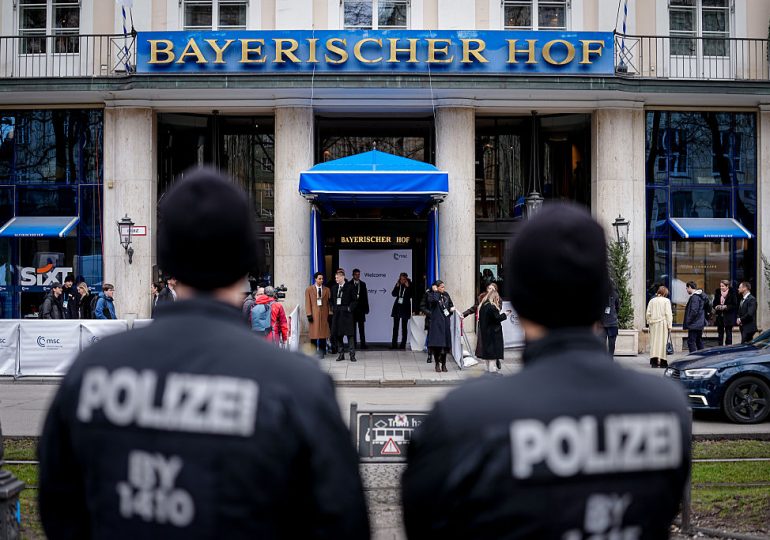
Coming out of the World Economic Forum’s annual meeting in Davos and heading into another consequential gathering at the Munich Security Conference, which starts today, one thing is clear: these convenings are becoming more consequential, not less. Not because they offer easy answers, but because they provide something increasingly rare and increasingly necessary: opportunities for sustained, face-to-face dialogue among leaders grappling with the hardest problems of our time.
This is not nostalgia for globalization. It is not a defense of elite gatherings for their own sake. It is about necessity.
The world is fragmenting. Alliances are being reassessed. Trust in institutions is eroding. Political divides within countries are deepening, even among long-standing allies. At the same time, technology—particularly artificial intelligence—is advancing faster than governance systems can keep pace. These forces are colliding, and the consequences are playing out in markets, workplaces, and societies around the world.
In this environment, dialogue is not a soft concept. It is foundational infrastructure.
Critics often dismiss forums like Davos as talk shops and view Munich as a grim exercise in security realism. That critique misses what is actually happening. These gatherings matter not because of what is said onstage but because of what happens away from the cameras—where leaders can argue, disagree, test assumptions and confront uncomfortable truths without the distortion of performative politics or social media outrage.
These conversations cannot happen over Zoom. They cannot be delegated to artificial intelligence. They require presence, nuance, trust and judgment. At a time when many public institutions are constrained by polarization or retreating from global engagement, these convenings serve an increasingly important function.
One of the most significant shifts underway is this: leadership is no longer coming primarily from the public sector. That is not an ideological observation. It is a practical one.
Governments are under strain, and many political leaders are increasingly focused inward. Yet the defining challenges of our era do not respect borders. Cyber threats, artificial intelligence, trade disruption, workforce transitions, energy security, climate pressures, human rights, labor standards and national security are inherently transnational.
As a result, responsibility is shifting. Leadership is emerging, increasingly, from the private sector and civil society: institutions that live with complexity every day. Companies operate across borders. They manage diverse workforces, serve multiple constituencies and navigate competing regulatory, cultural and political expectations simultaneously.
In many ways, they already inhabit a borderless world, even as tariffs rise and alliances fray.
This reality is reshaping what is expected of chief executives and board chairs. They are no longer seen solely as operators or stewards of capital. They are increasingly expected to act as statesmen and stateswomen, making decisions that resonate globally, nationally and locally at the same time.
Chief executives are being asked to engage with defining issues that do not fit neatly into quarterly earnings calls: technological governance and cyber risk; artificial intelligence and its impact on work and society; employment transitions; trade and supply chain resilience; human rights and labor standards; energy security; national and economic stability. These issues shape institutional legitimacy and market confidence.
Dialogue alone is not sufficient. But without dialogue, nothing durable is possible.
The ability to sit face to face, to listen as much as to argue, to disagree without retreating into caricature is a prerequisite for meaningful action. Gatherings like Davos and Munich preserve that capacity at a moment when it is eroding elsewhere. They create space for trust to form, for partnerships to emerge, and for leaders to recalibrate as conditions shift.
If political systems are constrained in addressing global challenges that cross borders, the responsibility shifts. Chief executives, chairs and leaders of civil society will increasingly be asked to step forward: not because they sought the role, but because the moment demands it.
That leadership will not come from slogans. It will come from judgment, courage, and engagement. It will be shaped, in no small part, by the quality of the conversations leaders are willing to have with one another.
The question is no longer whether gatherings like Davos or Munich matter. The question is whether leaders are willing to use them not as stages, but as workshops for ideas, as places to wrestle honestly with the hardest questions and decisions of our time.
The challenges we face do not stop at borders. Leadership, if it is to mean anything now, cannot either.
Leave a comment