This winter, the U.S. is experiencing a surge in measles cases. South Carolina is the epicenter of the outbreak, with over 960 confirmed cases, and the virus continues to spread, with 26 states reporting new cases this year. Last year, two children in the U.S. died from measles. Both were unvaccinated. We are seeing the consequences of declining vaccination rates, and, due to recent federal policy changes, parents need to brace for more disease risks for children.
[time-brightcove not-tgx=”true”]
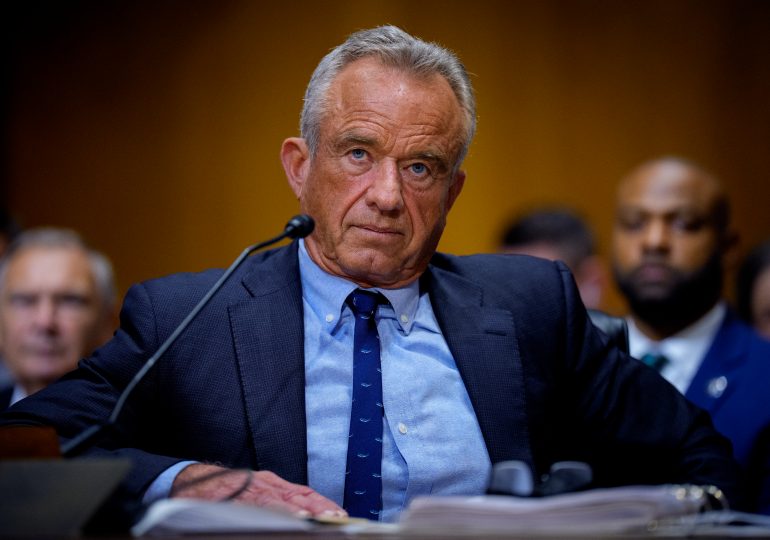
Earlier this year, Robert F. Kennedy Jr. directed the Centers for Disease Control and Prevention to change the designation for six vaccines on the federal government’s vaccine schedule, saying that the agency was no longer recommending them for routine use in children. At the same time federal officials like Dr. Mehmet Oz and President Donald Trump reassured parents that those who wanted these vaccines for their children would still be able to get them.
Parents, don’t believe them. What before was a straightforward process almost entirely paid for by insurance or public dollars is likely to become burdened by more paperwork, higher out-of-pocket costs, and fewer choices. You and your children may still have access to these shots, but at a steep price.
What are the changes to the vaccine schedule?
Hepatitis A doesn’t circulate as much anymore in the U.S. because of routine vaccination. With the schedule revisions, however, Hepatitis A is now only recommended for children travelling internationally to some countries. As vaccination rates decline, we will have more Hepatitis A infections in children, which can cause jaundice, liver failure, and death.
Other vaccinations that protect against respiratory syncytial virus, Hepatitis B, and meningococcal disease are now only recommended for certain “high-risk groups.” The revised schedule has now also moved rotavirus, influenza, Hepatitis A, Hepatitis B, and meningococcal vaccines to only be recommended based on “shared clinical decision-making,” a nebulous term which has not previously been applied broadly to vaccines.
To be clear, these new schedule designations were not based on new data. Rather, federal officials justified the demotion of these six vaccines by looking at peer nations’ vaccine schedules and choosing an outlier with the lowest number of vaccines on its schedule, Denmark, to model the U.S. schedule after. It is unclear why Denmark was chosen, considering it is a much smaller country that provides universal free health care, unlike the U.S.
Data on the burden of these diseases, like that meningococcal infection kills 10 to 15 of every 100 people infected, or that 90% of newborns who contract Hepatitis B will suffer from chronic liver disease, were not considered. In defending the revised schedule, federal officials have emphasized that insurance companies will still cover the vaccines that are no longer universally recommended.
This may not be the case for long. Last fall, most major health insurance companies banned together and pledged that, through the end of 2026, they would continue to cover any vaccine on the schedule as of Sept. 1, 2025. The Department of Health and Human Services is relying on insurance companies’ goodwill to alleviate parents’ concerns.
But that pledge expires at the end of this year. After that, whether insurers will continue to cover all vaccines without additional costs to families is anybody’s guess.
Read more: The Dangers of RFK Jr.’s Unscientific Vaccine Schedule
How the Affordable Care Act protected free vaccines for families
When the Affordable Care Act became law in 2010, insurers became required to fully cover vaccines on the CDC’s schedule that were recommended for routine use. The problem now is that due to the schedule changes, some vaccines are no longer recommended for routine use. They are only recommended for certain high-risk groups, or following shared clinical decision-making.
To be sure, the cost-effectiveness of preventing dangerous infectious diseases in children is one reason to be hopeful that insurers will continue to cover these vaccines beyond the end of the year. Prior to routine vaccination against rotavirus, the U.S. saw more than 200,000 children being rushed to the emergency department and 55,000-70,000 children hospitalized every year due to severe vomiting, diarrhea and dehydration. Routine vaccination against this gastrointestinal infection reduced U.S. healthcare costs by over $1 billion from 2008 to 2013.
But insurance providers are focused on their bottom lines, and without legal constraints, they might revert to tactics seen before the Affordable Care Act, such as requiring co-payments for these vaccines.
Coverage in the Vaccines for Children program under the new guidelines
Also in limbo are the commitments of the single largest purchaser of vaccines in the U.S.: the federal government. In 1994, Congress established the Vaccines for Children program, which pays for vaccines for uninsured, underinsured, Medicaid-enrolled, and American Indian or Alaska Native children. The federal government negotiates directly with vaccine manufacturers to get preferable pricing, and then purchases vaccine products to distribute to participating clinics across the country.
More than half of U.S. children born in 2020 qualified to receive their shots for free through this federal entitlement. In its first 20 years alone, the program contributed to preventing 21 million hospitalizations and 732,000 child deaths, at a savings of $1.38 trillion to American taxpayers.
As a result, we may see that the Vaccines for Children program reduces purchasing of vaccines that are no longer recommended for routine use, or starts to require proof that the child was in fact in a high-risk group, or that shared clinical decision-making was completed. The expected result is a narrowing of vaccine options for parents who rely on this program.
In the weeks that have followed the vaccine schedule upheaval, major medical groups have said they are sticking with the prior schedule, and many physicians and parents say the changes won’t affect their decisions. Following the old schedule may work for now, but roadblocks will spring up in front of parents trying to keep their kids healthy.
The U.S. is heading down a dangerous path. The health and lives of our children—and all of us—relies on the protections we have developed and benefited from for decades.
Due to the federal vaccine schedule changes, measles will be just one of many vaccine-preventable diseases allowed back into our communities.
Leave a comment