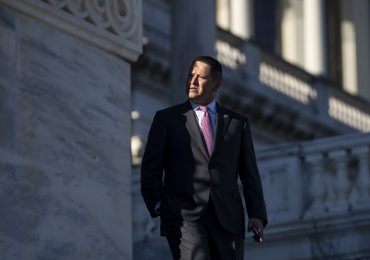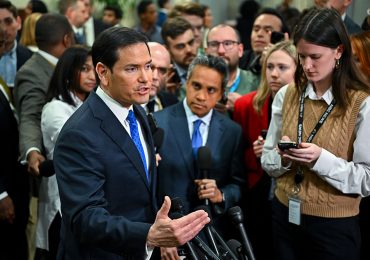

State Rep. James Talarico, the 36-year-old former middle school teacher who built a national profile by fusing progressive politics with unapologetic Christian faith, won the Democratic nomination for the United States Senate in Texas, the Associated Press called early Wednesday after Tuesday’s election, defeating U.S. Rep. Jasmine Crockett in one of the most closely watched and expensive primaries in the country.
[time-brightcove not-tgx=”true”]
“Tonight, the people of our state gave this country a little bit of hope,” Talarico told a crowd of supporters just after midnight, as he held a commanding lead. “And a little bit of hope is a dangerous thing.”
His win sets up a November midterm election that Democrats believe, perhaps more than at any time in a generation, is within reach. The Republican primary is headed to a bruising runoff between incumbent Sen. John Cornyn and the state’s attorney general Ken Paxton, a polarizing figure who has been dogged by legal and personal controversies. Party strategists in both camps acknowledge that a prolonged and bitter runoff could leave Republicans divided heading into the fall.
With control of the Senate hanging in the balance and President Donald Trump facing weak approval ratings, particularly among younger, Hispanic and Black voters, Texas has emerged as an unlikely but tantalizing pickup opportunity.
Talarico’s victory marks a preliminary triumph for Democrats who argued that the path to ending the party’s 32-year statewide losing streak runs through coalition-building. While both candidates occupied the party’s progressive flank, Talarico presented himself as a Democrat who could speak the language of faith and values to voters who have drifted rightward in recent years.
Read More: In Texas, Both Parties Get an Earful About Electability
Throughout the race, polling suggested Talarico was leading comfortably among white Democratic primary voters and was competitive among Hispanic voters, a pivotal voting bloc in Texas politics. In the closing weeks, his campaign poured time and resources into South Texas and Houston, working to blunt Crockett’s advantage among Latino voters.
Talarico also benefited from a late surge of money and attention. His February appearance on Stephen Colbert’s late night show made national headlines after Colbert alleged CBS was blocking him from airing it on broadcast television. The version posted online drew millions of views and fueled a one-day fund-raising windfall of $2.5 million. That burst of momentum came in a primary that was already shattering spending records. According to AdImpact, more than $125 million was spent across the Democratic and Republican Senate contests, making the Texas race the most expensive primary season in the country. Talarico and his allies significantly outspent Crockett on advertising, aided by a well-funded super PAC that drew large checks from national donors, including technology and philanthropic figures. Some of that spending flowed through nonprofit groups that do not disclose their contributors.
Crockett, 44, a former public defender from Dallas known for her sharp exchanges with Republicans in congressional hearings, built her campaign around mobilizing infrequent voters—particularly Black Texans—and argued that Texas Democrats have failed for decades because they have not expanded the electorate. Her coalition was anchored in Black churches and grassroots groups in major cities, and she campaigned heavily in the Rio Grande Valley in hopes of turning out Hispanic voters who rarely participate in primaries.
But the contest ultimately became a referendum on competing theories of electability in a red-leaning state. Talarico leaned into his record of flipping and holding a Republican-leaning state House district in Round Rock, arguing that he had already demonstrated crossover appeal. He spoke frequently about his Christian faith, casting democracy itself in moral terms, and sought to reassure moderate Democrats and independents wary of rhetorical excess.
The race was largely civil between the candidates, both of whom pledged to support the eventual nominee, but it was not without controversy. An allegation that Talarico had privately referred to former Senate candidate Colin Allred as a “mediocre Black man” ricocheted across social media and prompted a sharp rebuke from Allred, now a Crockett supporter. The episode was widely seen as damaging Talarico’s standing with some Black voters. Crockett also faced criticism for calling Republican Governor Greg Abbott, who uses a wheelchair, as “governor hot wheels” and for saying that Latino Trump supporters exhibit a “slave mentality.”
In the end, Democratic voters appeared to side with Talarico’s argument that winning in Texas would require not only energizing the base but also persuading voters who have grown uncomfortable with Republican leadership. Polling throughout the winter had shown little difference between how the two Democrats performed in hypothetical matchups against likely Republican opponents, but some surveys suggested Talarico ran slightly stronger among independents.
A protracted runoff could leave Republicans divided and financially depleted heading into November.
Talarico told TIME in February that the GOP infighting essentially gives Democrats a two-month grace period to unify and rebuild war chests. “They’re going to be even weaker after a bloody Republican primary that goes to a runoff. And so we’re going to have a head start,” he said.
Leave a comment