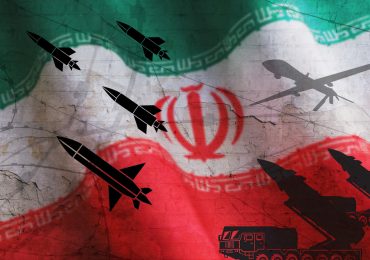
Iran has issued a warning to the United States, suggesting grave repercussions for the Pentagon sinking an Iranian warship off the coast of Sri Lanka with a torpedo.
“The U.S. has perpetrated an atrocity at sea, 2,000 miles away from Iran’s shores,” said Iranian Foreign Minister Abbas Araghchi Thursday morning. “Mark my words: The U.S. will come to bitterly regret [the] precedent it has set.”
[time-brightcove not-tgx=”true”]
Araghch said the Iranian frigate IRIS Dena was “a guest of India’s navy” and roughly 130 sailors were “struck in international waters without warning.” IRIS stands for Islamic Republic of Iran Ship and serves as an identifier of Iranian naval vessels.
The warship had taken part in a naval exercise in the Bay of Bengal.
According to Sri Lankan officials, over 80 Iranian sailors died, more than 30 are in hospital, and the rest remain unaccounted for. Search-and-rescue efforts are ongoing.
Sri Lanka’s Minister of Health Nalinda Jayatissa reportedly told parliament Thursday that another Iranian vessel is sailing close to Sri Lanka’s territorial waters. “We are making necessary interventions to resolve this issue, restrict the threat to lives and to ensure regional security,” he said.
The torpedo incident has been heralded as a show of U.S. military might by Defense Secretary Pete Hegseth.
“An American submarine sank an Iranian warship that thought it was safe in international waters,” he told reporters at the Pentagon on Wednesday. “Instead, it was sunk by a torpedo. Quiet death.”
Joint Chiefs of Staff Gen. Dan Caine referred to the operation as “an incredible demonstration of America’s global reach” and noted that it’s the first time an American torpedo has sunk a ship since World War II.
“To hunt, find and kill an out-of-area deployer is something that only the United States can do at this type of scale,” he said.
The warship is one of over 20 Iranian ships “struck or sunk to the bottom of the ocean” by American forces, according to the U.S. Central Command.
Despite President Donald Trump claiming earlier in the week that some senior Iranian officials want to lay down arms, Iran has continued to launch retaliatory attacks.
The Iranian Revolutionary Guard Corps said it had struck a U.S. oil tanker in the northern Persian Gulf on Thursday, according to state media.
Several tankers have dropped anchors in the Gulf after the IRGC warned that any U.S., Israeli, or European tanker passing through the crucial Strait, a narrow passage between the Persian Gulf and the Gulf of Oman through which around a fifth of global oil production flows, would “certainly be struck,” according to Iranian state media.
With traffic in the Strait of Hormuz largely coming to a halt, global oil and gas prices have surged, shipping costs have skyrocketed, and many insurers have dropped war risk protections. The impact may soon be felt by American consumers.
It’s “severe disruption,” Noam Raydan, a senior fellow at The Washington Institute for Near East Policy, told TIME.
“For a lot of ships, if they want to transit via Hormuz, they’re going to be transiting without coverage, meaning if anything happens—a hit, an oil spill—it’s on them,” she added, noting that companies simply won’t—nor should they—take that risk.
Read More: As Oil Tankers Come Under Attack, Experts Fear for Global Trade Through Strait of Hormuz
Iran appears to have targeted several oil tankers in the Strait and energy infrastructures in Gulf nations as part of its retaliatory efforts since the U.S. and Israel launched military action against the country Saturday morning, killing Iranian Supreme Leader Ali Khamenei in early strikes.
The conflict has now engulfed several other countries and territories, with no immediate end in sight.
“We’re ensuring Iran cannot rapidly rebuild or reconstitute its combat capability or combat power,” Caine told reporters Wednesday, specifying that the U.S. military campaign—titled Operation Epic Fury—will continue.
Six American service members in the region have been killed by Iranian retaliatory strikes so far. Trump has referred to the fallen troops as “true American patriots.”
Meanwhile, there is a growing concern that the Iran war is burning through U.S. weaponry stockpiles—sophisticated military equipment that is vital in protecting American bases, ships, and allies across the globe all year round.
There are fears it may impact the U.S.’ ability to aid Ukraine in its defense operations against Russia.
“I am deeply concerned about Ukraine,” Sen. Richard Blumenthal of Connecticut, Democrat who sits on the Senate Armed Services Committee, told TIME. “Just as a matter of common sense, our resources and supplies are limited, and I think we will be hard pressed, at some point, to tell Ukraine what is coming.”
But White House press secretary Karoline Leavitt maintains the U.S. “has more than enough capability to not only successfully execute Operation Epic Fury, but to go much further.”
She told TIME on Wednesday: “We have weapons stockpiles in places that many people in this world don’t even know about.”
Leave a comment