When 16-year-old Skylar Neese disappeared in July 2012, a large search effort began across Morgantown, West Virginia, where she was from. At first, authorities believed the teenager may have left her home voluntarily after climbing out of her bedroom window during the night. But as the investigation progressed, inconsistencies in the case began to emerge, raising concerns about what really happened in the hours before she vanished.
Neese’s story is explored in Hulu‘s Friends Like These: The Murder of Skylar Neese, which uses archival footage, social media activity and police records to piece together the timeline of her disappearance and the developments that eventually led authorities to uncover the truth behind the case.
[time-brightcove not-tgx=”true”]
Clair Titley, director of the documentary, says the series approaches the story differently from what was already reported about the case: “Early on, what we want to do is create a sort of an inside-out investigation. We look at it from Skylar’s and her peers’ perspective, and it’s all about building that world.”
Close circle of friends
Skylar Neese grew up in Morgantown, a university town in northern West Virginia best known as the home of West Virginia University. By most accounts, her life was typical for a high school sophomore. She worked part-time at a Wendy’s restaurant, maintained good grades, and spent most of her time with a small group of friends.
At the center of the friend circle were two girls she had known for years: Shelia Eddy and Rachel Shoaf. The three teenagers were frequently seen together at school and around town, often driving around late at night or spending time at one another’s homes.
Skylar’s parents later said she had been especially close with Shelia Eddy. The two met as children and remained friends throughout middle school and high school.
“They had been friends since they were eight years old,” Skylar’s mother, Mary Neese, said in the documentary. “They were inseparable.”
Despite their close bond, tensions reportedly began to develop within the group in the months before Skylar disappeared.
Those conflicts, however, did not initially appear serious enough to alarm adults around them.
The night Skylar disappeared
On the night of July 5, 2012, Skylar returned home late after her shift at Wendy’s. According to her father, Dave Neese, she told her parents she was tired and planned to go to sleep.
The following morning, Dave noticed something unusual. Skylar’s bedroom door was locked—something he said she rarely did. After receiving no response, he forced the door open using a tool and immediately realized something was wrong.
“The first thing I noticed was that the bed hadn’t been slept in,” he said.
Mary Neese was at work when she received the call from her husband saying their daughter was missing. At first, she believed Skylar might be out with friends, possibly shopping with Shelia Eddy, and began calling people who might know where she was. Shelia told her she did not know Skylar’s whereabouts.
Initially, Skylar’s parents hoped she would return before her scheduled shift later that afternoon. According to her mother, Skylar was responsible and rarely missed work.
When the clock reached 4 p.m., however, Skylar had still not appeared. Soon afterward, the Wendy’s where she worked called the Neese home asking if she planned to come in.
“She wasn’t like that,” Dave said. “She always showed up for work.”
Realizing something was seriously wrong, he contacted the Star City Police Department to report his daughter missing.
Early investigation
Officer Jessica Colebank of the Star City Police Department was assigned to the case. Her first step was interviewing Skylar’s parents and gathering information about the teenager’s last known movements.
Shortly after the disappearance, Shelia Eddy arrived at the Neese family home with her mother and said she wanted to explain what happened that night. According to Mary Neese, Shelia told them she and Rachel had picked Skylar up late that evening and the three of them had gone for a drive before dropping Skylar back off around midnight.
The Neeses later reviewed footage from security cameras outside their home. The video showed Skylar leaving the house and getting into a car.
The video did not show the girls dropping Skylar off earlier in the night. Instead, it captured the moment when Shelia and Rachel returned to pick her up again, shortly after she had already come home.
Officer Jessica Colebank of the Star City Police Department said investigators reviewed the footage multiple times as they tried to establish a timeline.
A community search
In the days following Skylar’s disappearance, friends and classmates mobilized to help search for the missing teenager. Posters with her photo were distributed throughout the community and across local businesses.
The case quickly spread through the local school and surrounding community, sparking speculation about what might have happened. Some believed Skylar had run away or become involved in a conflict.
As the investigation continued, federal authorities joined the case. FBI Special Agent Morgan Spurlock said the bureau became involved after receiving a request for assistance from local law enforcement.
By July 12, 2012, media coverage of the disappearance had increased significantly, bringing new tips and possible sightings.
One report suggested Skylar had been seen on a beach in North Carolina alongside two other girls, one with red hair—a description that matched Rachel Shoaf. Investigators contacted the church camp where Rachel was staying, but the lead ultimately proved to be incorrect.
Growing suspicion
Despite the lack of confirmed sightings, investigators began noticing inconsistencies in the statements provided by Shelia Eddy and Rachel Shoaf.
Thirteen days after Skylar disappeared, Rachel returned to Morgantown from her summer camp and was interviewed by investigators. Her account closely mirrored Shelia’s version of events: the three girls had driven around, smoked marijuana, and eventually dropped Skylar off near her home.
However, when detectives retraced the route with Shelia, they discovered discrepancies in the directions each girl had described. One said they had turned left at a key intersection, while the other said they had turned right.
Because it was a major road, investigators found it unlikely the two would confuse the route.
Colebank later said the similarity between their written statements made it appear as if the story had been rehearsed.
Digital clues
Three weeks into the investigation, authorities began reviewing the teenagers’ social media accounts. Like many teenagers at the time, Skylar, Shelia, and Rachel were active on Twitter and frequently posted details about their lives online.
One tweet from Skylar, posted shortly before she disappeared, caught investigators’ attention.
“You doing sh-t like this makes me never want to trust you,” the message read.
Investigators questioned Shelia about the tweet, but she claimed she did not know what it referred to. Friends later told police that tensions had been growing within the group. During their sophomore year of high school, Shelia and Rachel had grown closer, leaving Skylar feeling excluded. According to classmates, the trio argued frequently in the months before Skylar vanished.
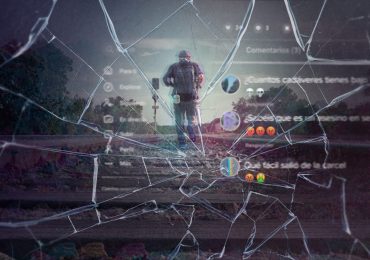
“It wasn’t just evidence, it was an extension of their lives. We integrated tweets and posts into the visual world—on football fields, lockers, even bathrooms—so viewers could feel the hidden layer of teenage communication. We really wanted to kind of embed viewers in that feeling of what it was like to be 16.” Titley said.
New leads
After several months with no major breakthroughs, investigators obtained phone records belonging to Shelia and Rachel. The data revealed that both girls’ phones had been in Blacksville, West Virginia, at approximately 4 a.m. on the night Skylar disappeared—despite their claims that they had been asleep at home.
This discovery prompted investigators to review traffic cameras and surveillance footage from local businesses.
At a Sheetz gas station equipped with high-resolution cameras, authorities spotted a car matching Shelia Eddy’s vehicle passing through around midnight—traveling in the direction of Blacksville.
The footage confirmed that the same car had picked Skylar up earlier that night. With this new evidence, investigators became increasingly convinced that Rachel Shoaf and Shelia Eddy were withholding critical information.
“It is a huge turning point when we see Sheila’s car on camera,” Titley says. “We wanted viewers to experience that realization with the investigators—the moment everything shifts.”
The investigation intensifies
Authorities continued interviewing the teenagers and examining digital evidence. Messages between Shelia and two brothers, Dylan and Derek Conaway—acquaintances who lived in the area—suggested the group may have been attempting to purchase drugs the night Skylar disappeared.
Investigators also obtained a search warrant for Rachel Shoaf’s home, where they seized electronic devices and discovered her personal diary. Despite mounting suspicions, both teenagers continued telling the same story during questioning.
With the case stalled, investigators decided to use polygraph examinations to test the credibility of their statements.
A confession emerges
Shelia Eddy underwent a polygraph test administered by FBI examiner Rob Ambrosini. During questioning, she acknowledged that she and Rachel had picked up Skylar around 12:30 a.m., but denied withholding any information. According to Ambrosini, the results indicated deception. “With the vehicle on camera and the timing not matching their story, it became clear that both were concealing something,” Ambrosini says. “The interviews were full of denial, but you could sense the truth starting to emerge.”
Shelia told investigators that after the girls stopped the car, Skylar got out following a disagreement. According to her account, Skylar wanted to go meet the Conaway brothers to smoke and hang out, while Shelia and Rachel did not. Shelia said Skylar insisted she would go on her own and walked away, and that she and Rachel briefly searched for her before eventually returning home.
Investigators then turned their attention to Rachel Shoaf, believing she might reveal more details.
Months later, on Jan. 3, 2013, Rachel agreed to speak with authorities. During questioning, she admitted that she had been present when Skylar died.
At first, investigators struggled to process what they were hearing. Rachel then revealed that she and Shelia had stabbed Skylar over 50 times.
According to Rachel, the plan had been initiated by Shelia, who had grown increasingly resentful of Skylar. The two teenagers had brought knives, plastic bags, and other supplies from Rachel’s home before driving to a remote area near the Pennsylvania border.
Once there, Skylar stepped out of the car and began walking ahead of them.
Rachel said she and Shelia counted to three before attacking her from behind. She said that during the assault, Skylar asked a single question: “Why?”
The two girls attempted to bury the body but were unable to dig into the hard ground. Instead, they dragged Skylar’s body into a wooded area and concealed it with branches and debris.
Rachel later led authorities to the location.
Investigators later learned that the early-morning trip to Blacksville happened after Skylar had already been killed. According to Rachel Shoaf’s confession, they drove there in the hours after the attack to dispose of evidence from the crime.
Building the case
Eight hours after Rachel’s confession, investigators arranged a recorded meeting between the two girls. Rachel contacted Shelia while FBI agents monitored the conversation using hidden cameras.
During the discussion, Shelia expressed confidence that authorities could not prove anything. Despite the conversation, investigators still needed physical evidence linking her directly to the murder.
Ambrosini commented on the significance of such evidence: “When there’s a consensual recording, you’re getting firsthand audio of two subjects who conspired to commit a terrible crime. It’s extremely powerful. For investigators, it allows you to move the case forward and verify statements. Even if it never goes to trial, it’s a crucial piece of evidence.”
Snow-covered terrain delayed the recovery of Skylar’s remains for several weeks. Eventually, authorities located her body and began gathering forensic evidence.
Blood discovered inside Shelia Eddy’s car later tested positive for Skylar’s DNA. With that confirmation, prosecutors moved forward with charges.
The sentences
Rachel Shoaf ultimately pleaded guilty to second-degree murder. Nineteen months after the crime, she was sentenced to 30 years in prison by the Monongalia County Circuit Court.
In court, she apologized to Skylar’s parents, Dave and Mary Neese.
During a 2023 parole hearing, Rachel reflected on the events leading up to the murder, describing her relationship with Shelia Eddy as intense and unhealthy. She also acknowledged fears about their secret romantic relationship being exposed.
Shelia Eddy, meanwhile, pleaded guilty to first-degree murder.
The judge sentenced her to life in prison with the possibility of parole after 15 years.
Legacy of the case
The murder of Skylar Neese had a lasting impact on West Virginia. Following months of advocacy by her parents, lawmakers passed legislation known as “Skylar’s Law” in 2013.
The measure requires authorities in the state to issue Amber Alerts immediately when a child is reported missing.
Rachel Shoaf has had two unsuccessful parole hearings, with a projected release date of April 2028. Shelia Eddy will become eligible for parole in May 2028.
More than a decade later, the case remains one of the most unsettling examples of violence between teenagers—a tragedy rooted not in strangers or external threats, but within a friendship that ultimately turned deadly.
Leave a comment