Pakistan said it will host talks between the United States and Iran in the “coming days”, even as thousands of U.S. Marines arrive in the Middle East and Iran’s Parliament Speaker dismissed the negotiations as cover for a ground invasion.
Pakistan’s Foreign Minister, Ishaq Dar, said in a televised speech Sunday that his country will “host and facilitate meaningful talks between the two sides,” in order to reach a “comprehensive and lasting settlement of the ongoing conflict.” He added that “both Iran and the U.S. have expressed their confidence in Pakistan to facilitate the talks.”
Dar did not say whether the talks would be direct or through intermediaries, and the White House did not immediately respond to a request for comment from TIME. Either way, it would mark the first negotiations between the two countries since the outbreak of the war on Feb. 28, when the U.S. and Israel launched a surprise attack that killed Iran’s Supreme Leader Ali Khamenei.
Read More: What Would a U.S. Win in Iran Look Like? We Asked Over Two Dozen Members of Congress
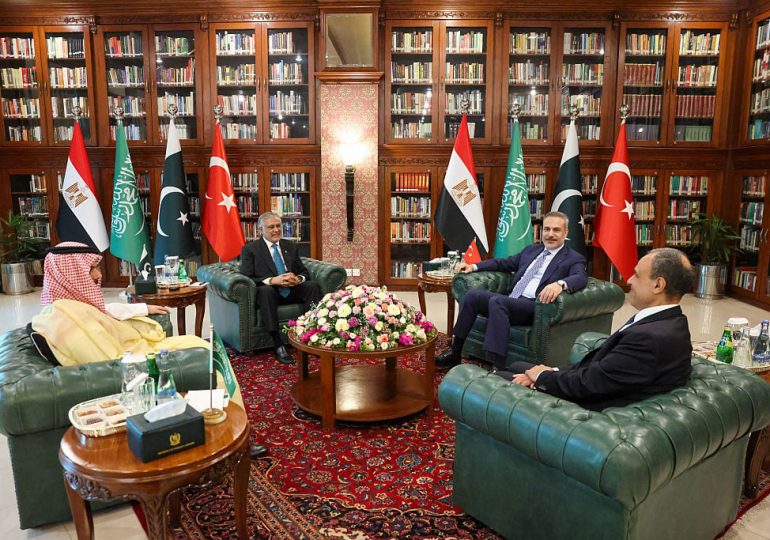
The announcement came as the foreign ministers of Saudi Arabia, Turkey and Egypt met in Islamabad for talks aimed at bringing an end to the war.
Dar said the four countries discussed “possible ways to bring an early and permanent end to the war” in a statement on Sunday.
The initial discussions have been focused on finding a diplomatic solution to reopen the Strait of Hormuz, Reuters reported. Reopening the key waterway, which has been effectively closed by Iran since the beginning of the war, is now a key aim of President Donald Trump.
Iran’s parliament Speaker Mohammad Bagher Qalibaf characterized the announcement of talks as a cover for U.S. military action, writing in a Telegram post: “The enemy publicly signals negotiations while secretly planning a ground invasion.”
“Our forces are ready for any US ground troops, and our response is clear: We’ll never accept humiliation,” he added.
Pakistan is positioned diplomatically between the U.S. and Iran, maintaining good relations with both despite the war raging for more than one month.
Pakistan’s Prime Minister Shehbaz Sharif said on X that he had spoken with Iranian President Masoud Pezeshkian by phone on Saturday to update him on his country’s “ongoing diplomatic outreach—engaging the United States and brotherly Gulf and Islamic countries—to facilitate dialogue and de-escalation.”
German Foreign Minister Johann Wadephul said Friday that a meeting between the U.S. and Iran was “expected to take place in Pakistan very soon.”
“According to my information, there have been indirect contacts. And they have also prepared for a direct meeting,” he said.
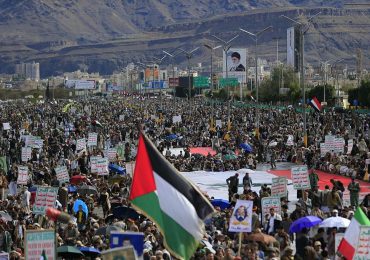
Despite talk of peace, several thousand more U.S. troops are on their way to the region, and the Iran-backed Houthis in Yemen have joined the fray, firing a barrage of missiles toward Israel on Saturday.
Here’s where diplomatic negotiations stand.
What has Trump said?
This past week, the U.S. reportedly delivered a 15-point plan to end the war to Iran by way of Pakistan.
The Wall Street Journal previously reported that the plan called for Tehran to dismantle its three nuclear sites and halt uranium enrichment, suspend its work on ballistic missiles, cease support for proxies, and reopen the Strait of Hormuz, in exchange for having Iran’s nuclear-related sanctions lifted and the U.S. aiding Iran’s civilian nuclear program.
Trump and his Administration officials cited Iran’s nuclear enrichment program—which did not include a weapons program—as a key justification for launching a joint attack against Iran alongside Israel on Feb. 28.
“You can’t have peace in the Middle East if they have a nuclear weapon,” Trump said on Feb. 19.
Yet, White House Press Secretary Karoline Leavitt told reporters on Wednesday during a press briefing that “the White House never confirmed that full plan,” and that some of the reports on the plans she has seen were incorrect.
“If Iran fails to accept the reality of the current moment, if they fail to understand that they have been defeated militarily and will continue to be, President Trump will ensure they are hit harder than they have ever been hit before,” she said.
Trump has also claimed that the U.S. is “in negotiations right now” with Iran, led by his Middle East envoy, Steve Witkoff, and his son-in-law Jared Kushner, along with Secretary of State Marco Rubio and Vice President J.D. Vance.
“We have a number of people doing it,” Trump said on March 24. “And the other side, I can tell you, they’d like to make a deal.”
Iran later denied that it was negotiating with the U.S.
Although Leavitt claimed that Trump was having “productive conversations,” the President denied to the press that he is “desperate” to make a deal with Iran.
“I’m the opposite of desperate, I don’t care … In fact, we have other targets we want to hit before we leave. We’re hitting them on a daily basis,” Trump said at a Cabinet meeting on Thursday.
The peace talks have come alongside a new buildup of U.S. military forces in the Middle East, and speculation about a potential ground campaign.
An expeditionary force of 2,200 U.S. Marines arrived in the region on Saturday, and 2,500 more Marines from the 11th Marine Expeditionary Unit are on their way to join them. Trump is also reportedly preparing to deploy 1,000 troops with the 82nd Airborne Division.
It is unclear what task those troops will be given, but Trump’s main focus has been on reopening the Strait of Hormuz.
Trump is reportedly considering an operation to capture Kharg Island, a strategic oil hub 15 miles off Iran’s coast that processes 90% of its crude oil exports. The Washington Post reported Sunday that the Pentagon was preparing for a limited ground operation that could last several weeks and would be focused on either Kharg Island or Iran’s coastal areas.
What has been Iran’s response?
Iran has publicly rejected the White House’s 15-point proposal and has offered its own five conditions for ending the war, according to Iranian media Press TV. The plan includes requirements to end “aggression and assassinations” by the U.S. and Israel against Iran and allies, payment for war damages, and a guarantee of Iran’s “sovereignty” over the Strait of Hormuz.
Iran’s Parliament Speaker, Qalibaf, said Sunday that the recent U.S. military buildup was proof that the negotiations were a cover for a ground invasion.
He said that Iranian forces were “waiting for the arrival of American troops on the ground to set them on fire and punish their regional partners forever,” according to Iranian state media.
That view is one held across Iran’s political and military establishment.
“At one moment he speaks of negotiations, and just hours later, he decides to pursue war,” Ebrahim Zolfaghari, spokesman of the Islamic Revolutionary Guards Corps, said of Trump in a statement, according to the New York Times.
Iran has continued launching missiles over the weekend at Israel and its Gulf neighbors, including an aluminum plant in the United Arab Emirates (UAE) and Kuwait’s international airport.
Does Israel support the talks?
Israel has said little about the possibility of peace talks, but there has been some reporting to suggest Israeli Prime Minister Benjamin Netanyahu’s government is less enthusiastic than Trump about ending the war soon.
“President Trump believes there is an opportunity to leverage the tremendous achievements we have reached alongside the US military to realize the goals of the war through an agreement that will safeguard our vital interests,” Netanyahu said in a speech posted on X on March 23.
Behind the scenes, Axios reported on March 24 that Israeli officials were concerned that Trump would strike a deal with Iran that falls short of Israel’s war aims.
“There is concern that Trump will decide to cut a deal and stop the war even if only some of his demands are met and postpone the rest for later without a clear solution,” one Israeli source told the outlet.
Meanwhile, Israel has escalated its attacks on Iranian infrastructure and announced Sunday that it is expanding its military presence in southern Lebanon to a “new objective.”
On Friday, Israel’s Defense Minister Israel Katz said that Israel will “intensify and expand” its military campaign against Iran, targeting “domains that assist the regime in building and operating weapons against Israeli civilians.”
What do the Gulf countries want?
Gulf officials have reportedly told U.S. officials that any deal with Iran must not just end the war, but permanently curb the country’s missile and drone capabilities, according to Reuters.
The report echoes claims by Yousef Al Otaiba, the UAE’s ambassador to Washington, who said in an opinion piece for the Wall Street Journal this week that the outcome of the war must address Iran’s nuclear capabilities, “proxy network”, drones, and blockades of sea lanes like the Strait of Hormuz.
“We can’t let Iran hold the U.S., the United Arab Emirates and the global economy hostage,” Otaiba wrote. “A simple cease-fire isn’t enough.”
Gulf countries have been hit hard by the war and by Iran’s effective closure of the Strait of Hormuz, through which they export most of their oil. Iranian missiles and drones have also struck crucial oil and gas infrastructure—attacks Iran says are in retaliation for those countries allowing the U.S. to launch attacks from bases within their borders.
According to Reuters, citing Gulf sources, there is a divide among Gulf states, as Qatar, Oman and Kuwait are pushing for a swift cease-fire, while the UAE, Saudi Arabia and Bahrain are prepared for a military escalation by the U.S.
In a joint statement this past week, Qatar, Kuwait, the United Arab Emirates, Bahrain, Saudi Arabia and Jordan all condemned Iranian attacks on their soil, raised concerns over Iran-backed militias with influence in the region, and signaled a readiness to act in “self defense” in the future.
Leave a comment