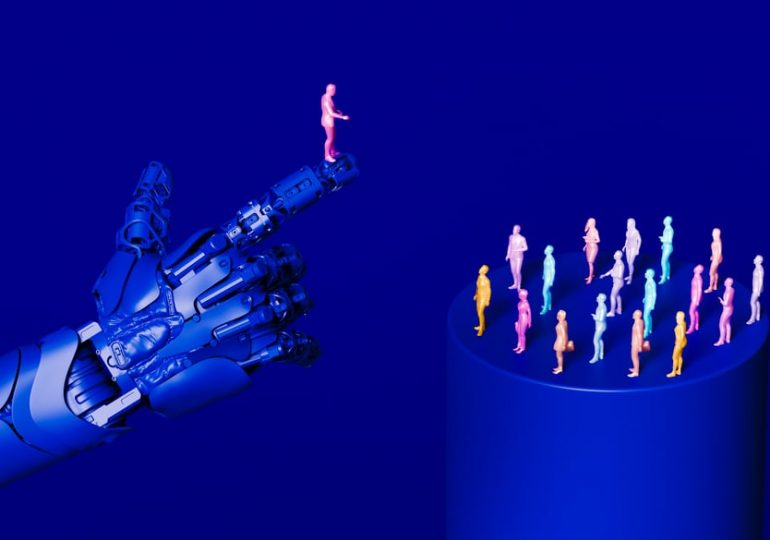
AI won’t replace you at work, but someone using AI likely will. Maybe not today or tomorrow. Maybe not this year or even next. But eventually. And if you wait for eventually, it will be too late.
For some, that shift is already happening. A recent report from LinkedIn found that nearly 90% of c-suite leaders say accelerating AI adoption is critical. Not just someday. Now. Together with Microsoft, we also found that a new hiring calculus is locking in, with two-thirds of corporate leaders saying they won’t even consider candidates without AI skills.
This is just the beginning. Ask leaders who truly understand AI about the years ahead, and they don’t talk about tweaks or upgrades. They talk about reimagining work entirely.
This thinking isn’t just true in tech circles. As early as 2023, one-third of content writers on LinkedIn had added AI literacy skills to their profiles, significantly outpacing software engineers at 19 percent. Graphic designers (27%) and marketing managers (24%) showed similar enthusiasm for building AI literacy. By early 2025, AI literacy had become one of the skills LinkedIn members from all over the world added most to their profiles.
Out there right now, a real estate agent is using AI to help write property descriptions and manage scheduling, freeing up more time to walk potential buyers through homes and help them envision raising a family there. A retail manager is using AI to help decode buying
patterns and predict seasonal shifts, creating space to build deeper relationships with suppliers and customers. A small business owner is using AI to help handle bookkeeping and social media, giving them time to develop new products and personally serve their most important customers.
Workers in every field are using AI right now. As they’re doing that, they’re learning which parts of their jobs AI can do and what that means for their future. The data is striking: Researchers at LinkedIn found that 24% of skills for the average job changed globally from 2015 to
2022. As we look ahead to 2030 and consider the impact of AI, we estimate that this proportion will jump to as high as 70%.
What does all this mean for you? It means your job is changing on you even if you aren’t changing jobs. And right this moment, while you’re reading these words, people who do jobs just like yours are out there trying things out with AI. They’re not waiting for permission. They’re not waiting for someone else to go first. They’re open to solving the problem as it’s changing. Open to learning, testing, building, and getting better. Every day.
They understand perhaps the most important things about this moment. First, change at work will never be as slow as it is now. Second, AI as a tool will never be as basic as it is now. Third, every day you wait, the gap between those experimenting with AI and those hesitating widens.
The reason that gap is growing is because of something unique about AI: The technology gets better at understanding you while you get better at understanding it. Every interaction is a two-way upgrade. It’s like riding a bicycle that understands you better the more you ride. The pedals start to match your rhythm. The seat adjusts to support you better. The handlebars find the perfect position for your reach. Each improvement removes resistance and difficulty. Every mile makes the next mile easier, until you’re gliding along on a bike that can kind of feel like an extension of yourself.
That’s the individual experience. Zoom out, and you’ll see something bigger happening.
The point is that the workers getting ahead aren’t necessarily the most resourced or technical. They’re the ones who experiment before they must. Not frantically, but with intention. They practice adapting before they have to. They know that learning how to learn matters more than what you currently know.
They could use AI to amplify their unique human capabilities. They didn’t hold on to careers or frameworks that no longer served them. They chose curiosity over comfort. They prioritized the possibilities of new work over the “this is how it’s always done” mindset.
Which brings us to something crucial: The old ways of work weren’t designed to unleash human potential. They were designed for industrial efficiency. For speed. For scale. For predictability. For us humans to do more, better, faster. That old world is coming apart. And that’s actually the opportunity. For the first time in centuries, we can build work around what makes us most human: our capacity to create, solve novel problems, and connect meaningfully. AI handles the efficiency work. That frees us to do what no algorithm can: create solutions that have never existed before. And yet, so many of us are still holding on to the old rules.
The bottom line is that the pace of change is exponential, not linear. Change will never be this slow again. AI will never be this basic again. The time to experiment is now.
Your resistance is biology, not weakness. That knot in your stomach when you think about AI? That’s millions of years of evolution trying to protect you from rapid change. But the instincts that once kept you safe could now keep you stuck.
Our advice: Don’t fight the future; build it. Technology doesn’t just replace old work; it transforms what work can be. Those who resist change see only what might be lost. Those who adapt are able to see what can be gained.
Excerpted from OPEN TO WORK (Copyright © 2026 by LinkedIn Corporation) with permission from Harper Business, an imprint of HarperCollins Publishers.