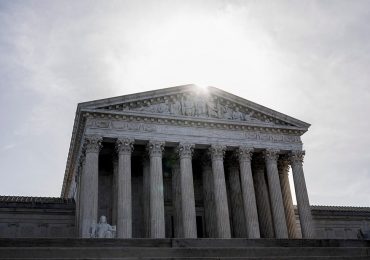
A clear majority of the Supreme Court on Wednesday appeared to cast doubt on President Donald Trump’s effort to upend more than a century of settled law around birthright citizenship, as Justices across the ideological spectrum pressed the Administration’s lawyer on what they suggested were significant gaps in its argument.
Less than an hour into oral arguments, members of the court’s conservative majority, including Chief Justice John Roberts and Justices Neil Gorsuch, Brett Kavanaugh and Amy Coney Barrett, were openly questioning the historical, textual, and practical foundations of the Administration’s position. Their pointed exchanges with Solicitor General D. John Sauer suggested that Trump faces an uphill battle in a case that could redefine who qualifies as an American citizen.
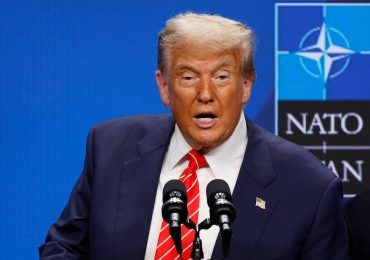
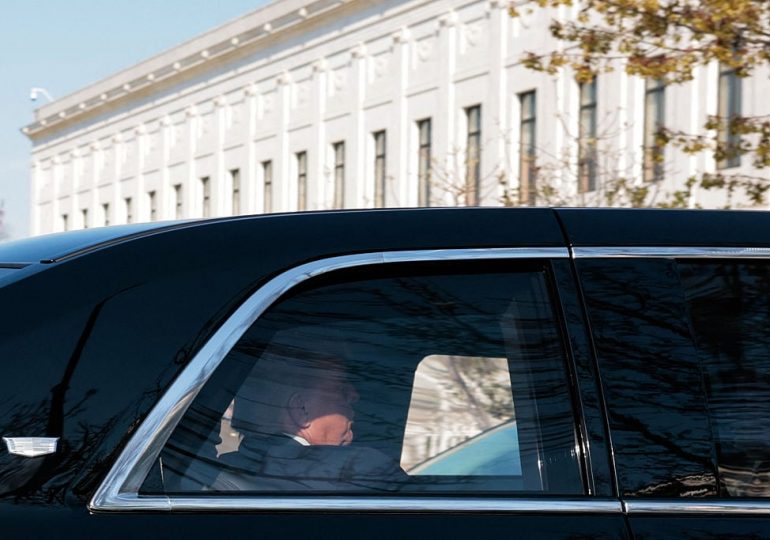
In a rare and unprecedented move, Trump himself sat in the courtroom—the first sitting President ever to attend Supreme Court oral arguments. Escorted in shortly before proceedings began, he took a seat on a red-cushioned bench in the front row of the public section, several rows behind the lectern where his solicitor general faced a barrage of questions, The New York Times reported. Wearing a red tie and sitting with his hands clasped, the President watched as members of a court he has both relied upon and publicly rebuked pressed his Administration’s case. He left after more than an hour of arguments.
Trump has not hesitated to criticize the Justices in the past, particularly after rulings that went against him. Just weeks ago, after the court struck down his use of tariffs, he derided members of the majority as “disloyal to the Constitution” and “unpatriotic.” Days before the hearing, he preemptively lashed out again, warning that “dumb judges and justices” could undermine the country.
At issue is an executive order Trump signed on the first day of his second term that would deny citizenship to children born on U.S. soil unless at least one parent is a citizen or lawful permanent resident. The order, part of a broader immigration crackdown, has been blocked nationwide by lower courts and has never taken effect.
At one point early on, Chief Justice Roberts described parts of the government’s argument as difficult to follow, calling its reliance on limited historical exceptions, like children of diplomats or invading forces, “very quirky.” He pressed Sauer on how those narrow categories could be expanded to encompass “the whole class of illegal aliens.”
The solicitor general pointed to “birth tourism” and other modern concerns. “It’s a new world,” Sauer said, noting that global travel has made it easier for people to come to the United States to give birth. “It’s the same Constitution,” the chief justice replied.
The legal fight centers on the meaning of the Citizenship Clause of the 14th Amendment, ratified after the Civil War, which declares that “all persons born or naturalized in the United States, and subject to the jurisdiction thereof, are citizens.” For more than a century, that language has been understood to guarantee citizenship to nearly anyone born in the country, with narrow exceptions.
Sauer urged the Justices to revisit that consensus, arguing that the clause was intended to apply primarily to the children of formerly enslaved people—those who, he said, had established allegiance to the United States—and not to the children of undocumented immigrants or temporary visitors. Those children, he contended, are not “subject to the jurisdiction” of the United States in the constitutional sense.
But the court’s questions quickly exposed skepticism with that reasoning.
Justice Gorsuch, a Trump appointee, drilled into one of the Administration’s central concepts: that citizenship should hinge on whether a child’s parents are “domiciled” in the United States. He questioned both the historical basis and the workability of that standard, noting that immigration laws were far less developed when the amendment was ratified in 1868.
“If somebody showed up here in 1868 and established domicile, that was perfectly fine,” he said. “So why wouldn’t we … come to the conclusion that the fact that someone might be illegal is immaterial?”
He also pointed to what he described as a striking absence in the historical record: little discussion of parents’ status in debates over the amendment. “The focus of the clause is on the child, not on the parents,” he said, suggesting the Administration’s approach might be reading new requirements into the text.
Justice Barrett, another key conservative vote, took aim at the Administration’s reliance on the amendment’s purpose rather than its wording. At one point, she noted that newly freed slaves—whose citizenship the amendment was designed to secure—might still have felt allegiance to other countries, yet they were unquestionably covered.
“That’s not textual,” she told Sauer. “How do you get there?” Her questioning suggested concern that the Administration was relying on historical narratives to fill gaps not supported by the Constitution’s language.
Justice Kavanaugh focused on Congress’s actions in the decades after the court’s landmark 1898 decision in United States v. Wong Kim Ark, which affirmed birthright citizenship for a man born in San Francisco to Chinese parents. Congress, he noted, enacted citizenship laws in 1940 and 1952 using nearly identical language to the 14th Amendment without narrowing its scope.
“One might have expected Congress to use a different phrase” if it intended to limit birthright citizenship, he said. “And yet Congress repeats that same language, knowing what the interpretation had been.”
Justice Elena Kagan told Sauer that the constitutional text “does not support you,” accusing the Administration of relying on “technical, esoteric” interpretations and “obscure sources.” Justice Ketanji Brown Jackson questioned how the policy could be administered in practice, asking whether parents would effectively be interrogated about their intentions at the time of a child’s birth.
“Is this happening in the delivery room?” she asked, expressing incredulity at how the government would determine a newborn’s citizenship status.
Justice Sonia Sotomayor warned that the Administration’s logic could destabilize longstanding precedent, repeatedly invoking Wong Kim Ark and asking whether the government was effectively seeking to undermine it.
Throughout the exchanges, Sauer struggled at times to provide clear limiting principles, particularly when pressed on how to define “domicile” or reconcile his arguments with historical practice. He maintained that citizenship should be reserved for those with full political allegiance to the United States and argued that modern realities, including global travel, justify revisiting earlier interpretations.
Representing the challengers, Cecillia Wang of the American Civil Liberties Union argued that the Constitution’s meaning is already settled. Drawing on English common law principles of jus soli, or “right of the soil,” she said the court had long recognized that nearly everyone born on U.S. territory is subject to its jurisdiction.
“When the government tried to strip Mr. Wong Kim Ark’s citizenship on largely the same grounds they raised today, this court said no,” she told the Justices.
The stakes of the case are sweeping. More than 200,000 babies born in the United States each year could be denied citizenship if the order were upheld. The policy would apply not only to undocumented immigrants but also to people in the country legally on temporary visas, including students and workers awaiting permanent residency.
Opponents warn that such a shift could create widespread uncertainty for families and administrative chaos for the government, potentially requiring new systems to verify parents’ legal status at birth.
Soon after oral arguments ended, Trump, who had already left the court, posted an erroneous take on a thorny and far-reaching legal debate: “We are the only Country in the World STUPID enough to allow “Birthright” Citizenship!” In fact, more than 30 countries offer unrestricted birthright citizenship.
A decision in the case is expected by early summer.
Leave a comment