—Photograph by Mark Seliger for TIME
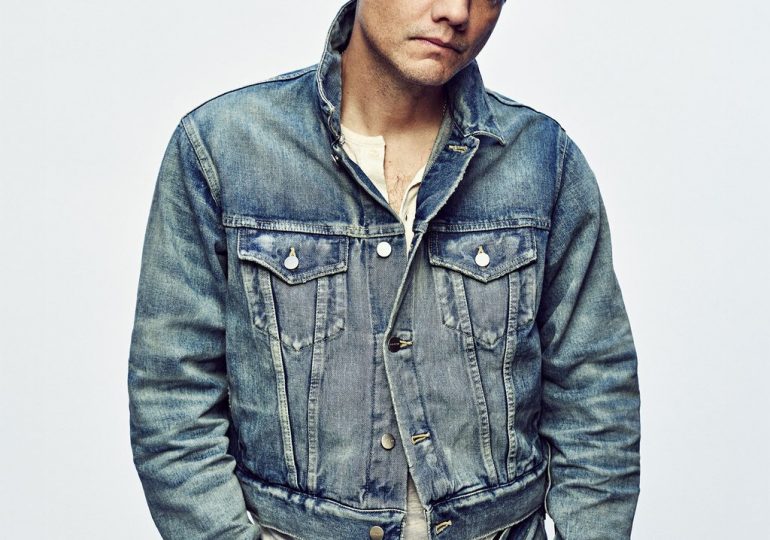
If you like your movie stars to be seen—and admired—but not heard, Wagner Moura’s not your guy. Born in Brazil but now living in Los Angeles, Moura freely speaks his mind on political issues in both his home country and his adopted one. “Listen,” he says when we meet in mid-March, “I’m very vocal. I say things. I’m not afraid. I never was afraid to say what I believe, because that’s how I am.”
Though Moura’s latest film, The Secret Agent, is set in Brazil in 1977, at a time when that country was under the thumb of an oppressive political dictatorship, it has resonated with viewers all over the world—particularly in the United States. Moura plays a research scientist who’s become a government target, a man on the run whose greatest wish is to settle down and live a quiet life with his young son. Directed by Moura’s friend Kleber Mendonça Filho, The Secret Agent works as an artful, beguiling thriller, but it’s also a picture of a country whose citizens, in real life, had reason to live in fear. Moura, 49, was just a baby during this period, but as he got older, he saw how its effects lingered. He thinks one reason American viewers have responded to the film is because they sense the creeping threat of authoritarianism at home. We’re not living under a dictatorship yet, he says, but he points to ways the government has been trying to exert control over its citizens, including curtailing the work of scientists like his character. “All that is happening already,” he says. “It’s a huge red flag. It’s not hard to read. Whoever’s not reading that red flag is either an accomplice of what’s going on or is not really paying attention.”
At the Cannes Film Festival last May, Moura won the Best Actor award for his role in The Secret Agent. From there, both the movie and Moura were unstoppable: the film was up for four Academy Awards, including one for Moura’s subtly wrought performance. Moura, the first Brazilian to be nominated for the Best Actor award, didn’t win, nor did the film: it lost out in every one of its categories. But talking to Wagner in L.A. just three days after the ceremony is a bit like hearing an excited schoolkid relay his recent adventures. He still can’t believe how far the film has come—and how far he has come—since that Cannes premiere. Disappointment is the last thing the whole Secret Agent team is feeling. “For us, it was like, ‘If we get an Oscar, great. If we don’t, we’re here.’ It was such an unexpected thing.”
This story is part of the 2026 TIME100. Read Jeremy Strong’s tribute to Wagner Moura here.
Moura has long been a movie star in Brazil, and has an unbreakable link to the country. At home, he, his wife, and three sons speak only Portuguese, and he keeps a place in Salvador, in the state of Bahia, where he grew up. Though he began his film and TV career more than 25 years ago, American audiences, until recently, would have known him mostly for the Spanish-language Netflix drama Narcos (he played Colombian drug lord Pablo Escobar), or for Alex Garland’s 2024 dystopian thriller Civil War.
Yet there’s something so Old Hollywood about him that he seems like an anomaly among most contemporary actors. His understated charm and mildly mischievous sense of humor offset any potential self-seriousness, and it’s easy to picture him in a 1930s-style smoking jacket, smoking without smoking, if you get the drift. He doesn’t use social media, he listens to music on vinyl, and he drives himself around in a 1959 VW Beetle that’s the exact blue of a dusky twilight sky. In a world that’s more digital by the day, one that seems to be getting more intelligent only in the artificial sense, he’s the analog antidote we didn’t know we needed.
That’s perhaps even more remarkable when you consider that Moura almost didn’t become an actor at all: he got his bachelor’s degree in journalism, and though he seems to know today that he chose the right path, his college years, and the writers he read—“You know, like the guys from the school of Frankfurt, Benjamin, Adorno—guys that kind of make your mind go like, ‘Oh, man!’”—were revelatory in helping him understand how art and politics mesh. “I don’t think I have the objectivity necessary to be a journalist,” he says. “I was always very emotional towards the things that I saw.” But he still values the grounding that his journalism training gave him. “It shaped me a lot as an artist, as a person, as a citizen. And there’s the idea of creating empathy: the more you know about other things, the more empathy you have. That’s all. And that’s what acting should be about.”
To watch Moura in any of his films—as a special-ops-unit police captain caught in a web of brutality in Elite Squad, as a confident veteran journalist in Civil War, or as that research scientist in The Secret Agent—is to see both intelligence and intuition at work. For Moura, connecting with the broader world is paramount. This becomes even more important in an era when journalism, the arts, and even the mere idea of truth are under attack.
“What scares me is that the truth as we know it is over,” he says. “Facts, they don’t matter anymore. When we talk about polarization, we talk about the creation of parallel universes, parallel narratives. We don’t live in the same mental space of other people anymore.” He remembers a time when the right and the left, in any society, would fight. “But we would fight over the same fact, we both saw the same thing, and we would disagree over how to deal with that fact. Now they’re different versions. They’re not facts. They’re versions of reality,” he says, “and that’s a very scary thing.”
Which is why he’s determined to keep moving toward the truth in his work, and that includes directing as well as acting. He has already directed one film, 2019’s Marighella, a biographical thriller about 1960s-era Brazilian Marxist revolutionary Carlos Marighella; the picture played the Berlin Film Festival that year, but didn’t come out in Brazil until two years later. Former Brazilian President Jair Bolsonaro, who is now serving a 27-year sentence for a coup attempt, had criticized Moura’s view of Marighella as presented in the film, and Moura has said that the government was responsible for the movie’s delayed release.
His next film as a director will be Last Night at the Lobster, which he calls a “political Christmas film” about employees of a fast-food chain restaurant who are fired the week before the holiday. His upcoming acting projects include a sci-fi-horror film for Netflix, 11817, and this summer, he’ll be taking a play to Europe: A Trial—After an Enemy of the People, which he cowrote, is an interactive riff on Henrik Ibsen’s play. And Moura’s voice is the one you hear as Brander Lawson in Disney’s recently released animated series Star Wars: Maul—Shadow Lord. “It’s undeniably interesting and crazy for a Brazilian to be part of the Star Wars universe,” he says, “because that’s a galaxy far, far, far away, for me.” He loved the fact that Diego Luna provided the voice of Cassian Andor in Andor, without changing his accent. “I think that means a lot to young Latinos in the world: ‘Oh my God, we can be part of that too!’”
—Photograph by Mark Seliger for TIME
Maybe connecting through art—all kinds of art—is our last hope. “When totalitarian governments attack scholars, attack artists, attack journalism—that’s not by chance, right?” They know that artists, in particular, have ways of speaking the truth that no amount of doublespeak can undo. “Everything I do is truth,” he says. “Art is true.” And having seen so many political shifts in his home country, he believes wholeheartedly that his adopted one can also change course.
“Governments come and go,” says Moura, who became a U.S. citizen in 2023. “But for me, this is the country that welcomes people from all over, that was built upon immigration. Of course, the country is polarized. But there’s a difference between the government that’s in charge right now and the soul of the country. Donald Trump is a representation of a lot of what the U.S. is. But the U.S. is not only that, not even close. This is the country of Martin Luther King, of Rosa Parks, of so many freedom fighters who exported their ideas to the rest of the world.”
Moura stops to think for a moment about what democracy really is. “It’s a vision of a country.” And art, he says, can shape that vision. “So when you ask me, ‘Do you believe?’ Yes—because somehow, American jazz gave it to me. American blues gave that to me. Somehow Elvis Presley, Woody Allen, Martin Scorsese gave it to me.” Now it’s Moura’s turn to give back.
Wardrobe: Ilari Urbinati; Groomer: Kiki Heitkotter; Prop: Lux Wright; Production: Ruth Levy, Madi Overstreet; Location: Smashbox Studios, LA.
Leave a comment