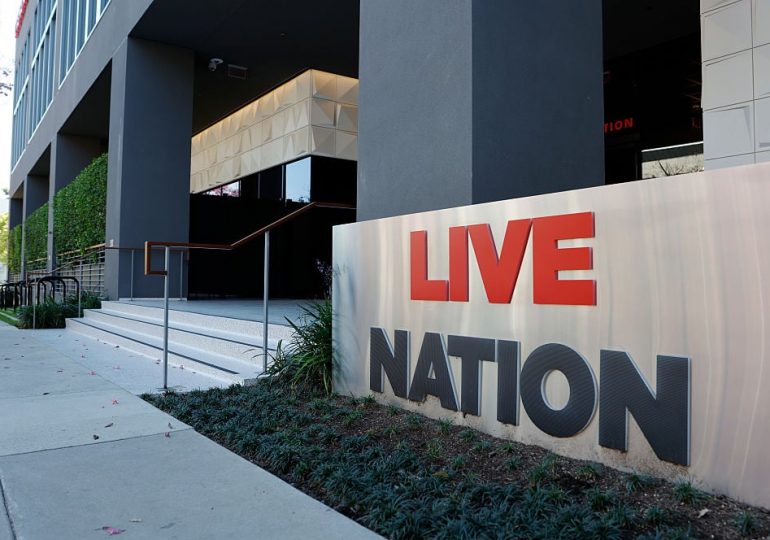
The Live Nation logo is displayed at a Live Nation corporate office in Beverly Hills, Calif., on March 9, 2026. —Mario Tama—Getty Images
High ticket prices have long been the bane of any concertgoer. But the landmark loss of entertainment giant Live Nation Entertainment, which owns Ticketmaster, in an antitrust trial has raised hopes that concerts and live events could soon be more affordable—though it’s unlikely to bring immediate and long-lasting relief.
After weeks of trials that began on March 2, a New York federal jury on Wednesday found that the company was operating an illegal monopoly over large entertainment venues.
The verdict came about two years after the Biden Administration’s Justice Department and nearly 40 state attorneys general sued Live Nation over its unrivaled control on ticket sales and venues. Under the Trump Administration, however, the federal government reached a $280 million settlement a week into the trial. Some states joined the settlement—which still needs the judge’s approval—but more than 30 other states and Washington, D.C., continued their fight in court.
The jury also found that Ticketmaster overcharged $1.72 per ticket in 21 states and in D.C. because of Live Nation’s anticompetitive practices.
States’ attorneys general celebrated the ruling: New York’s Letitia James called it a “landmark victory,” and California’s Rob Bonta said that it was a win “for artists, fans, and the venues that support them.” Utah’s Derek Brown said the “fight isn’t over” as the states pursue remedies.
Omeed Assefi, acting assistant attorney general for the Justice Department’s antitrust division, called the jury verdict “a fantastic outcome for the American people” in a statement sent to the media: “DOJ and some states settled their case and got instant relief. The remaining states received a liability finding and will now move on to the next phase of a remedies trial. Everyone but Live Nation wins with this scenario.”
What comes next?
Arun Subramanian, the judge overseeing the case, will ultimately determine the remedies, which could include divestments by Live Nation of some its entities or ordering Live Nation and Ticketmaster, which merged in 2010, to break up—which the Biden Administration’s Justice Department had called for. Live Nation may also be ordered to pay back overcharges, which would cost the company millions of dollars.
Following the verdict, the judge told both sides’ attorneys to meet and jointly deliver a letter proposing a schedule for next steps, including addressing remedies, according to the Associated Press.
States have viewed the ruling as a way to open up the market to other companies, in a bid to lower prices. But Shubha Ghosh, professor of law at Syracuse University, told the AP that while the ruling could be slightly felt by those who bought tickets through Ticketmaster, “whether ticket prices will go down in the long run, I think it largely depends.”
Live Nation has insisted throughout the trial that it’s not a monopoly, and it is also not backing down on the case after the verdict. In a statement, the company said that the jury’s verdict “is not the last word on this matter,” citing pending motions, including one for judgment of law, which could determine whether rulings on liability and damages stand. The company also claimed that it should pay no more than $450 million for damages.
And once all is resolved, including appeals and remedies, Live Nation also predicted that the case’s outcome “will not be materially different than what is envisioned by” a recent settlement with the Trump Administration’s Justice Department, which included a cap on service fees in some venues as well as ticket-selling options for promoters and venues, which could improve competition.
What factors go into ticket prices
Ticketmaster is considered the world’s largest primary ticketer of live events.
In the trial, Jeffrey Kessler, an attorney for the states, said that Ticketmaster has an 86% share of the ticketing market at “major concert venues”—which he defined as around 250 U.S. amphitheaters and arenas that can hold 8,000 people and host more than 10 concerts a year. Live Nation argues that their market share is much smaller—around 44%—if broader, smaller venues are considered.
The extent of Live Nation’s control is the bedrock of the states’ argument: they claim Ticketmaster can pressure venues to charge higher fees without worrying that venues can switch to other providers of ticketing services.
Bloomberg reports that Michael Rapino, Live Nation’s CEO and president, acknowledged during the testimony that the fees Ticketmaster has imposed have increased over time, though he argued those increases have been at par with other ticketing service providers. Ben Baker, Live Nation’s ticketing director, also testified that Ticketmaster’s fees adjust based on the ticket’s base cost.
But ticket prices have also largely ballooned in the past few decades. Bloomberg reports that as streaming became a less lucrative source of revenue for musicians, artists have turned to touring and charge a higher base cost. The post-pandemic live events boom also contributed to the increase.
Leave a comment