
—Davide Bonaldo—SOPA Images/LightRocket/Getty Images
A U.S. special forces soldier involved in the U.S. capture of Venezuelan leader Nicolás Maduro has been charged with using classified information about the military operation to make more than $400,000 in profit through the online betting market, Polymarket, federal authorities announced Thursday.
In the indictment unsealed in Manhattan federal court, federal prosecutors allege that Gannon Ken Van Dyke, a Master Sergeant with the U.S. Army Special Forces, used sensitive classified information to make multiple bets totaling almost $34,000 on Polymarket, a popular prediction market platform, in the lead-up to the operation on Jan. 3.
Van Dyke was arrested and has been charged with unlawful use of confidential government information for personal gain, theft of nonpublic government information, commodities fraud, wire fraud, and making an unlawful monetary transaction. If convicted, he could face decades in prison.
Who is Van Dyke?
Several unnamed officials told CBS News that Van Dyke, 38, of Fayetteville, N.C., was a communications specialist supporting Joint Special Operations Command, a task force that oversees tier-one special mission units.
According to the indictment, Van Dyke has been on active duty since 2008, and was stationed at the time in the Fort Bragg military complex in North Carolina, where the Joint Special Operations Command is housed.
The indictment said that from around Dec. 8, 2025 to Jan. 5, 2026, Van Dyke was involved in the planning and execution of Maduro’s capture and had access to sensitive, non-public, classified information.
The extent of Van Dyke’s involvement isn’t clear, though the indictment said that after U.S. forces carried out Maduro’s capture, a photograph of Van Dyke was taken and uploaded to his Google account. The photograph, according to the indictment, depicts him “on what appears to be the deck of a ship at sea, at sunrise wearing U.S. military fatigues, and carrying a rifle, standing alongside three other individuals wearing U.S. military fatigues.”
The federal prosecutor’s office in New York added that Van Dyke had signed nondisclosure agreements, in which he promised to “never divulge, publish, or reveal by writing, words, conduct, or otherwise . . . any classified or sensitive information” relating to military operations.
What is he accused of doing?
On or around Dec. 26, 2025, Van Dyke allegedly created an account on Polymarket, where users can bet on the likelihood of an event happening by buying “yes” or “no” shares. The President’s son, Donald Trump Jr., signed on as an adviser to Polymarket as well as Kalshi, another prediction market platform, last year.
Between the next day and Jan. 2, 2026, Van Dyke purportedly traded on Maduro- and Venezuela-related contracts 13 times, purchasing approximately $33,934 in “yes” shares.
In a parallel complaint filed against Van Dyke, the Commodity Futures Trading Commission, which regulates prediction markets, alleged that Van Dyke had funded his cryptocurrency exchange with around $35,000 from his personal bank account on Dec. 26, 2025, about a week before the Venezuela operation.
Trump announced the operation in the early hours of Jan. 3, and Van Dyke won his wagers and allegedly sold his positions for profit. On the same day, he withdrew the proceeds from his Polymarket account and transferred them into a foreign cryptocurrency vault and then a brokerage account.
Reports of suspected insider trading about the Maduro operation on Polymarket emerged afterward, particularly focused on a user who made about $400,000 in profit.
The indictment added that Van Dyke “took steps to conceal his identity as the trader in the Maduro- and Venezuela-related markets” after, including by asking Polymarket to delete his account and changing the email address registered to his cryptocurrency exchange account to one that was not subscribed under his name.
U.S. Attorney for the Southern District of New York Jay Clayton said in the announcement of Van Dyke’s indictment that prediction markets “are not a haven for using misappropriated confidential or classified information for personal gain” and that what Van Dyke did was “clear insider trading and is illegal under federal law.”
Polymarket, in a statement posted on X on Thursday, said that when they identified a user trading on classified government information, they referred it to the Justice Department and cooperated with the investigation. “Insider trading has no place on Polymarket,” the statement read. “Today’s arrest is proof the system works.”
How officials have reacted
Insider profiteering off prediction market platforms has become a growing concern in Washington, and some lawmakers are questioning how to police the platforms amid suspicious activity. Earlier in April, the Associated Press reported that several new Polymarket accounts made very specific, well-timed bets on a U.S.-Iran ceasefire on April 7; those accounts reaped hundreds of thousands of dollars in profit. The White House subsequently warned staff against using confidential information to place trades and bets. Kalshi also recently fined and suspended three congressional candidates whom the company claimed bet on the results of their own elections.
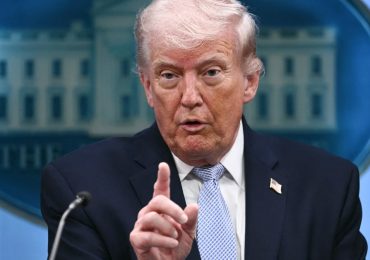
President Donald Trump was asked about the soldier on Thursday, as well as if he’s concerned about federal employees betting on prediction markets, but he said he didn’t know about the specific case and would “look into it” but wondered if the soldier had bet for or against the success of the operation.
“That’s like Pete Rose betting on his own team,” the President said, referring to the late baseball manager and player who was banned for life after he was caught having bet on the sport and his own team, the Cincinnati Reds.
As for suspected insider trading on the outcomes of the war in Iran, Trump said, “Well, the whole world unfortunately has become somewhat of a casino. And you look at what’s going on all over the world, in Europe and every place, they’re doing these betting things. I was never much in favor of it. I don’t like it conceptually, but it is what it is.”
Leave a comment