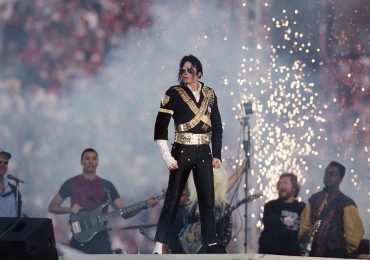
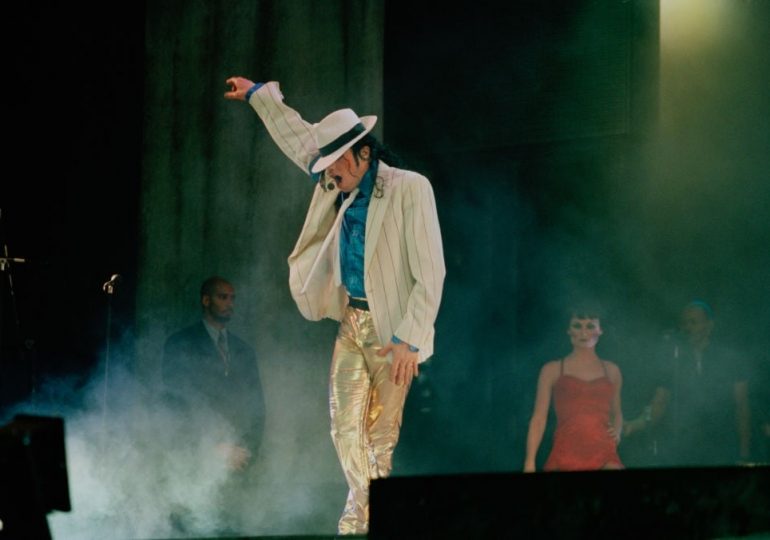
Michael Jackson during the HIStory World Tour in 1997 —Dave Hogan—Getty Images
The arrival of the biopic Michael is reopening a question that never stays buried: What do we do with a genius whose story is shadowed by allegations of harm? A big-budget studio film doesn’t simply revisit a public figure—it situates him in our cultural memory, smoothing some edges, flattening others, and elevating or puncturing myths. That makes the movie, and the arguments that will inevitably follow, a celebration and test of our selective attention: what we preserve, what we minimize, what we cannot bear to hold alongside the undeniably brilliant music. With Jackson, the realities collide: The awe is real. So is the enduring discomfort raised by the alleged child sex abuse—resurfaced forcefully by Leaving Neverland—and the fact that no retelling can offer a clean, perfect ending.
The cultural shock of Leaving Neverland
Michael Jackson’s career soared through the 1980s with a velocity matched only by his startling physical transformation. The first pause came with allegations that he’d sexually abused a boy. Jackson denied the claims, reached a settlement with the 13-year-old’s family, and entered a period of relative domesticity. He married and divorced, had three children. Our skepticism lingered, and by the turn of the millennium, the King of Pop’s stardom had shifted from dominion to drift. More allegations followed. And in 2009, he died.
In many ways, the memory of Jackson operates on two distinct tracks. On one, there’s a sprawling business empire fueled by Jackson’s talent and the public’s embrace of it: Las Vegas, Broadway, West End, and global musical tours. On the other track sit the persistent allegations. The arguably most destabilizing chapter of the second track arrived in 2019, with Leaving Neverland, HBO’s two-part documentary. In it, James Safechuck and Wade Robson—men now, looking back on their boyhoods—described what they said were years of sexual abuse by Jackson. They recalled, in explicit detail, the intimacy that unfolded within the Jackson orbit, an environment shaped by the intoxication of being chosen from relative obscurity.
Both of the accusers had previously defended Jackson in court cases, insisting he hadn’t abused them. Then, after Jackson’s death, they reversed course and pursued legal claims against Jackson’s estate. In 2013, Robson told NBC’s Matt Lauer, “I never forgot one moment of what Michael did to me. But I was psychologically and emotionally unable and unwilling to understand that it was sexual abuse.” He was referring to experiences he alleged occurred between ages 7 and 14.
There’s a grim plausibility here that doesn’t necessarily need certainty, only the willingness to sit with honesty. People can—and do—survive trauma without naming what happened to them. Trauma can be compartmentalized and rationalized, sometimes for years, until something breaks the seal: a triggering memory, the arrival of a new child. It’s possible that, especially at a young age, you may not have the language or context to pinpoint that what you’ve experienced is, in fact, abuse. Leaving Neverland premiered at Sundance in late January 2019, landing in the midst of the #MeToo moment, when Americans were being rewired to more deeply scrutinize power. So the response was swift. Oprah aired a special interview, After Neverland, with Safechuck and Robson. Broadcasters in New Zealand and Canada pulled Jackson’s songs from playlists. The Simpsons removed an episode that featured him.
The documentary became its own legal battleground. Jackson’s estate sued HBO for a reported $100 million. Robson and Safechuck continued their civil claims; a trial is expected for late 2026. (Jackson’s family has dismissed the suits as a money grab.) By the end of 2019, the news of the biopic was confirmed, with Jackson’s estate as co-executive producers. There was always going to be a Jackson biopic at some point—there’s too much money and myth at stake for Hollywood to resist. But the timing of the film, and the degree of the estate’s involvement, reads differently depending on where you stand. Is it all a bid to reclaim and sanitize Jackson’s narrative so the fortune continues flowing? Or is it a good-faith attempt to set the story straight—even if the culture is too diffused to agree on what a “straight” telling of Michael Jackson’s story means? There’s no easy answer, even from the Jackson family. Jackson’s nephew Jaafar will portray the King of Pop. The star’s daughter, Paris Jackson, wasn’t involved in the production, and said, according to Deadline, “The thing about these biopics is—it’s Hollywood. So it’s fantasy land…. The narrative is being controlled, and there’s a lot of inaccuracy.”
Michael Jackson’s Neverland ranch —Paul Harris—Getty Images
Neverland, the refuge—and the warning
Jackson created Neverland Ranch as a sanctuary, nestled in the grassy valleys northwest of Los Angeles, far away from the paparazzi’s gaze. It was a sunny place the performer could explore himself, and sometimes he invited kids to experience the magic of a childhood he lost. But at some point, between the carousel, the ferris wheel, and Bubbles the chimpanzee sleeping in his bedroom—Jackson rode Neverland’s roller coaster far away from the bounds of reality and social norms, into fantasy.
One of the most vivid moments in Jackson’s public unraveling came during his 2003 interview with Ed Bradley on 60 Minutes, as yet another wave of allegations arrived. Jackson was clearly in damage control mode, yet he insisted it was perfectly acceptable for an adult man to share a bed with children who weren’t his own. “If you’re going to be a pedophile or Jack the Ripper, if you’re going to be a murderer, it’s not a good idea. That, I’m not,” he said with certainty. Moments later, he sought refuge in his chart positions. “My album is No. 1 all over the world. America is the only one…I don’t want to say too much.” He paused, sensing the precipice beneath him. “It’s a conspiracy.”
Jackson seemed on the edge of acknowledging what he believed to be the accusations’ root: not just his accusers’ financial motivations or his own view of behavioral norms, but racism—the way America compresses Black men into archetypes, no matter how singular their gifts. He’d lived so long above gravity, insulated by fans and fantasy, that he appeared to forget the peculiar rules Black people in America carry. The rules say that eccentricity is rarely acceptable. You may only step so far out of line before being humbled back to earth. Nothing can spare you: not a physical transformation, not wealth, not Ivy League degrees or a suit.
There was something mournful in watching Jackson grapple with the realization that his fame, talent, or the myth of him could save him from the reckoning or the boundaries of appropriate behavior with children. His delusion was almost childlike: The world he dazzled would never turn on him. It’s worth asking how much of our interpretation of Jackson is a failure of our cultural vocabulary. In the 1980s and 1990s, a man who moved with so much softness, who treated appearance as a canvas and refused the cues of conventional masculinity, was rarely granted compassion. He was turned into a spectacle. Today, thankfully, we have more space for gender expression and self-reinvention. None of this is absolution. It could explain why Jackson may have been misread in a different era, but it leaves untouched the question: What, exactly, do we owe the art when the artist is accused of harm?
Michael Jackson in 2003 —Courtesy of Getty Images
America’s reckoning, the world’s memory
The truth is, parts of America never fully welcomed Jackson back after the court cases. His popularity’s decline was shaped partly by race, partly by our deep but uneven revulsion toward scandal involving children, and partly by a media ecosystem that devours spectacle. But in Asia, Latin America, Europe, and Africa, Michael’s music never stopped playing. The devotion persisted—a reminder that the world saw him not simply as a symbol of American chaos but as an artist whose radiance outlasted the noise.
Read more: TIME Special Edition — Michael Jackson: His Music. His Life. His Legacy
Reconciling someone as complicated as Michael Jackson is an exercise in living with contradictions. His music endures because it’s universal: Play “Don’t Stop ’Til You Get Enough” on a street in Lagos or London, and you can bet total strangers will start bopping instinctively. The biopic will inevitably tap into that timelessness. But any credible retelling must somehow deal with the allegations that shadow Michael’s legacy. We turned Michael into a god, and his unraveling is a reminder of what happens when gods are accused of very human harms. The world loves redemption narratives. But absolution—total and final—is an impossible sell.
Michael, at his peak, offered us a cosmopolitan dreaminess that feels too remote in today’s hyper-fractured world. His story reminds us of a time when a single artist could cut across borders, identities, and politics, when ambiguity wasn’t a liability but a connective force. His story is, in the end, a parable about the brilliance and limits of the American imagination. And even now—especially now—we may still find ourselves needing the optimism and joy he once made possible.
Leave a comment