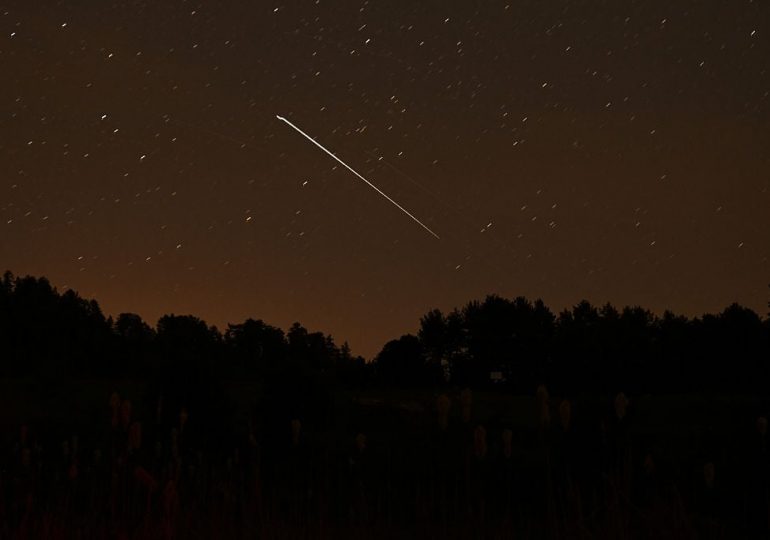
Lyrids meteor shower is observed in Karagol Geosite in Kizilcahamam district of Ankara, Turkiye, on April 22, 2025. —Utku Ucrak—Anadolu/Getty Images
One of the oldest meteor showers recorded by humans began this week—but don’t worry, there’s still plenty of time left to see it.
The Lyrid meteor shower started on Tuesday, and will continue until the end of the month, according to the American Meteor Society. And your best shot to see the most meteors during the shower will be next week.
Here’s everything you need to know about the Lyrid meteor shower and how to watch it.
What is the Lyrid meteor shower?
Meteors are the “shooting stars” or “falling stars” that result when small pieces of space rock burn up as they pass through the Earth’s atmosphere, tracing bright streaks across the sky. You may be able to see several meteors an hour on any given night. When there’s a meteor shower, though, you can see many more in the same timeframe; during the peak of the Lyrid meteor shower, for instance, you might be able to see anywhere from 10 to 20 meteors each hour.
The Lyrid meteor shower, which takes place every April, is caused by debris from Comet Thatcher entering the Earth’s atmosphere.
Humans have been observing the Lyrids for more than 2,000 years, according to NASA. While it’s not as plentiful as the Perseid meteor shower, which peaks in August, the Lyrid meteor shower is known for its “fast and bright meteors,” the agency said on its website.
“Lyrids don’t tend to leave long, glowing dust trains behind them as they streak through the Earth’s atmosphere, but they can produce the occasional bright flash called a fireball,” NASA said.
When can you see it?
The Lyrids started on Tuesday, and will continue until April 30, according to the American Meteor Society. But its peak—the best time to spot the most meteors—will begin around 10 p.m. on April 21 and will continue into April 22, according to NASA.
How can you watch it?
You don’t need to use a telescope or binoculars to watch a meteor shower—just your eyes! As with many other celestial phenomena, it’s best observed when looking up at a very dark night sky, so find a spot far away from any light pollution.
Make sure to give your eyes enough time to adapt to the darkness, too; NASA recommends about 30 minutes. You can bring a sleeping bag, blanket, or lawn chair to make yourself comfortable.
“Be patient—the show will last until dawn, so you have plenty of time to catch a glimpse,” NASA said.
Leave a comment